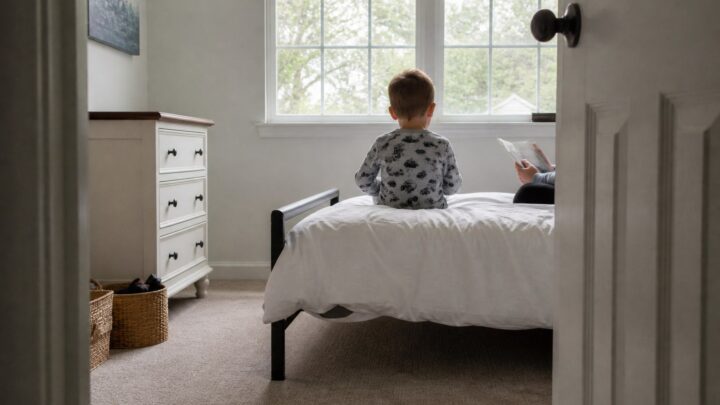
Is it normal for my son to prefer playing alone on the tablet? What to watch for and when to step in
A child choosing the tablet over playing with others is not always cause for alarm. We explain what normal solitary play looks like, how much screen time is considered reasonable by age, and which signs do warrant professional consultation.
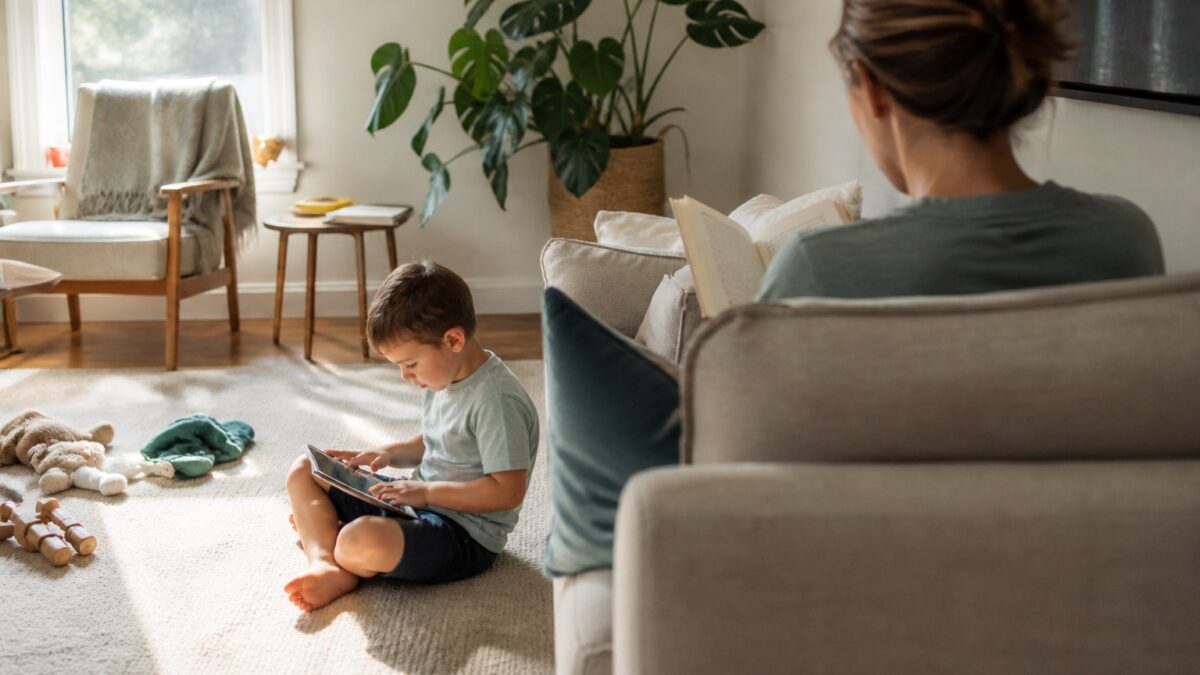
Your son comes home from school, grabs the tablet and shuts himself in his room for an hour. He doesn’t ask to play with his siblings, he doesn’t call any friends, he doesn’t complain about being alone. And you wonder whether that’s normal or whether you should be worried.
It’s one of the questions families repeat most often with children aged 3 to 12. The answer is not black and white. There is a wide range of behaviours that fall within what is expected, and there are specific signs that do deserve a closer look. Let’s go through them one by one.
Why children get hooked on the tablet and prefer to play alone
Screens are designed to be engaging. Immediate rewards, constant visual stimulation, a sense of total control over the game. A child who plays alone on the tablet doesn’t need to negotiate turns, share pieces or tolerate losing to someone. It is, quite literally, easier than social play.
Moreover, solitary play is not in itself a problem. Developmental psychology has documented for decades that playing alone is part of the normal range of childhood, especially between the ages of 2 and 6, and that even at later ages many children need periods of individual play to unwind, process their day or simply rest from social stimulation.
The important nuance lies in the word “prefer”. Preferring the tablet at certain times (after an exhausting school day, for example) is not the same as systematically avoiding any play alternative with other children.
How much screen time is normal by age
The World Health Organization and the Spanish Association of Paediatrics (AEP) have published guideline recommendations on screen time. These are indicative guidelines, not rigid figures that must be met to the minute.
| Age | WHO / AEP recommendation | Comments |
|---|---|---|
| Under 2 years | Avoid screens, except family video calls | Play should be sensory and with caregivers |
| 2 to 4 years | Maximum 1 hour a day, quality content | Always accompanied by an adult where possible |
| 5 to 12 years | Up to 2 hours a day of digital leisure | Priority to sleep, active play and family time |
| Teenagers | No fixed figure, focus on balance | The impact on sleep, mood and relationships matters more than the exact amount of time |
These figures are a frame of reference, not a stopwatch. What really matters, according to the AEP itself, is context: what content the child watches, whether they do so alone or accompanied, and what they stop doing because they are in front of the screen.
Solitary play: when it is just a phase and when to look more closely
There are life moments in which solitary tablet play temporarily increases: a move, the birth of a sibling, a change of school, a period of greater physical tiredness. In these cases, it usually normalises by itself, without the need for intervention.
It is also common for some children, by temperament, to prefer individual activities over group ones. Not all children enjoy group play equally, and that is not a flaw to be corrected. Shyness or introversion are not synonymous with problematic isolation.
The key difference lies in whether the child can play with others when invited, even if they don’t seek it out spontaneously, or whether they actively reject, with distress, any alternative that isn’t the screen.
Warning signs that are worth monitoring
These are the situations in which it makes sense to speak with the paediatrician or the school counsellor:
- The child shows intense irritability or tantrums when the tablet is taken away, in a disproportionate way that persists over time.
- They systematically refuse to play with other children, even in settings they used to enjoy (birthday parties, the park, cousins).
- They have lost interest in activities they used to like (sport, drawing, pretend play).
- Use of the tablet noticeably interferes with sleep, meals or homework.
- You notice a sudden change in behaviour: more withdrawal, more sadness, less communication with the family, which is not explained by another cause (change of school, family situation, etc.).
None of these signs, on its own, is a diagnosis. They are reasonable grounds for booking an appointment with the paediatrician, who can assess the child’s full context and, if necessary, refer to a specialist. This is a blog, not a consultation: if any change genuinely worries you, the right person to assess it is the paediatrician.

What the family can do to restore balance
There is no need to ban the tablet all at once. Many families find it helpful to introduce gradual changes rather than drastic measures:
- Join in rather than prohibit. Playing for a while with the child what they play alone can open the door to them later accepting play with others.
- Offer concrete alternatives, not generic ones: saying “go out and play” is not the same as suggesting a board game after dinner or inviting a particular friend round for a snack.
- Set screen-free times shared by the whole family, such as mealtimes, without turning it into a punishment.
- Review what happens before and after tablet use. Sometimes the problem is not the screen itself, but that it is the only activity available at that time of day.
- Look after sleep. Screen use in the late afternoon and evening can affect the quality of rest, which in turn influences mood and frustration tolerance during the day. You can read more about this in our article on how blue light affects children’s sleep and which routine helps.
Common mistakes and myths
One of the most widespread myths is thinking that every tablet is “bad” by definition. It isn’t: the content and the way it is used matter as much as, or more than, the time spent. In fact, there are documented educational uses, as explained in this analysis of whether a tablet can help children learn to read.
Another common mistake is comparing your child with other children their age (“my neighbour’s son no longer even wants to touch the tablet”). Every child has their own pace, and solitary screen play does not define a child’s character or social future at 6, 8 or 10 years old.
Nor is it true that “playing alone” automatically equals “isolation”. Isolation implies suffering or active rejection of social contact; occasional solitary play is simply a preference within the range of normal.
FAQ
Is it normal for my 7-year-old to prefer the tablet to playing with their cousins? Yes, it can be, especially if they accept playing with them when asked directly. Preferring is not the same as actively refusing.
How much tablet time is excessive for a 9-year-old? The AEP suggests a maximum of 2 hours a day of digital leisure at school age, although what matters most is that it does not displace sleep, active play or family time.
Can tablet use cause behavioural problems? There is no evidence that the tablet by itself “causes” a behavioural disorder. It can, however, amplify irritability if it replaces sleep or leads to constant conflict over time limits. If you notice sustained changes in behaviour, consult the paediatrician.
Should I take the tablet away all at once if they only want to play alone? That is usually not the most effective strategy. Gradual changes, accompanied by concrete alternatives, work better than sudden bans.
When should I seek professional help? If the rejection of social play is constant, if there is intense distress when the screen is removed, or if you notice a change in behaviour that isn’t explained by another circumstance, it is a good time to speak with the paediatrician.