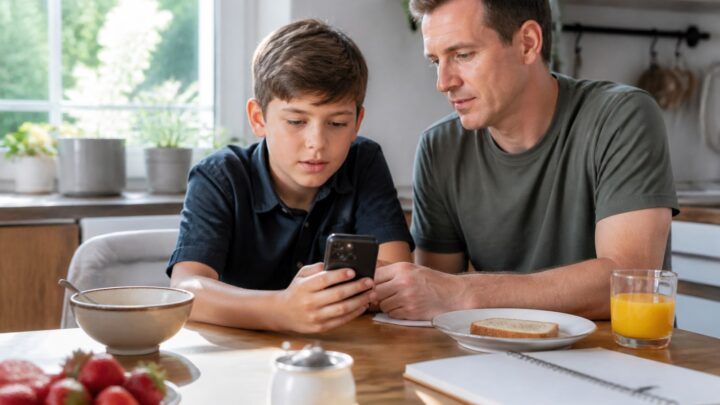
Screens and children's sleep: how blue light affects it and which routine helps
Blue light from phones and tablets can delay melatonin production and make it harder for children to fall asleep. We explain what the evidence says and which routine really helps.
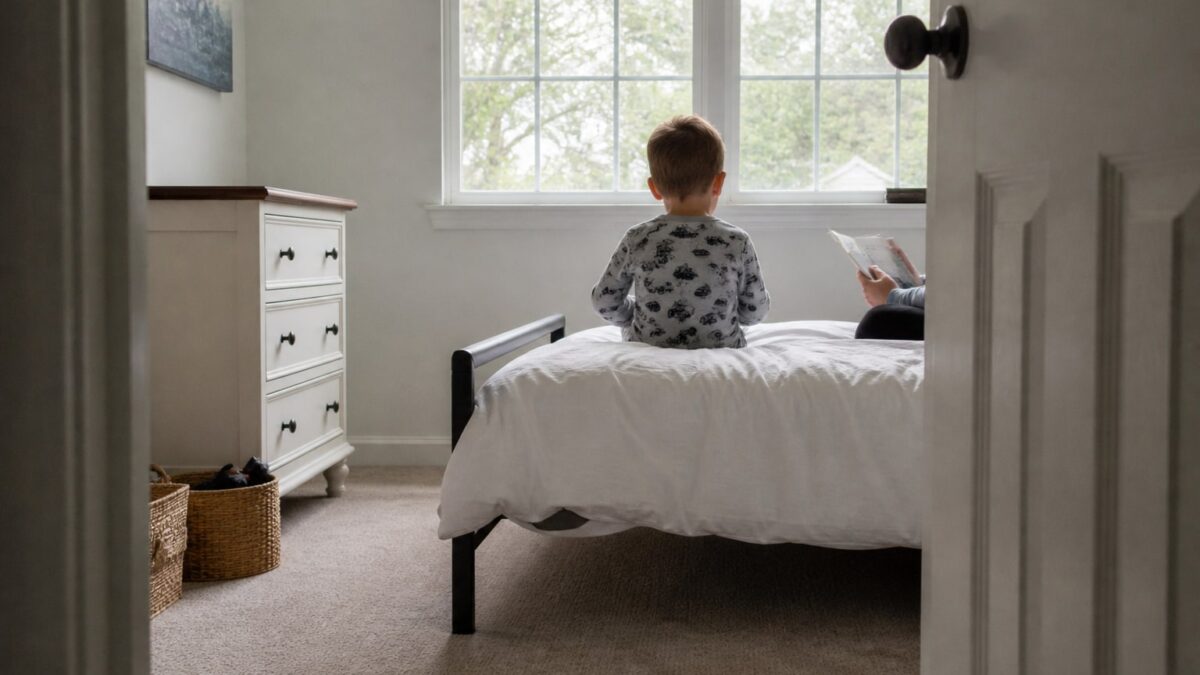
If your home has a tablet or phone as part of the evening routine, you’ve surely wondered whether that has something to do with how hard it is to get them to sleep. You’re not the only family asking. This question comes up in paediatric consultations and in parenting forums alike, and it has an answer based on evidence.
In this article we explain what blue light actually does to a child’s brain, what sleep ranges are normal for each age, and which concrete changes you can try at home without it turning into a daily battle.
What blue light is and how it affects sleep
Blue light is part of the visible light spectrum, the same light emitted by phone, tablet and computer screens and by many LED bulbs. It is not harmful in itself during the day; in fact, it helps us stay awake and alert.
The problem appears at night. The brain uses light as a signal to regulate the circadian rhythm, the internal clock that decides when it is time to be awake and when to sleep. When the eyes receive blue light at dusk, the brain interprets that it is still daytime.
This delays the release of melatonin, the hormone that prepares the body for sleep. In children this effect can be even greater than in adults, because their eyes have larger pupils and more transparent lenses, which let more light reach the retina.
There is another factor: the content on screens. A dynamic video, a game with constant stimulation or a chat conversation activate the brain as well as lighting it up. The Spanish Association of Paediatrics (AEP) reminds us that it is not only the light that matters, but also what is being done on the screen.
Normal range: how much children should sleep by age
Not all children need the same amount of sleep, and differences of 30–60 minutes between siblings of the same age are perfectly normal. The American Academy of Sleep Medicine, whose recommendations the AEP also follows, sets these approximate ranges:
| Age | Recommended sleep hours (including naps) |
|---|---|
| 4–12 months | 12–16 hours |
| 1–2 years | 11–14 hours |
| 3–5 years | 10–13 hours |
| 6–12 years | 9–12 hours |
| 13–14 years | 8–10 hours |
These numbers are a range, not a target to hit every night. A child who sleeps a little less but wakes up rested, in a good mood and without daytime drowsiness is probably fine. What really matters is the quality of sleep and how the child functions during the day.
When to worry about sleep and screens
Most sleep difficulties related to screens are resolved by adjusting routines and are not cause for alarm. But there are signs that are worth discussing with the paediatrician:
- Insomnia that persists for several weeks even after removing screens at night.
- Extreme tiredness during the day, difficulty concentrating at school.
- Frequent night wakings accompanied by anxiety or intense nightmares.
- Sudden changes in temperament that coincide with screen use.
- Refusal to go to sleep that causes very intense daily conflict at home.
If you are also worried that screen use has become hard to manage beyond sleep, this article on screen addiction in children and when to consult a professional may help, as it explains real signs without alarmism.
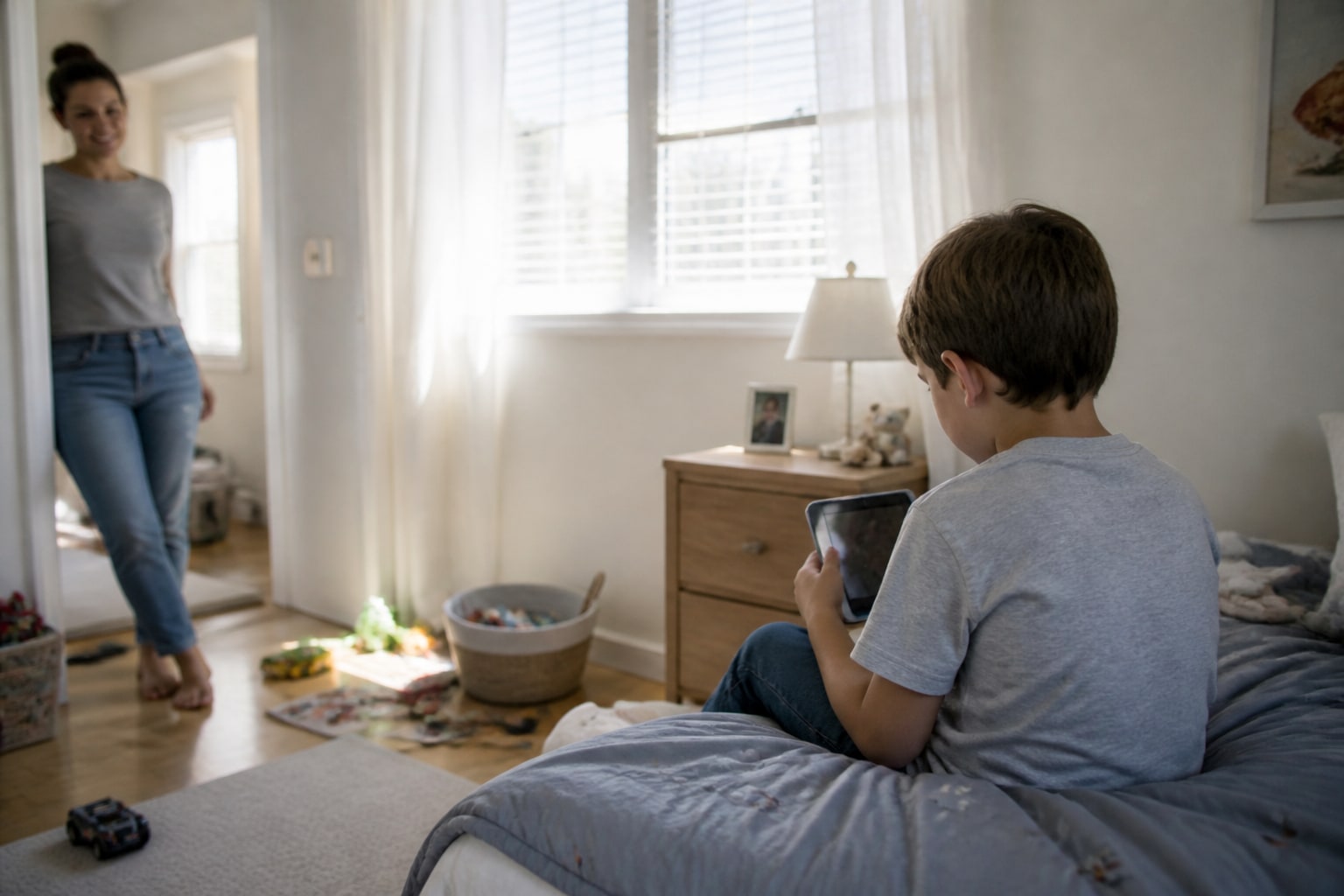
What the family can do: a practical bedtime routine
There is no need to eliminate screens from family life to improve sleep. It helps more to be consistent with a few changes than to ban them radically.
Turn screens off 60 to 90 minutes before bedtime. This is the margin the AEP recommends so that melatonin can start to be released without interference. It doesn’t need to be exact to the minute, but it should become a habit.
Replace the screen with something calm. A story, drawing, listening to an audiobook or simply talking about the day. The transition works better when there is an activity to replace it, not just a prohibition.
Keep devices out of the bedroom. Screens in the bedroom, even when switched off, tend to lengthen the time it takes to fall asleep. Charging the phone or tablet outside the room makes things much easier.
Take care of the home’s ambient light in the evening. Dimming the lights an hour before bed helps the body receive the signal that night is approaching, with or without screens involved.
Keep stable schedules, weekends included. Going to bed and waking up at similar times every day reinforces the circadian rhythm more than almost any other measure.
Be consistent, not perfect. One night with a tablet before bed does not permanently disrupt anything. What truly affects sleep is the pattern sustained over time.
Common mistakes and myths about screens and sleep
“The night mode on devices solves the problem.” It reduces part of the blue light, but it does not eliminate the stimulating effect of the content nor replace the real rest of the eyes and brain before sleep.
“If they fall asleep watching a screen, they must be relaxed.” Falling asleep with a device on does not equal quality sleep. Light exposure during the night, even brief, can fragment rest.
“Teenagers need less sleep than young children.” They need fewer hours than a baby, but they still need between 8 and 10 hours. The delay in sleep during adolescence is usually due more to hormonal changes and habits than to a genuinely lower need for rest.
“It only matters before bed; during the day it makes no difference.” Screen use during the day does not usually affect night-time sleep, unless it replaces physical activity or exposure to natural light, both of which protect good rest.
Frequently asked questions about screens and children’s sleep
Is it normal for my 6-year-old to take more than 30 minutes to fall asleep after using the tablet? It can be a direct effect of blue light and screen stimulation. Trying to remove the screen at least an hour before usually makes a difference within a few days.
Does blue light affect babies the same as older children? The biological effect is similar, but for babies and young children the AEP and the WHO directly advise against screen use before bedtime, also for developmental reasons.
Do blue light filters on glasses or screens really work? They reduce part of the exposure, but the scientific evidence on their real effectiveness for children’s sleep is still limited. They do not replace turning off the device.
How much screen time is recommended per day? It depends greatly on age and family context. What matters is not only the amount, but the time of day and the type of content, especially at night.
Can lack of sleep caused by screens affect school performance? Sustained lack of sleep is associated with poorer concentration and memory, as the AEP notes. If you notice ongoing tiredness at school, it is worth discussing it with the paediatrician.