Otitis in children: signs, treatment and when to see the pediatrician
Otitis is one of the most common infections in childhood, especially in children under 3 years old. We explain how to identify it, when it needs antibiotics and when it is time to see the pediatrician.
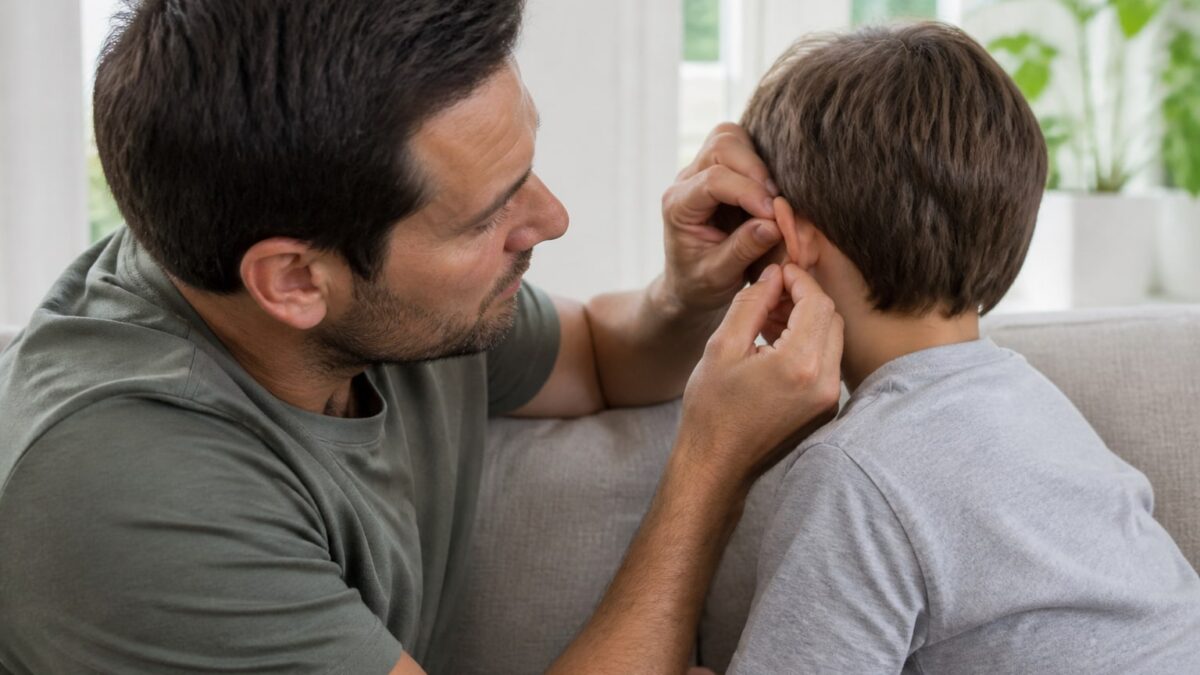
Your child keeps touching their ear, is more irritable than usual or has a fever without any other symptoms. This is one of the most frequent questions in any paediatric consultation: is it otitis? The short answer is that it probably is, especially if they are between 6 months and 3 years, the age range where this infection is most common. It is no coincidence: the anatomy of the infant ear makes it more vulnerable, which is why almost all children will have at least one episode before starting primary school.
The good news is that otitis, in the great majority of cases, resolves on its own or with simple treatment. Let us look at how to recognise it, what the evidence says about antibiotics and when you really need to be concerned.
Key points about otitis in children
- Acute otitis media mainly affects children between 6 months and 3 years old and usually appears after a cold.
- Otitis externa (“swimmer’s ear”) is more typical in summer and hurts when the ear is touched or moved.
The benefit of antibiotic treatment is moderate, and most children will improve by 3 days regardless of whether it is given or not.
- In children over 6 months old without risk factors, observation for 48-72 h (wait and see) or deferred prescribing while maintaining symptomatic treatment is recommended.
- The paediatrician usually prescribes antibiotics straight away in children under 6 months, according to the AEPap.
| Type of otitis | Most common age | Guiding symptom | Fever |
|---|---|---|---|
| Acute otitis media | 6 months – 3 years | Ear pain + previous cold | Frequent |
| Otitis externa (“swimmer’s ear”) | Most common in summer, any age | Pain when touching or moving the ear | Rare |
| Serous otitis media | School-age children | Feeling of blocked ear, no acute pain | No |
What otitis is and why it affects young children so often
Otitis is inflammation of the ear, but under this name lie several different infections. The most common is acute otitis media (AOM): it affects the middle ear, the cavity behind the eardrum. It is much more frequent in children because the Eustachian tube — the duct connecting the middle ear to the back of the nose — is shorter and more horizontal than in adults, which makes it easier for mucus and germs to pass through.
That is why it almost always appears after a cold: the mucus and bacteria living in the nose and throat find an easy route to the middle ear.
Otitis externa, on the other hand, is something else. It affects the skin of the ear canal, not the middle ear, and usually comes from germs in the outside environment, typically from swimming pool water; it is characteristic of summer, causes a great deal of pain and rarely fever.
There is a third type, serous otitis media (or with effusion), less dramatic: it is the accumulation of fluid or mucus in the middle ear, and the child has no fever or pain. It is often detected at routine check-ups and requires follow-up, but it is not an emergency.
Difference between otitis externa and otitis media: how to tell them apart
This is the doubt that comes up most often. There are two fairly reliable clues:
- If it hurts when touching or pulling the ear, it is probably otitis externa. The typical sign is pain when pressing in front of the ear or even just touching it.
- If there is fever and it comes after a cold, it is more likely to be otitis media. These cases may be accompanied by other symptoms such as fever, general malaise and irritability.
In the consultation, the paediatrician will confirm it with the otoscope, checking whether the eardrum is red, bulging or if there is fluid behind it.
Symptoms of childhood otitis by age
The younger the child, the less clear the hallmark symptom (pain) is. The younger the child, the less striking the local symptoms (ear ache) and the more frequent the general symptoms (fever, vomiting, irritability…).
In babies and children under 2 years old, look for:
- Frequently touching or pulling at the ear.
- More intense crying when lying down or when feeding.
- Fever without another clear source.
- Irritability that does not improve as usual.
- Partial refusal of the bottle or breast.
In older children, they can usually say directly “my ear hurts”, making it easier to identify. Some add headache or a feeling of blocked ear.
An interesting fact: young children also complain of non-specific accompanying symptoms, such as abdominal pain, which confuses many families.
How to tell if my child has otitis: what you can observe at home
You cannot reliably look inside the ear without an otoscope, so this is not about “diagnosing” at home. But you can collect useful information for the consultation:
- Does he or she have a fever? Since when?
- Do they touch the ear or seem uncomfortable when lying on that side?
- Have they had a cold in the last few days?
- Has any fluid or pus come out of the ear?
- Does it hurt when you gently pull the ear (more typical of otitis externa)?
This information helps the paediatrician reach the diagnosis faster, but it never replaces examination with an otoscope.
When it is an emergency or you need to call the paediatrician
Most cases of otitis can be managed calmly, booking an appointment within the next 24-48 hours. But there are signs that require more urgent attention:
- High fever (above 39°C) that does not come down with the usual treatment.
- Very intense pain that does not improve with the analgesia prescribed by the paediatrician.
- Swelling, redness or pain behind the ear: this could indicate a rare complication that does need prompt assessment.
- Discharge of fluid or pus from the ear.
- In babies under 3 months with fever: always consult without waiting, whatever the cause.
- Significant lethargy, neck stiffness or repeated vomiting.
Outside these signs, there is no need to rush to the emergency department: a normal appointment with your usual paediatrician is sufficient.
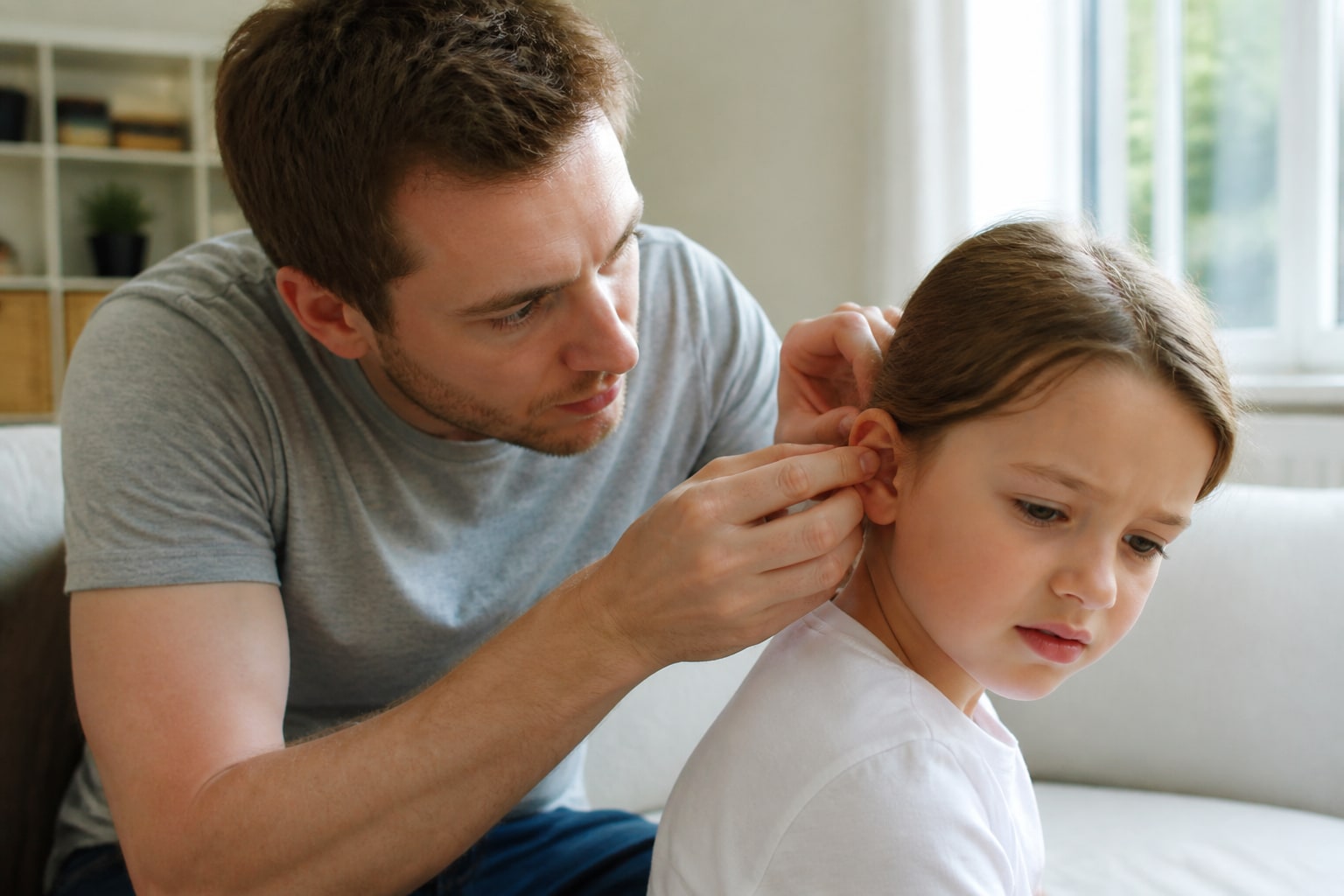
Treatment of otitis media in children: is antibiotic always necessary?
This is probably the question families search for most, and the answer clashes with what many expect: not always.
The current evidence is quite clear. The benefit of antibiotic treatment is moderate: for children under 2 years, 7 children need to be treated for one to avoid pain at 48 hours, and for those over 2 years, 10. Put another way: most improve equally with or without antibiotics.
For this reason, according to AEPap protocols, in children over 6 months with uncomplicated acute otitis media and no risk factors, observation for 48-72 h (“wait and see”) or deferred prescribing while maintaining symptomatic treatment is recommended.
When is an antibiotic indicated from day one? Most guidelines recommend initial antibiotic treatment in children under six months, children over 2 years with severe symptoms or otorrhoea, and children of any age in whom adequate follow-up cannot be guaranteed.
When prescribed, oral amoxicillin remains the antibiotic of choice because it offers adequate coverage of the bacteria involved and relatively few adverse effects. The duration and exact dose are always decided by the paediatrician, according to weight and severity of the condition: it is never advisable to reuse leftover antibiotics from another episode, even if “it seems the same”.
For pain, the paediatrician may prescribe analgesics. There is no evidence that mucolytics and antihistamines help relieve symptoms or improve the course of acute otitis media, so there is no need to add them “just in case”.
In the case of otitis externa, the approach is different: it is usually treated with drops, sometimes combined with a corticosteroid to reduce inflammation of the canal, as indicated by the paediatrician after examining the ear.
Home remedies for ear pain: what works and what does not
While you wait for the appointment or during treatment, there are things that do help your little one be more comfortable:
- Analgesia prescribed by the paediatrician (paracetamol or ibuprofen, according to indication and weight). It is the most effective measure for pain.
- Keeping them semi-upright when sleeping, rather than fully lying down, may relieve pressure in the ear.
- Gentle, dry warmth (a lukewarm cloth, never hot) over the area, if the child finds it comfortable.
What not to do:
- Putting oils, infusions or any liquid into the ear without medical indication, especially if it is not known whether the eardrum is perforated.
Water and alcohol ear drops should not be used.
- Cotton buds to “clean” inside the canal: they push the wax further in and can irritate more.
Preventing otitis in children
There is no infallible way to avoid it, but some measures reduce the risk:
- Complete vaccination schedule, including the pneumococcal vaccine, which is part of the official vaccination calendar in Spain.
- Avoiding tobacco smoke in places where the child is.
- Breastfeeding whenever possible, as it is associated with fewer respiratory infections in general, although this should never cause guilt in those who do not breastfeed or have stopped doing so.
- Nasal washes with saline during colds, to keep the airways clear.
- For otitis externa: dry the ear well after bathing and avoid inserting objects into the canal.
Common mistakes and myths about childhood otitis
“If there is no fever, it cannot be otitis”. False. Serous otitis media does not present with fever or pain, and it still requires follow-up.
“A red ear means otitis”. Not necessarily. When children have a cold their mucous membranes are red, and so is the ear; to speak of otitis media there must also be other signs such as crying, irritability, fever or a bulging eardrum.
“The more otitis episodes, the worse the prognosis”. Not always. Complications of acute otitis media are not very frequent, although recurrent otitis does merit assessment by an ENT specialist to rule out associated causes.
“An antibiotic is always needed”. We have already seen that this is not the case in most children over 6 months without risk factors.
Frequently asked questions about otitis in children
How long does otitis last in children? With or without antibiotics, most children will improve by 3 days. The full course of treatment, when prescribed, usually lasts between 5 and 10 days depending on age and severity.
Can my child go to school with otitis? If they have no fever and feel well, otitis itself is not contagious and does not prevent attendance. The cold that caused it can be, like any respiratory infection.
Can otitis affect hearing? Temporarily, yes, especially if fluid has built up. That is why recurrent or prolonged serous otitis is referred to an ENT specialist to assess hearing.
Is it normal for my baby to touch their ear a lot without having otitis? Yes, it is very common in healthy babies, especially during teething or simply from discovering their own body. If there is also fever, disproportionate crying or refusal to feed, it is advisable to consult. If you are interested in this topic, you can read more about the real symptoms of teething and which myths are worth forgetting.
Can a child with otitis media have a bath? For otitis media there is generally no restriction on water. For otitis externa, however, it is recommended to avoid water in the ear while the treatment lasts, as indicated by the paediatrician.
For any doubts about your child’s symptoms, the most reliable source remains your usual paediatrician: they know the medical history and can examine the ear with an otoscope, something no article can replace.