Visiting medieval markets and historical fairs with children
A practical guide to enjoying a medieval market as a family: what to bring, what age is worth it, and which activities you can't miss. Includes an approximate calendar of the best-known markets in Spain.
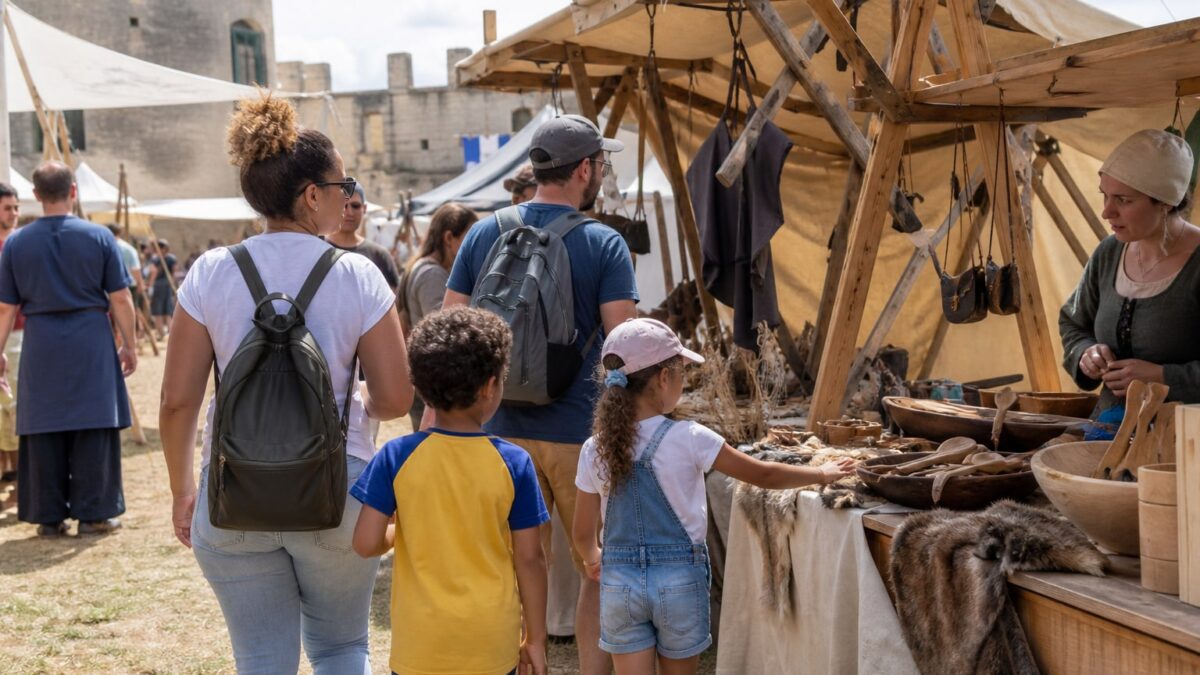
A medieval market is one of those rare activities that the whole family enjoys at the same time, without arguments. The little ones are captivated by the costumes, the jesters and the animals. The older kids enjoy the crafts, the food and the atmosphere. And adults, for once, don’t have to pretend to be interested: they have just as good a time.
They take place almost all year round in towns and cities across Spain, are usually free (or have a symbolic entrance fee) and last from one to three days, normally over a weekend. This guide explains how to make the most of them with children, from babies in baby carriers to pre-teens who already enjoy historical reenactments.
What a medieval fair is and why children love it so much
A medieval fair or market recreates life in a specific era: craft stalls, traditional trades, live music, falconry, staged sword fights and food cooked over open fire. Many are organised around a local anniversary, such as the Weddings of Isabel de Segura in Teruel or the historical siege of Hondarribia.
For a child, it is above all a sensory experience: it smells different, sounds different and everyone is in costume. That immersion is what sets it apart from a museum. You don’t need to understand history to enjoy it; it’s enough to let yourself be carried along by the atmosphere.
At what age to take children to a medieval market
There is no minimum age. Babies in a baby carrier or pushchair experience it well because there are constant stimuli and plenty of movement. Between 3 and 6 years old is usually when they get the most hooked: they are fascinated by the costumes, the falconry birds and the stalls selling wooden swords.
From 7 or 8 years old they can follow the thread of a historical reenactment or a staged battle and understand the context a little. Pre-teens, between 9 and 14 years old, especially enjoy it when there are hands-on workshops: archery, blacksmithing, calligraphy or period games.
When and where: an approximate calendar of medieval markets in Spain
Medieval markets are concentrated mainly in spring and autumn, although there are options all year round. This table lists some of the best-known ones and their usual time of celebration:
| Medieval market | Town | Usual time | Approx. duration |
|---|---|---|---|
| Weddings of Isabel de Segura | Teruel | February | 4-5 days |
| Medieval Market of Tordesillas | Valladolid | May | 3 days |
| Alarde of Hondarribia | Gipuzkoa | September | 1 day |
| Medieval Market of Chinchón | Madrid | October | 2-3 days |
| Medieval Market of Pedraza | Segovia | September | 2 days |
| Medieval Market of Dénia | Alicante | November-December | 4-5 days |
Exact dates change every year, so it’s worth confirming them on the website of the relevant town hall before planning your trip. If you’re looking for more ideas for the season, this roundup of family plans in autumn includes several fairs that coincide with those dates.
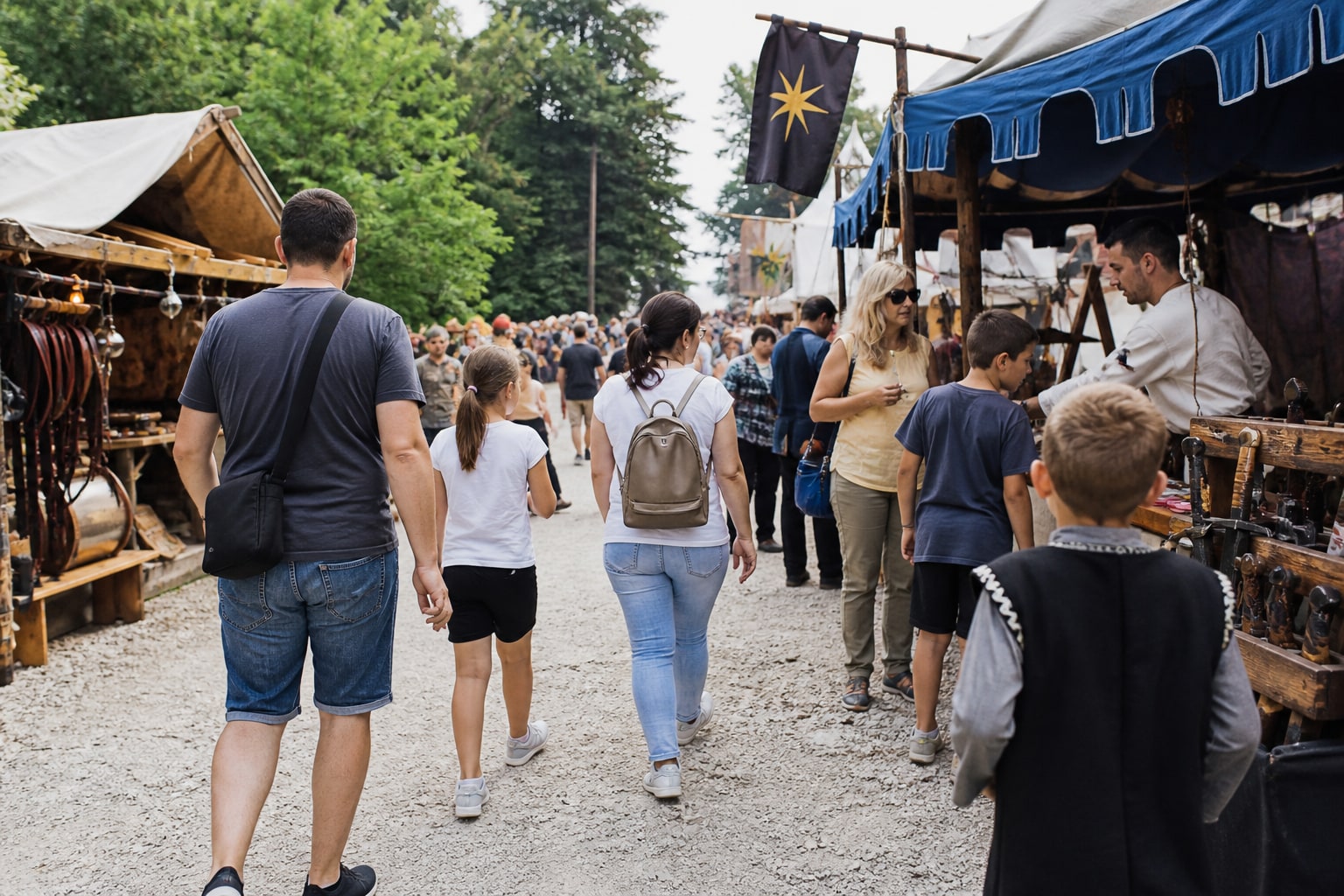
What to see and do at a medieval fair with children
Workshops and trades for the little ones
Almost all fairs include areas with children’s workshops: pottery, coin striking, archery with rubber-tipped arrows or calligraphy with a goose quill. They are free or cost a symbolic amount and usually last between 15 and 30 minutes, ideal for breaking up the day if anyone is tired.
Shows and historical reenactments
Sword fights, falconry displays and parades are the great visual draw. It’s worth checking the schedule on arrival because they are usually repeated two or three times a day. Arriving a few minutes early guarantees a good spot without having to push a pushchair through the crowd.
Market and food
The food stalls—round loaves of bread, grilled sausage, honey sweets—are part of the experience, although it’s wise to bring water and some snacks of your own if your child is a fussy eater or has any special dietary needs.
What to bring: footwear, clothing and practical logistics
Footwear is the most important thing: markets are often set up in historic old quarters with cobbled streets, so comfortable closed shoes prevent trips and falls. For the rest:
- Layered clothing, because it is hotter inside the walled enclosure than outside.
- A lightweight pushchair or baby carrier; cobblestones are not friendly to large wheels.
- A cap or sun protection at spring and summer fairs.
- Cash for workshops and small stalls.
Tips to make the visit work with small children
Going without rushing helps more than following a fixed itinerary. Many families find it useful to arrive mid-morning, before it fills up, and to take a long break to eat outside the enclosure. If the child tires of the crowds, there are always quieter craft areas where you can slow the pace.
Common mistakes to avoid
A common mistake is planning the full visit with no margin: these fairs are best enjoyed by strolling rather than rushing from one show to the next. Another is underestimating the walking distances inside the enclosure, especially in historic quarters with slopes. And it’s best not to force children to “understand” the history; if they enjoy it, that already fulfils its purpose.
FAQ
Do you have to buy a ticket for medieval markets? Most are free, although some charge a symbolic entrance fee to fund the shows. It’s worth checking the official event website before going.
Is it safe to take a baby to a fair with so many people? Yes, as long as you choose a quieter time of day and keep the heat inside the enclosure in mind. A baby carrier usually works better than a pushchair on cobbled streets.
How long does a typical visit last with small children? Between 2 and 4 hours is usually enough, including breaks. Forcing a full day rarely works well with children under 6.
Are there medieval markets adapted for children with special needs? It depends on each organisation. Some large fairs, such as the one in Tordesillas, offer rest areas and adapted access; it’s best to check in advance with the town hall.