Can a tablet help children learn to read? What the educational evidence says
We analyze what studies and organizations such as the OECD, UNESCO and the AEP say about the use of tablets for early literacy. When it adds value, when it subtracts, and which apps and habits make the difference.
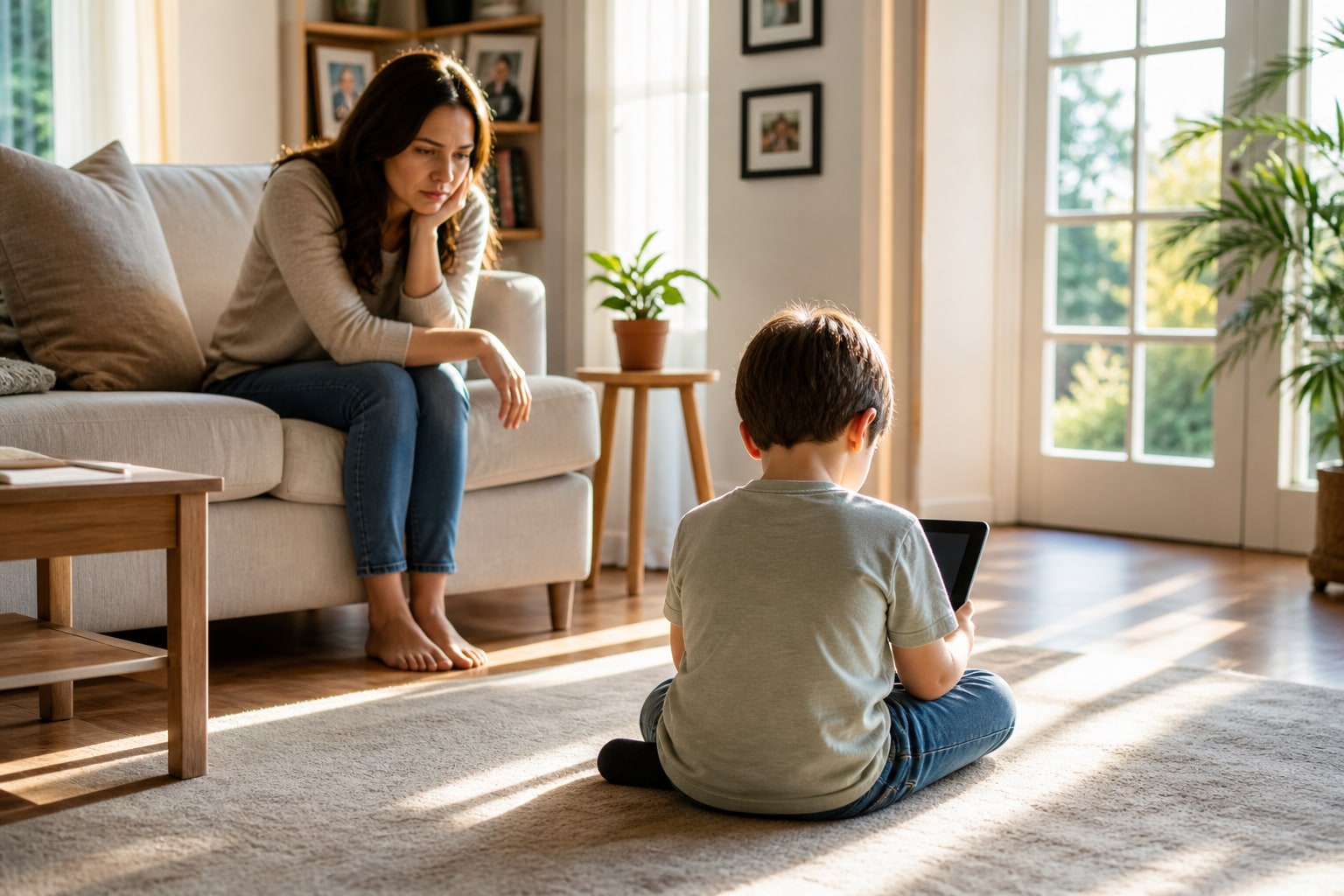
The question comes up in many homes around age 4 or 5, when the little one starts recognizing letters and the tablet is already part of the family landscape. Does it help them learn to read? Is it better than a book? Are we helping or getting in the way?
The short answer: it depends. It depends on age, how much time is spent using it, the type of app and, above all, whether there is an adult nearby. Let’s take it step by step, with what current educational evidence says and without selling snake oil.
What we know today about tablets and literacy
Research on educational technology has grown considerably over the last decade. Major meta-analyses, such as the one published in the Review of Educational Research (Furenes, Kucirkova and Bus, 2021), compare reading on paper and on screens in children aged 1 to 8. The conclusion tempers the enthusiasm considerably: paper still has the advantage in reading comprehension when it comes to narrative texts, but well-designed apps, with interactions aligned with the story, can match or even surpass printed books in vocabulary.
The OECD, in its PISA reports, has noted that moderate use of digital devices for educational purposes is associated with better results; intensive use, by contrast, correlates with poorer performance. UNESCO (Global Education Monitoring Report 2023) goes further and reminds us that technology does not replace the teacher or human interaction: it supports them when used wisely.
Honest summary: a tablet does not teach reading on its own, but it can be a useful tool within a language-rich environment.
Summary table: what the evidence says by age
| Age | Role of the tablet in literacy | Suggested time |
|---|---|---|
| 0-2 years | Not recommended (WHO, AEP) | 0 minutes |
| 2-3 years | Educational content only, with an adult | Max. 1 h/day of total screen time |
| 3-5 years | Letter and sound apps with accompaniment | 20-30 min/day of educational use |
| 6-8 years | Reading support: audiobooks, phonological apps | 30-45 min/day of educational use |
| 9-12 years | Digital reading, dictionaries, text creation | Depending on family planning |
These are indicative ranges based on recommendations from the Spanish Association of Pediatrics (AEP) and the American Academy of Pediatrics (AAP). Each family adapts them.
Before age 2: no tablets or screens
The WHO and the AEP agree: before age 2, the best thing for language development is face-to-face interaction, free play and cardboard books. No app, however educational it claims to be, matches the value of an adult talking to, singing to and reading stories to the child sitting beside them. If you want to go deeper, we cover it here: screens before age 2: why the WHO advises against them and what alternatives exist.
From 2 to 5 years: letters, sounds and plenty of accompaniment
At this stage, children begin to show interest in letters, names and sounds. The apps with the strongest evidence are those that work on phonological awareness (identifying sounds within words), letter recognition and vocabulary with images.
What works:
- Apps with interactive story narration, where tapping a word reads it aloud.
- Games that associate letter and sound with immediate feedback.
- Short sessions (15-20 minutes) and, ideally, with an adult commenting on what appears.
What doesn’t add value: apps full of advertising, cartoon characters with no clear educational purpose, or screens used as a “digital babysitter” without interaction.
From 6 to 12 years: the tablet as support, not as a substitute
Here things change. The child is now within the formal literacy process. The tablet can add value in:
- Audiobooks synchronized with text: useful for reading fluency.
- Dictionaries and adapted readers for children with dyslexia or other difficulties (with fonts such as OpenDyslexic or adjustable spacing).
- Creation apps: writing stories, recording yourself reading, making comics. Producing text reinforces reading.
The evidence is clear on one point: reading a long book on paper is still more effective for deep comprehension than reading it on a screen, especially continuous text without interaction. For novels and reading for pleasure, paper wins.

What to check before downloading a reading app
Not all “educational” apps are educational. Before installing, check:
- Visible pedagogical basis: who designed it? Are there speech therapists, teachers or educators behind it?
- No advertising or in-app purchases when it is intended for young children.
- Level progression adapted to the reading stage.
- Correct language and neutral accent (if you’re looking for Spanish, it should be Spanish, not some odd dubbing).
- Positive, non-jarring feedback: rewards that motivate without overwhelming.
- Offline mode, to avoid surprises with data usage and advertising.
Applications widely cited in Spanish educational settings for these ages include Leo con Grin, Pupitre, Jelata, or the proposals from the Junta de Andalucía and other regional education departments with open content. Always look at reviews from teachers and educators, not just app store ratings.
The factor that weighs most: the adult beside the child
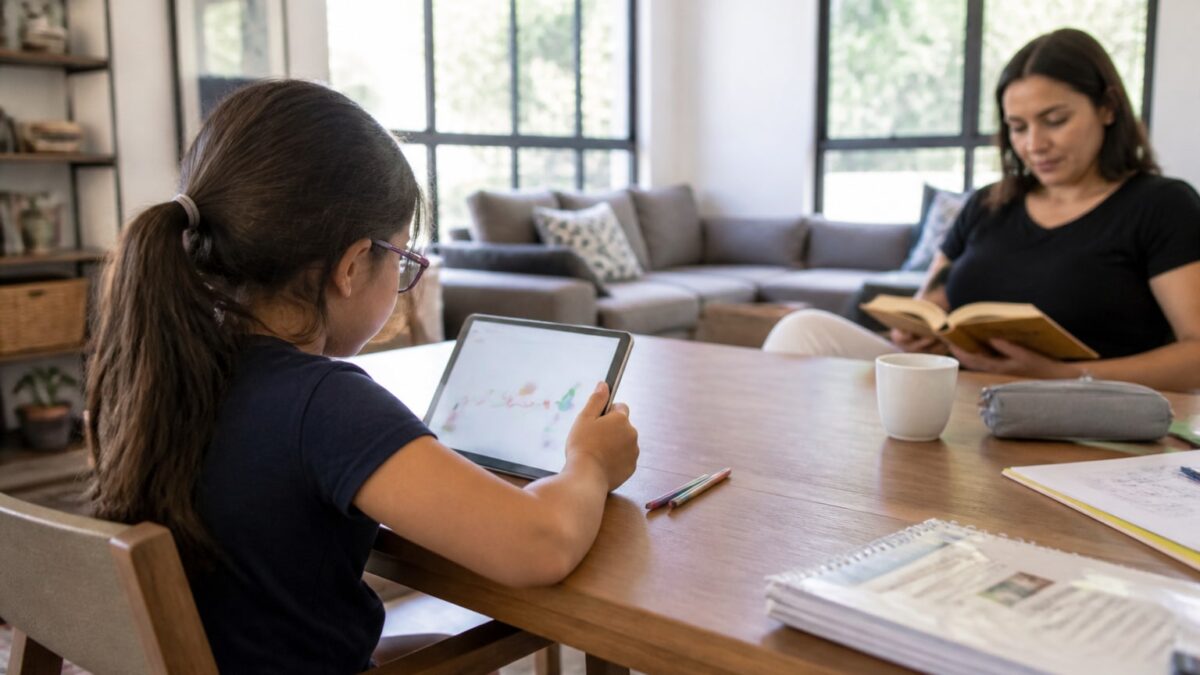
This is the most repeated finding in the educational literature: adult mediation multiplies the benefit of any app. A study by Reich, Yau and Warschauer (2016) in the Journal of Children and Media sums it up well: the same app produces very different learning depending on whether the child is alone or accompanied.
Accompanying does not mean supervising. It means:
- Asking: “what letter is that?”, “what do you think happens now?”.
- Celebrating successes without exaggerating.
- Stopping when the child gets frustrated and returning later.
- Talking afterwards about what they have learned.
Tablet yes, but within a varied reading diet
The tablet does not replace three things that the evidence considers key to learning to read: reading stories aloud to them, seeing adults in the home read and having physical books within reach. If these three elements are present, the tablet can be a support. If they are not, no app can make up for them.
A good habit: for every 20 minutes of reading app, 20 minutes of shared story time on paper. It is not a scientific rule, just common sense.
Risks to watch for
Excessive screen use at early ages has been associated with less free play time, poorer sleep and less family interaction. This is not alarmism; it is what reviews such as the AEP’s on technology use in childhood report. If you notice the tablet is displacing play, sleep or meals, it is time to readjust. To explore specific warning signs in depth, you can read about screen addiction in children and when to consult a professional.
Frequently asked questions
At what age can I introduce a reading app? From ages 3-4, in short sessions and with an adult nearby. Before age 2, the WHO and AEP recommend avoiding screens.
Do reading apps work the same as a teacher? No. They are a complement. The evidence shows that learning to read requires human interaction, shared reading and guided practice. The app helps; it does not replace.
What if my child with dyslexia uses a tablet to read? For children with specific difficulties, the tablet can be a great ally: text readers, adapted fonts, audiobooks. It is best to check with the speech therapist or the school’s guidance team, who can recommend specific tools.
Is it better to read on paper or on a tablet from age 8? For deep comprehension and reading for pleasure, paper retains the advantage according to current meta-analyses. For quick searches, reference or interactive reading, the screen works well.
How much time per day is reasonable? It depends on age and on what the child does with it. As a reference, from 3 to 5 years, between 20 and 30 minutes of educational use; from 6 to 12, up to 45 minutes. Always within the total daily screen time.