Afterschool sports vs arts: how to choose based on your child's personality
Find out how to choose between sports and arts afterschool activities based on your child's personality, with a comparison table of benefits and real signs that will help you decide without pressure.
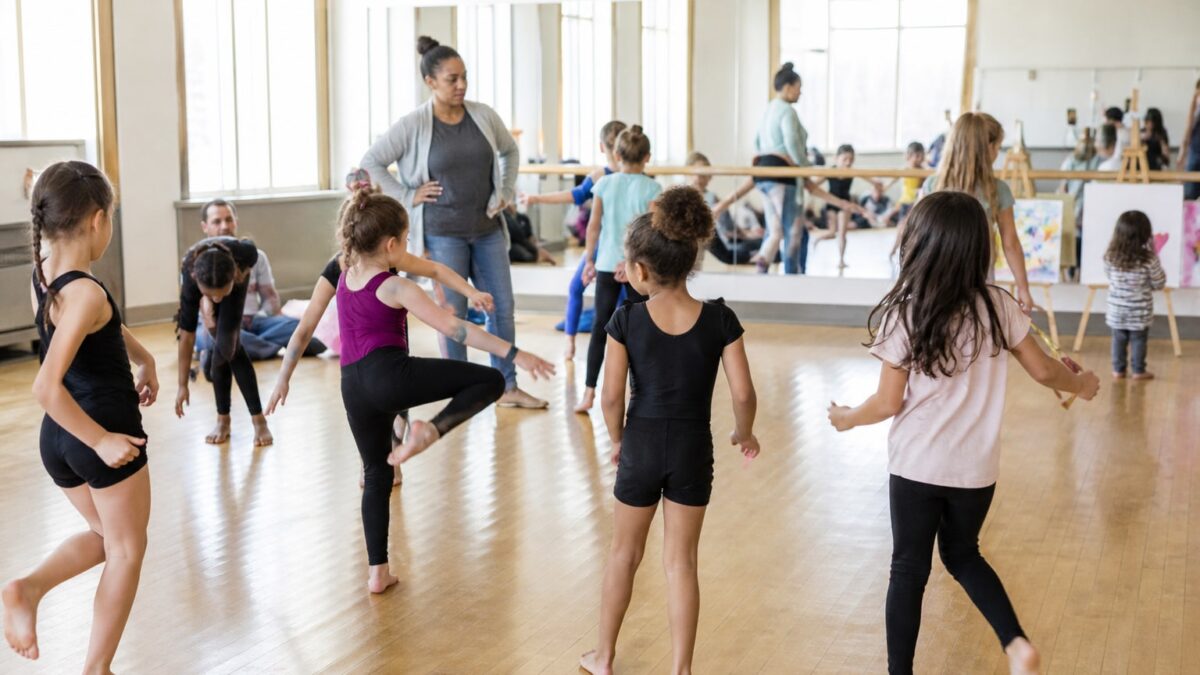
September or January, it doesn’t matter the time of year: the moment arrives to fill in the after-school activities form and the same doubt appears. Football or drawing? Basketball or theatre? There is no single answer, because no two children are the same. What there are, though, are clear clues—in their personality, in how they react to stimuli, in what makes them smile after class—that can help you get it right more often and get it wrong less.
This article does not aim to tell you which activity is “better”. It aims to give you a simple framework: what each type of activity contributes, what signs to observe in your child, and how to combine both things to make a decision with less anxiety and more common sense.
Why personality matters as much as the activity itself
Two children can sign up for the same basketball team and experience it in completely different ways. One enjoys the competition and the constant contact with the group. The other gets anxious every time they miss a shot in front of everyone. The activity is the same; the experience is not.
That is why, before looking at the sports centre’s or music school’s catalogue, it is worth looking at your child first: how they handle frustration, how they relate in large or small groups, whether they need to move in order to concentrate or prefer quiet spaces to create.
What sport contributes: proven benefits
The World Health Organization recommends that children and adolescents aged 5 to 17 accumulate an average of at least 60 minutes a day of moderate to vigorous physical activity. Sports-based after-school activities are a natural way to cover part of that recommendation, while also providing benefits that go far beyond muscle.
Team sport teaches children to lose, to wait their turn, to coordinate with others toward a common goal. Individual sport (swimming, athletics, judo) builds personal discipline, overcoming one’s own limits and managing anxiety without depending on other people’s performance. In both cases, something is trained that does not appear on any report card: tolerance for frustration.
What the arts contribute: less visible but equally real benefits
Artistic activities—music, dance, theatre, drawing, pottery—do not compete with sport; they complement it. They foster emotional expression in children who struggle to put into words what they feel. They develop fine motor skills, sustained concentration and, in disciplines such as theatre or dance, also body expression and the management of shyness in a more controlled setting than a stand full of shouting families.
A fact many families are unaware of: theatre and dance, although artistic disciplines, also meet part of the physical activity recommendation, because they involve sustained movement.
After-school activities for shy children: what usually works best
A reserved child does not need to “expose themselves” in order to force their personality. They need an environment where they feel safe while gradually gaining confidence at their own pace. The following usually work well:
- Individual activities with visible progression (swimming, athletics, chess): the child competes with themselves and does not feel constantly observed.
- Artistic workshops in small groups (pottery, drawing, instrumental music): they reduce social pressure.
- Dance or theatre with a playful focus, without mandatory recitals at the beginning.
What is best to avoid, at least at first, are very large and competitive team sports if the child visibly freezes when exposed. This is not a fixed rule: some shy children flourish precisely in team sport because it gives them a clear role within the group.
After-school activities for extroverted children: what usually works best
A child who needs constant interaction and burns off energy in abundance usually enjoys more:
- Team sports (football, basketball, volleyball): they channel social and physical energy at the same time.
- Group theatre and performing arts: they combine creativity with constant contact with other children.
- Group dance or batucada: movement, rhythm and group in one single activity.
Here the risk is not exposure, but boredom if the activity is too structured or silent for long stretches at a time.
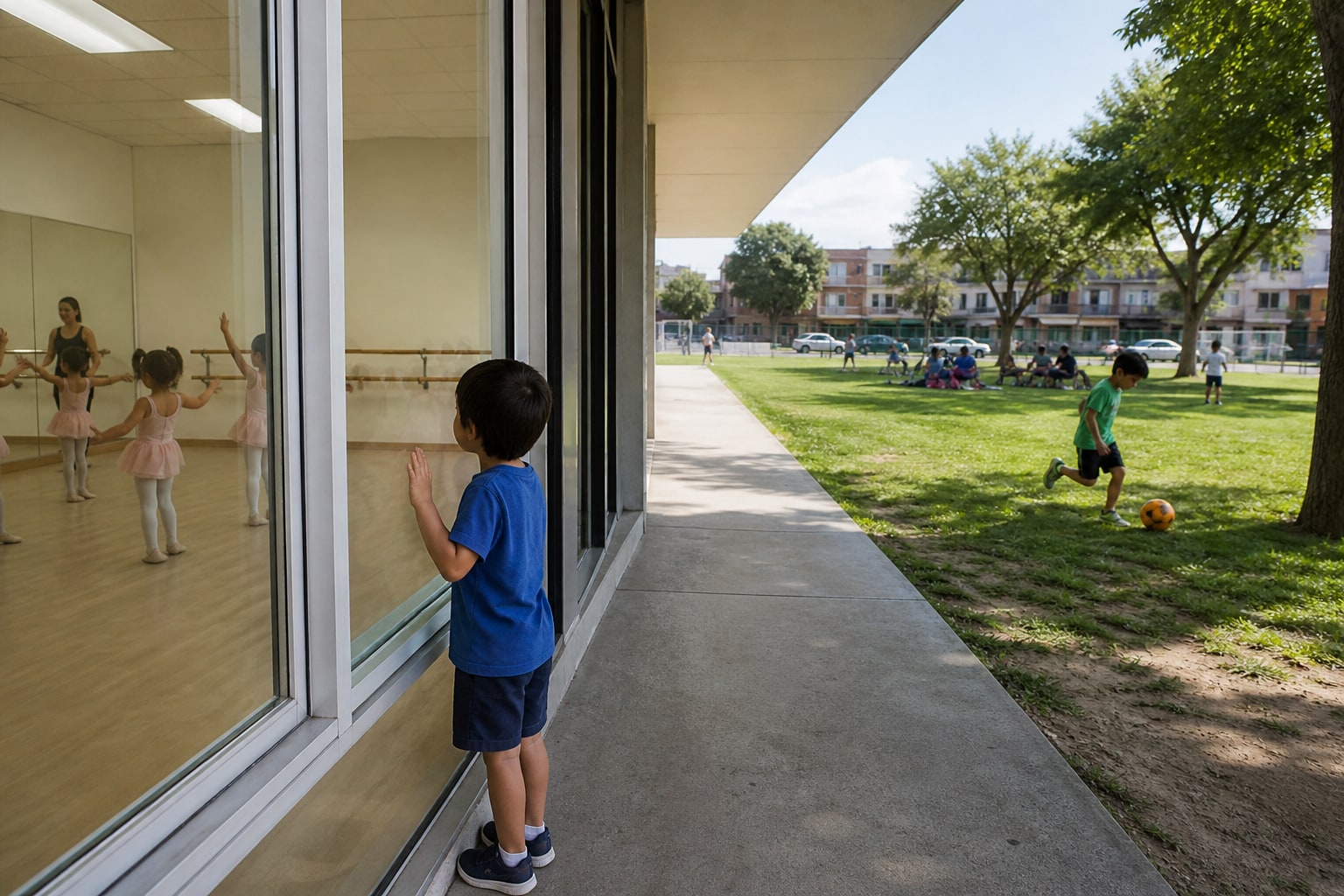
Comparison table: sport vs arts by child profile
| Child profile | Recommended sports activity | Recommended artistic activity | What it mainly develops |
|---|---|---|---|
| Shy / reserved | Swimming, athletics, judo | Drawing, pottery, individual music | Progressive confidence, self-esteem |
| Extroverted / very energetic | Football, basketball, volleyball | Theatre, group dance, batucada | Social skills, channelling energy |
| Competitive | Individual sports with personal bests | Dance with levels or exams | Healthy self-discipline, consistency |
| Sensitive / emotional | Individual sport without pressure for results | Theatre, music, painting | Emotional expression, self-regulation |
| Needs a lot of movement to concentrate | Any high-activity sport | Dance, percussion | Sustained attention, physical release |
Observable signs that help you decide
You do not need a personality test. Simply observe for a few weeks at home and in the playground:
- How they react to a public mistake: if they freeze or cry easily, it is better to start with less exposed formats.
- What they spontaneously ask for: if they constantly imitate dances, sing or draw, there is a clear clue.
- How they arrive home after school: if they need to run and shout, sport may be their natural outlet.
- How they relate in the park: whether they seek a large group or prefer to play with one or two children at a time.
No single sign is definitive on its own. They are clues, not diagnoses.
Common mistakes when choosing an after-school activity
One of the most frequent mistakes is choosing the activity the parents would have liked to do as children, rather than the one that fits the real child in front of them. Another is insisting on an activity “because it will be good for them” even though the child rejects it week after week for no apparent reason beyond genuine dislike.
It is also common to overload the schedule by combining sport and art with the idea of “trying everything”. If you want to explore when the after-school timetable starts to become excessive, you can consult the signs that your child needs a lighter schedule.
How to adapt the choice according to age
Not all after-school activities make sense at every stage. A 3-year-old does not need the same structure as a 10-year-old. To see which activities fit best at each stage of development, it is useful to review what makes sense to offer at each stage.
Frequently asked questions
Can my child do a sports activity and an artistic one at the same time? Yes, as long as the weekly rhythm leaves time for free play and rest. Two well-chosen activities are usually more sustainable than four crammed in.
What if I don’t know what they like because they’ve never tried anything? Many schools offer free trial classes in the first month. It is the most reliable way to find out, better than asking a young child directly.
Is it bad if they change activity midway through the year? Not necessarily. Trying and discarding is part of finding what fits. What matters is supporting that change without guilt or frustration.
Is sport better than art for self-esteem? Neither is “better” in the abstract. What builds self-esteem is feeling competent and enjoying oneself, and that can happen playing handball or playing the piano.
What do I do if they reject everything I suggest? Before pushing, it is worth understanding the real reason for the refusal. If you want to explore how to handle this without pressure, this article on how to deal with a child who wants to quit an after-school activity may help you.