Consoles for Kids in 2026: What to Look For by Age, Budget and Type of Game
A practical guide to choosing a console based on the child's age, the family budget and the type of game. Includes PEGI ratings, parental controls and a clear comparison.
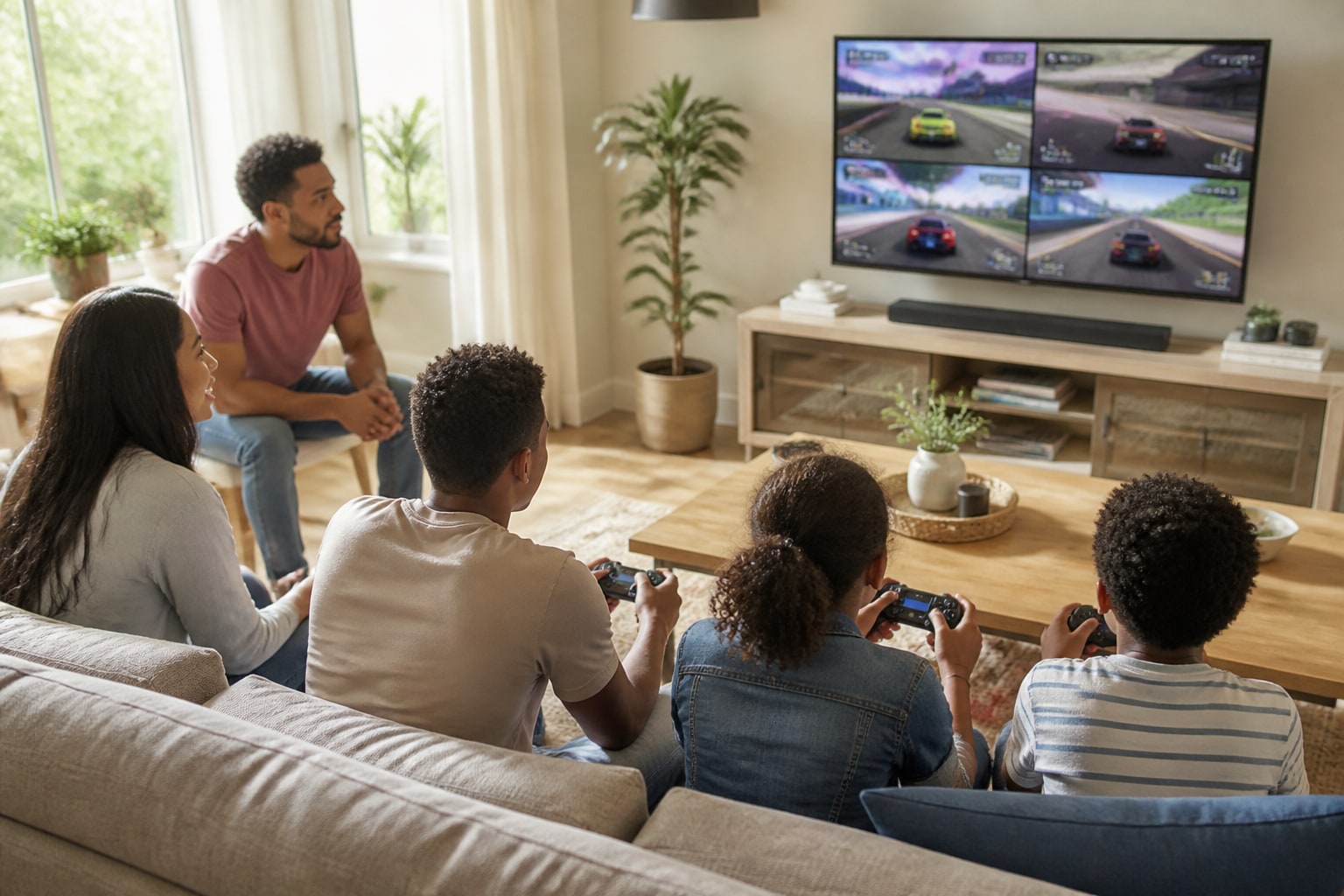
Choosing a console for a child in 2026 is not just a question of price or "what’s trendy". It depends on their age, the kind of games they like, how much time you’re going to spend on it as a family, and how much parental control you need. And, honestly, how much noise you’re willing to put up with in the living room.
This guide is designed as a decision tree: age → budget → type of game. Without recommending a "winning" brand, because the best console is the one that fits your home.
Summary table: which console by age and budget
Before going into detail, here is a quick overview of the most common options in 2026. Prices are indicative and vary by model, bundle and promotion.
| Recommended age | Type of console | Price range | Usage profile |
|---|---|---|---|
| 3-6 years | Educational tablet-style consoles | 60-150 € | Guided play, letters, numbers |
| 6-9 years | Hybrid handheld (desktop + portable) | 200-350 € | Family play, adventures PEGI 3-7 |
| 8-12 years | Pure handheld or mid-range hybrid | 200-400 € | Local multiplayer, gentle open worlds |
| 10-14 years | Mid/high-range desktop console | 400-550 € | Online play, sports, PEGI 12 shooters |
| Any age | Retro / mini console | 60-120 € | Family play, nostalgia |
What the PEGI code actually means
The PEGI (Pan European Game Information) system is the official age rating system in Europe. It is not a general recommendation of maturity: it indicates the age from which the content is considered appropriate.
- PEGI 3: suitable for all. No realistic violence or inappropriate language.
- PEGI 7: may include scenes that slightly frighten young children.
- PEGI 12: mild violence in fantasy settings, suggestive themes.
- PEGI 16: more realistic violence, strong language.
- PEGI 18: adult content.
On top of this come the content descriptors (violence, fear, language, gambling, in-game purchases). That last one, the "In-Game Purchases" icon, is key: many PEGI 3 games include microtransactions.
You can check the rating of any game at pegi.info.
Ages 3 to 6: does a child need a console?
The short answer: no, they don’t need one. The WHO and the AEP recommend limiting screen time in this age range (less than 1 hour a day between ages 2 and 5, and none before age 2). If you want to know more, we have a specific article on screen time by age according to the WHO and AEP.
That said, if your family wants to introduce some digital play, reinforced tablet-style educational consoles (60-150 €) are designed for these ages: small screen, sturdy casing, closed and validated content, no open store or connection to strangers.
What to look for:
- Resistance to bumps and drops (CE certification and EN 71 toy standard).
- Content that comes preloaded or is downloaded from a closed store.
- Minimum battery life of 4-5 hours.
- Built-in usage time control.
Ages 6 to 9: the age of "I want a real one"
This is when they start asking for "a console like their friend’s". Between 6 and 9 years old, most children are ready for a real console, always with adult supervision and agreed time limits.
The profile that fits best: a mid-range hybrid handheld, between 200 and 350 €. It lets you play on the sofa, take it in the car on long trips and connect it to the TV for family games.
Catalogue that usually works well at these ages:
- PEGI 3 platformers.
- Sports games (football, tennis, karts).
- Cooperative adventures where you play with your child on the same screen.
- Sandbox building games with a family mode.
If your little one is already asking to play online titles like Minecraft, we recommend reading what experts say about Roblox and Minecraft before deciding.
Ages 8 to 12: multiplayer, open worlds and first online games
From around 8-9 years old, the demand for online play with friends appears. This is the moment to decide whether you want a handheld they can take to their cousins’ house, a powerful desktop console for the living room TV, or both.
Options and price ranges:
- Hybrid handheld: 250-400 €. More versatile, less graphical power.
- Mid-range desktop: 400-500 €. More power, more adult catalogue.
- Laptop PC for children’s gaming: from 500 €. More control, more complexity.
Games they look for at this age: gentle shooters (PEGI 7-12), football, adventure open worlds, multiplayer building games, karts.
Practical warning: many online games are not designed for children under 13 under European regulations. Always check the voice chat and messaging settings.
Ages 10 to 14: the "I’m in control now" phase
From 10-11 years old, the child wants to choose for themselves. It is also the age when they start asking for PEGI 16 or 18 because "everyone in class plays it". The PEGI rating exists for a reason: respect the age rating of the game, even if you’re being pressured.
This range fits:
- Mid/high-range desktop console (450-550 €).
- Hybrid handheld (if the priority is taking it to school or to friends’ houses).
- Monthly subscriptions to game catalogues (8-18 €/month), cheaper than buying individual titles.
It is also the age when it’s worth talking about balance between screens and other activities. Our article on board games vs. video games can help you approach that balance.
Handheld vs. desktop consoles: which fits your home best
| Criterion | Handheld / hybrid | Desktop |
|---|---|---|
| Average price | 200-400 € | 400-550 € |
| Battery life | 3-6 hours | Plugged in |
| Own screen | Yes | Needs a TV |
| Adult supervision | Harder | Easier (it’s in the living room) |
| Adult catalogue | More limited | Broader |
| Portability | High | None |
A tip that works in many families: desktop console in the living room, no consoles in the bedroom. Supervision happens naturally, without having to stand over them.
Cheap and second-hand consoles: are they worth it?
Yes, with some caveats. A previous-generation console (launched 3-5 years ago) can cost 40-50% less and already have a huge catalogue available. For a child aged 6-10, it’s a very reasonable option.
What to check when buying second-hand:
- Minimum warranty (if from a shop, 1 year; private seller, none).
- That it has no locked linked account.
- Working controllers (joysticks wear out).
- Original invoice if possible.
Mini / retro consoles (60-120 €) are a great option for playing classic titles as a family, with no internet or microtransactions.
Parental controls: what you can’t do without
Before switching on the console for the first time, spend 20 minutes setting up parental controls. All current consoles include them for free, usually via an app on your phone.
The minimum to set up:
- Daily time limit (start with 30-60 min on weekdays).
- PEGI age filter matching the child’s real age.
- Purchase lock without a PIN.
- Restriction of voice chat and messages with strangers.
- Weekly usage report sent to the adult’s email.
If they also use a tablet or phone, our comparison of parental controls may be useful to you.
Frequently asked questions
At what age can you give a console as a gift? It depends more on supervision than on age. From 6-7 years old, many families take the step with a hybrid handheld, always with time control and a catalogue suited to their age.
Is a console or a PC better for gaming? For under-12s, a console. It’s more closed, easier to control and cheaper. PC gaming makes more sense later on or if the home already has a computing culture.
Are microtransactions dangerous? They can be if you don’t block purchases with a PIN. There are families with bills of hundreds of euros due to oversights. Block them from day one.
Can they play online with their school friends? Yes, but check that voice chat is limited to added friends and not open to the entire community. European regulations restrict online play for under-13s on many services.
How much console time is reasonable? The AEP recommends that, between the ages of 6 and 12, total leisure screen time should not exceed 1-2 hours a day, spread out and never right before bedtime. What matters is the balance with sleep, study, free play and physical activity.