Bronchiolitis in babies: warning signs and home care
A clear guide to the symptoms of bronchiolitis in babies, the signs that indicate a trip to the emergency room, and the care that helps at home during recovery.
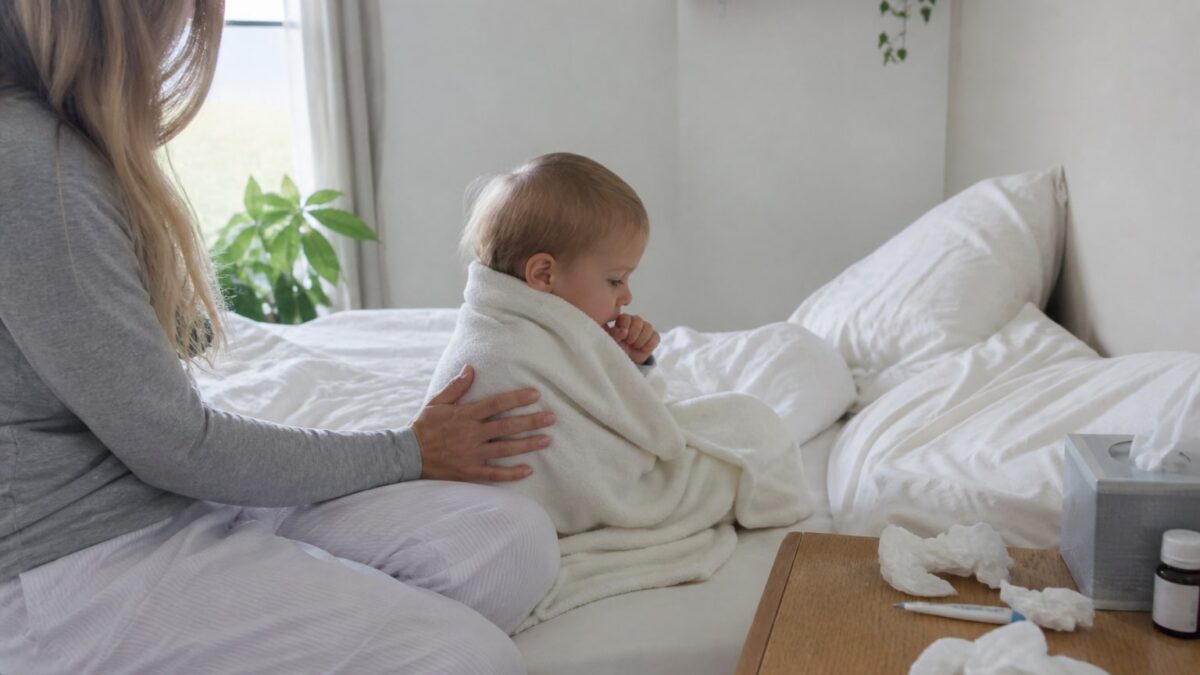
If your baby has started with a runny nose and cough and suddenly breathes differently, it’s natural to worry. Bronchiolitis is one of the most common respiratory infections in the first two years of life, and it is often the reason many families take their child to a pediatric emergency room for the first time in winter.
The good news is that most cases resolve at home with monitoring and simple care. In this article we explain how to recognize the symptoms, what is normal and what isn’t, and when it’s necessary to see the pediatrician or go to the emergency room.
What bronchiolitis is and why it happens
Bronchiolitis in infants is an inflammation of the bronchioles, the finest branches of the bronchi.
The narrowing of these airways makes the baby work harder to breathe in and out, increasing the risk of hypoxia if it is not properly monitored.
The cause is almost always a virus. Respiratory syncytial virus (RSV) is the most common cause of bronchiolitis and pneumonia in children under 1 year old.
It is a common respiratory virus that usually causes mild symptoms similar to a cold, but in small babies it can reach the finest airways and cause inflammation. RSV spreads in autumn and winter, along with other respiratory viruses, which is why bronchiolitis is so typical of this time of year.
Bronchiolitis is a common respiratory infection that mainly affects babies and children under 2 years old. Although in most cases it progresses favorably with home care, in some young children it can cause difficulty breathing, feeding problems and the need for hospital care.
Difference between bronchiolitis and a cold
At first it’s hard to tell them apart, because they start the same way. It begins with cold symptoms (cough, runny nose, mild fever) and, after 1-4 days, progresses to wheezing (sibilance), fatigue and increased respiratory effort.
The key is to watch for two things that a normal cold usually doesn’t cause: increased respiratory effort and feeding difficulties are two important signs. If your baby breathes as usual and eats normally, it is probably a simple cold. If you notice that they breathe faster or have trouble nursing or drinking from the bottle, it’s worth monitoring closely.
Symptoms of bronchiolitis in babies
The first few days usually look like any ordinary cold:
- Mucus and nasal congestion.
- Frequent sneezing.
- Cough, initially dry, that gradually worsens.
- Fever, although it is not always present.
From the second or third day, some babies progress to symptoms more typical of bronchiolitis: progressively increasing breathing difficulty characterized by tachypnea, retractions and coughing with difficulty breathing. Wheezing (a whistling sound when breathing) and more irritability or lethargy may also appear.wheezing
There is one group that deserves special attention: infants under 2 months old, especially those who have not yet reached one month of life. In them, the illness can begin very subtly and progress quickly, even with apnea before coughing.
Typical course: how long bronchiolitis lasts
Understanding the pattern helps avoid worrying over every change:
| Timing | What usually happens |
|---|---|
| Days 1-3 | Cold symptoms: mucus, sneezing, mild cough, variable fever |
| Days 3-5 | Worsening: more coughing, possible increase in breathing rate |
| Days 4-6 (approx.) | Peak intensity of symptoms |
| Days 7-10 | Gradual improvement in breathing difficulty |
| 1-3 weeks | The cough may persist even after the rest has improved |
Symptoms usually last 1–2 weeks, although the cough may linger a bit longer in some cases. A cough that persists for a few more days does not mean something is wrong; it is a normal part of the process.
Warning signs: when to go to the emergency room
This is the part that really matters to memorize. Go to the emergency room if your baby shows:
-
Very rapid or labored breathing: very fast breathing, nasal flaring, or visible sinking of the ribs or chest when breathing.
-
Marked retractions: breathing with the ribs sinking in and the abdomen rising is a clear sign of respiratory distress, because the lungs are unable to do the work on their own and rely on the abdominal muscles.
-
Refusing feeds: if they eat less than half of what they usually eat.
-
Changed skin color: changes in skin color, such as paleness or bluish tones around the lips.
-
Pauses in breathing: pauses in breathing (apneas) always require urgent evaluation, especially in small infants.
-
Lethargy or excessive drowsiness, or irritability that does not improve.
-
Coughing that causes vomiting or prevents rest: if they have continuous coughing fits that prevent rest or cause vomiting.
If your baby is under 2-3 months old and starts with cold symptoms, consult the pediatrician first even if they seem mild: at this age the illness can progress differently and closer monitoring is advisable.
If your baby only has a runny nose and cough, but breathes normally and eats well, there is no need to rush to the emergency room: keep monitoring at home and maintain usual care.

Home care that really helps
There is no treatment that cures bronchiolitis faster; the body needs time to clear the viral infection. What you can do is help your baby be more comfortable:
-
Nasal washes with saline solution: home care consists of performing nasal washes to keep the nose clear, keeping the baby in a semi-upright position, and offering frequent feedings of their usual foods and fluids to maintain good nutrition and hydration.
-
Smaller, more frequent feeds: if the baby finds it hard to breathe and eat at the same time, many families find it helpful to offer smaller amounts more often. Offer breast milk or formula in smaller quantities, but more frequently.
-
Continue breastfeeding if you are doing so: there is no need to interrupt it; on the contrary, it helps with hydration and provides antibodies.
-
Avoid tobacco smoke: avoid tobacco smoke and make sure the baby gets enough rest.
-
Calm environment and rest: patience and monitoring are, in fact, part of the treatment.
Avoid giving cough syrups, antihistamines or decongestants on your own: do not give antihistamines or decongestants without medical indication. No medication shortens bronchiolitis, and some are not safe for babies. If the pediatrician recommends something (such as oxygen if hospitalization is needed), they will be the one to prescribe it.
Bronchiolitis and contagion: how to prevent it
The virus spreads through respiratory droplets and by contact with contaminated hands or objects, so the most effective measures are simple:
- Frequent handwashing, by yourself and by anyone who handles the baby.
- Prevent people with colds from kissing or bringing their face close to the baby, especially if the baby is only a few weeks old.
- Ventilate rooms and avoid crowded places during epidemic seasons (autumn-winter).
- If someone at home has a cold, they can wear a mask when near the baby.
None of this guarantees avoiding contagion one hundred percent — it is a very widespread virus — but it considerably reduces the risk, especially in the first months of life, when bronchiolitis can be more intense.
Common mistakes and myths
“If they don’t have a fever, it’s not bronchiolitis.” False. It can occur without fever or with a very mild fever, especially in the first few days.
“You have to give him cough syrup.” Coughing in bronchiolitis serves a function: it helps move secretions. There are no cough syrups recommended for babies with this condition.
“If they had bronchiolitis, they will always have asthma.” It is not that direct. It is true that some children who go through it experience recurrent wheezing with later colds, but this does not equate to an asthma diagnosis nor does it mean it will always happen.
“You have to keep him isolated from the rest of the family.” Strict isolation is not necessary, although it does make sense to be extra thorough with handwashing and to avoid close contact between people with colds and the baby.
If there are older siblings at home and you are concerned about other typical childhood infections, you may also be interested in our guide on ear infections in children: signs, treatment and when to see the pediatrician.
Frequently asked questions
How many days does bronchiolitis last in a baby?
Symptoms usually last 1–2 weeks, although the cough may linger a bit longer in some cases. The peak of greatest respiratory difficulty usually occurs between the third and sixth day.
How do I know if my baby is breathing too fast? Watch them with their chest uncovered, at rest, and count the breaths for one full minute. If you notice they are breathing very quickly, with rib retractions or nasal flaring, consult the pediatrician or go to the emergency room without waiting.
Can I keep breastfeeding if my baby has bronchiolitis? Yes, and it is advisable to continue. If they tire easily while nursing, you can offer shorter, more frequent feeds so they don’t get as tired.
Can bronchiolitis be prevented with a vaccine? There are specific immunizations against RSV recommended to protect babies at higher risk; consult your pediatrician if your child falls into the groups for which they are indicated, following the current official schedule and recommendations.
Is bronchiolitis the same as bronchitis? No. Bronchiolitis affects the smallest airways and is typical of babies and infants, while bronchitis affects larger bronchi and can occur at any age.