Childhood constipation: common causes and what you can do
A practical guide to childhood constipation: why it appears, what is normal for each age, when to consult the paediatrician and which changes at home can truly help.
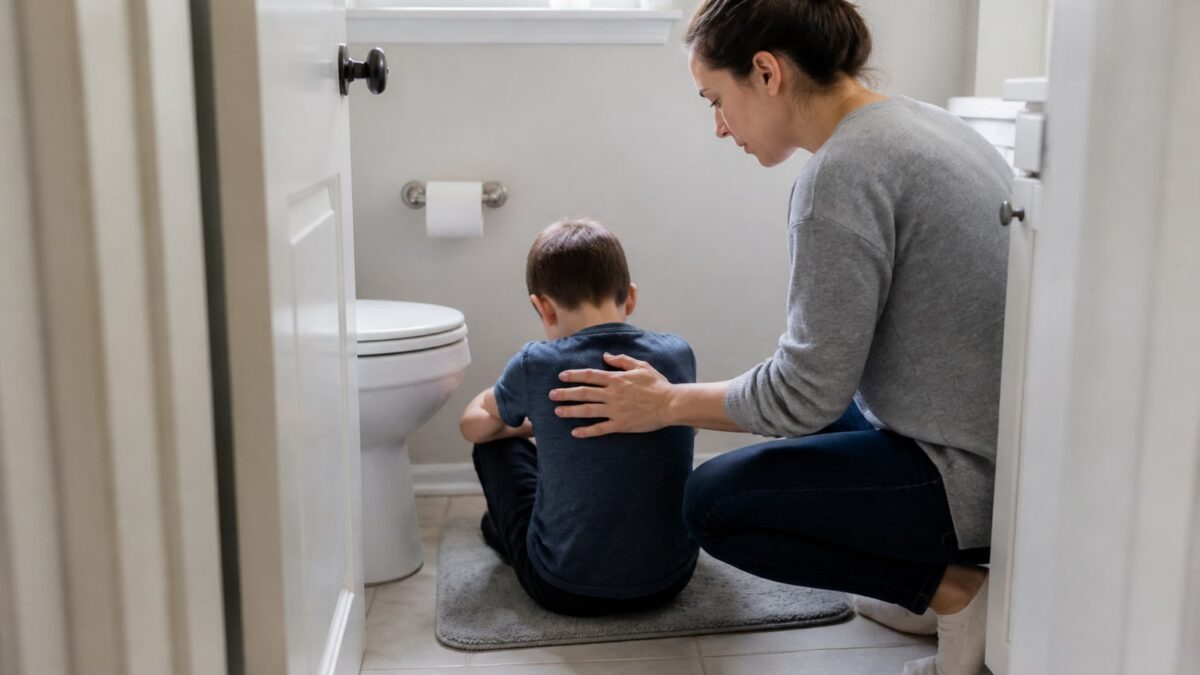
If your child hasn’t had a bowel movement for several days, cries when going to the toilet, or you find very hard stools in the nappy, don’t worry: it is one of the most common consultations in paediatrics. Childhood constipation affects many children at some point, especially at three key stages: the move from breastfeeding to complementary feeding, toilet training and starting school.
In this article we explain what is considered constipation for each age, why it usually appears, what you can do at home without resorting to miracle solutions, and when it is advisable to book an appointment with the paediatrician. No alarmism, and based on paediatric sources.
What is considered constipation in children
Constipation is not simply “going to the toilet only occasionally”. According to the Spanish Association of Paediatrics (AEP) and the international Rome IV criteria, we speak of constipation when there are fewer than two bowel movements a week, hard or very bulky stools, pain when passing stools, faecal incontinence (soiling), or voluntary retention of stools.
What matters is not so much the frequency as the consistency and whether the child finds it difficult or painful. A breastfed baby may go a week without a bowel movement and be perfectly healthy if, when they do pass stool, it is soft. And a child who goes to the toilet every day but passes hard, pellet-like stools may well be constipated.
Quick reference: normal frequency by age
| Age | Usual frequency | Expected consistency |
|---|---|---|
| Newborn (breastfed) | From several a day to 1 every 7-10 days | Soft, yellowish |
| Infant on bottle | Approx. 1-3 a day | Pasty |
| 6-12 months (with complementary feeding) | 1-2 a day, variable | More formed |
| 1-3 years | 1 a day or on alternate days | Formed, soft |
| Over 3 years | From 3 a week to 3 a day | Formed |
Why it appears: most frequent causes
In more than 90-95% of cases constipation is functional, meaning there is no underlying disease. It usually results from a combination of factors: little fibre, little water, changes in routine, voluntary retention out of fear of pain or not wanting to interrupt play.
The most common causes of constipation in children are:
- Introduction of complementary feeding around 6 months. The intestine adapts to new foods.
- Switch from breast milk to formula or to whole cow’s milk.
- Nappy removal. Many children “hold on” because they don’t want to use the toilet.
- Diet low in fibre and excess ultra-processed foods.
- Low fluid intake, especially in summer or in very active children.
- Emotional changes: moving house, a new sibling, starting school.
- Pain cycle: an anal fissure causes pain, the child retains stool, the stool hardens and hurts even more.
Organic causes (Hirschsprung’s disease, hypothyroidism, coeliac disease, cow’s milk protein allergy) are very rare, but the paediatrician rules them out when there are signs that don’t fit.
Symptoms of constipation in babies and children
It is not always obvious. These are the most frequent symptoms:
- Hard stools, in balls or very thick.
- Pain or crying when passing stools.
- Red blood in the stool or on the paper (usually a fissure).
- Swollen or hard tummy.
- Involuntary soiling of soft stool in underwear (encopresis).
- Retention postures: standing on tiptoes, crossing legs, hiding.
- Reduced appetite and quick feeling of fullness.
In very young babies, if you notice vomiting, refusal of food or a very distended belly, don’t wait: consult.
When to consult the paediatrician
Most cases resolve at home with simple changes. But there are situations in which it is advisable to book an appointment:
- Under 6 months with constipation.
- First bowel movement (meconium) later than 48 hours after birth.
- Heavy bleeding in the stools or bleeding that does not stop.
- Weight loss, stalled growth or fever.
- Bile-stained vomiting (greenish) or a very swollen belly.
- Constipation that lasts more than 2 weeks despite changes at home.
- Repeated faecal soiling in underwear.
If you see that your child is in a lot of pain or you suspect dehydration after gastroenteritis, you may also find our guide on how to prevent dehydration in childhood gastroenteritis helpful.
What you can do at home
Before thinking about medication, there is a lot of room for improvement through diet, hydration and routine. The AEPap insists that the approach must be gradual and sustained, not a three-day sprint.
Foods that help against constipation in children
What works best is to increase fibre naturally and spread it throughout the day:
- Fruit with skin well washed: pear, plum, kiwi, apple (raw is best), grapes, peach.
- Prunes soaked or as compote (a classic, and it works).
- Vegetables at every meal: broccoli, spinach, chard, courgette.
- Pulses 2-3 times a week: lentils, chickpeas, beans, mashed if they are small.
- Wholegrain cereals: wholemeal bread, oats, brown rice.
- Water, especially between meals. For babies over 6 months, small amounts if they already take complementary foods.
Reduce (don’t forbid) white rice, green banana, cooked carrot, grated oxidised apple and excess dairy. And beware of industrial juices: they are not substitutes for fruit.
Routine and habits
- Offer 5-10 minutes on the toilet after main meals, without phones or rush. Take advantage of the gastrocolic reflex.
- Make sure they can rest their feet properly (a low stool helps enormously).
- Encourage daily movement: playground, cycling, running.
- Don’t scold for soiling underwear. The soiling is usually involuntary.
And laxatives or suppositories?
The treatment of paediatric constipation with laxatives (such as polyethylene glycol) exists and is safe, but always under the paediatrician’s prescription. Do not routinely use glycerine suppositories or give infusions “to go to the toilet” to babies. Nor homemade micro-enemas.
Common myths
- “If they don’t go every day, they are constipated”. False. Frequency varies greatly.
- “Orange juice on an empty stomach fixes it”. It does not replace fibre or water.
- “It’s because you’re breastfeeding for too long”. No.
- “You have to change the formula milk”. Only if the paediatrician recommends it.
Frequently asked questions
Is it normal for my 2-month-old baby to go 5 days without a bowel movement? If they are breastfed, it can be, as long as the stool when it does come is soft and the baby is calm, feeds well and gains weight. If they are on formula or seem uncomfortable, consult.
Can I give my 8-month-old kiwi or plum? Yes, from 6 months almost all fruits can be offered, in safe pieces or mashed, following the AEP complementary feeding recommendations.
How long does it take to notice improvement with dietary changes? Between 2 and 4 weeks. The intestine needs time to re-educate itself, especially if there is long-standing retention.
Can constipation cause night-time wetting or urinary tract infections? Yes. A very full rectum compresses the bladder and can encourage leakage and cystitis. It is another reason not to let it go.
What if my child holds on because they are afraid of the school toilet? It is very common. Talk to their teacher, keep a calm routine at home and don’t pressure them. It usually resolves within weeks.