Day trips to reservoirs, lakes and rivers with kids: safety and water plans
A practical guide to enjoying reservoirs, lakes and rivers with children without scares: approved life jackets, safe swimming areas and freshwater plans for the whole family.
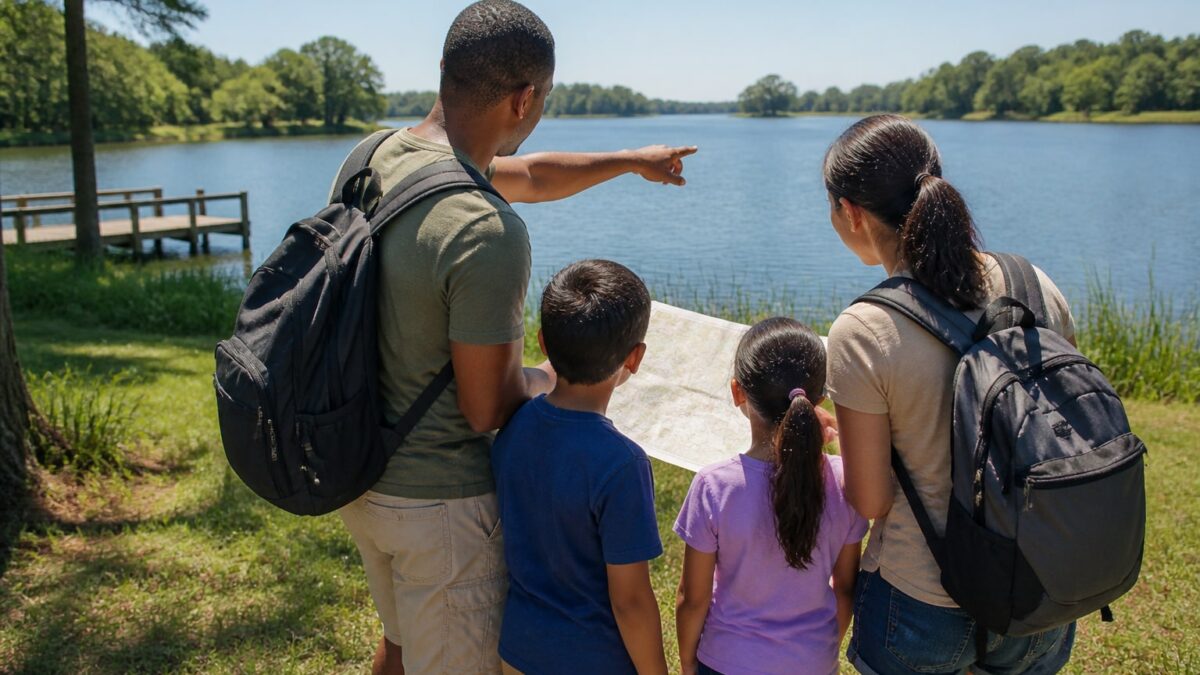
Summer isn’t just about the beach. Inland reservoirs, lakes and rivers are a great alternative when you want to escape coastal crowds, shorten the journey or simply change scenery. They’re calmer outings, usually cheaper, and offer plenty of free play for the little ones.
But freshwater has its own rules. Most spots have no lifeguards, the shorelines can be deceptive and water temperature changes very quickly. With a few clear guidelines, the outing turns out perfectly.
Why freshwater is a great outing (and how it differs from the sea)
At a reservoir or river, kids find things the beach doesn’t always offer: stones to move, logs, tadpoles, shade from real trees. The setting invites exploration, not just splashing around.
The practical difference from the sea matters. There are no waves, but many reservoirs also lack a gradual shore: you can go from a hand’s depth to two metres in a single step. The water is colder than it looks, even in August, and visibility beneath the surface is poorer. That changes how you need to supervise.
Quick reference: freshwater with children
| Detail | Value |
|---|---|
| Recommended minimum age for swimming in a reservoir | From when the child walks confidently; always with a life jacket if they can’t swim |
| Typical water temperature in summer | 18-24 °C (colder in mountain reservoirs) |
| Approximate maximum continuous swimming time | 15-20 min, with breaks to warm up |
| Sun protection | SPF 50, reapply every 2 h and after each swim |
| Adult-child distance in the water | Arm’s length, always |
Life jackets: which ones really work
Arm bands, noodles and inflatable mats are not safety devices. They’re toys. In freshwater, where there’s no lifeguard, that difference is critical.
What does work is a life jacket approved to EN ISO 12402-4 (50 N) or EN ISO 12402-5 (buoyancy aid), in the correct size for the child’s weight, with a crotch strap and a neck strap. If you lift the child by the shoulders of the jacket and it rides up above their ears, it’s too big.
For babies and children who can’t swim yet, the life jacket goes on from the moment they step into the water area, not just when they get in.
Active supervision: what it really means
Active supervision isn’t being on the shore with your phone, glancing up now and then. It means:
- One designated adult, eyes on the water, not reading or looking at screens.
- Clear shifts if there are several adults (“you’re on watch now”).
- Arm’s-length distance with children under 5 or who can’t swim.
- Never leave watch duty to an older sibling.
Child drowning is silent and fast: there are no screams or dramatic flailing. A child can submerge in under 30 seconds without making a sound. That’s why supervision must be continuous, not intermittent.
Choosing the spot: signage and swimming zones
In Spain, reservoirs with an authorised swimming zone are signposted and, in many cases, listed in the Ministry of Health’s bathing water register (náyade.sanidad.gob.es). You can check the water quality there before you go.
What to check before getting in:
- Signs saying swimming prohibited (usually due to currents, sluice gates or cyanobacteria).
- Gradual entry, visible bottom, no dense vegetation in the first few metres.
- No motorboats nearby.
- Accessible shade for breaks.
Cyanobacteria (greenish or bluish scums on the surface, especially during sustained heat) are a reason not to swim. They can cause vomiting, diarrhoea and skin reactions.
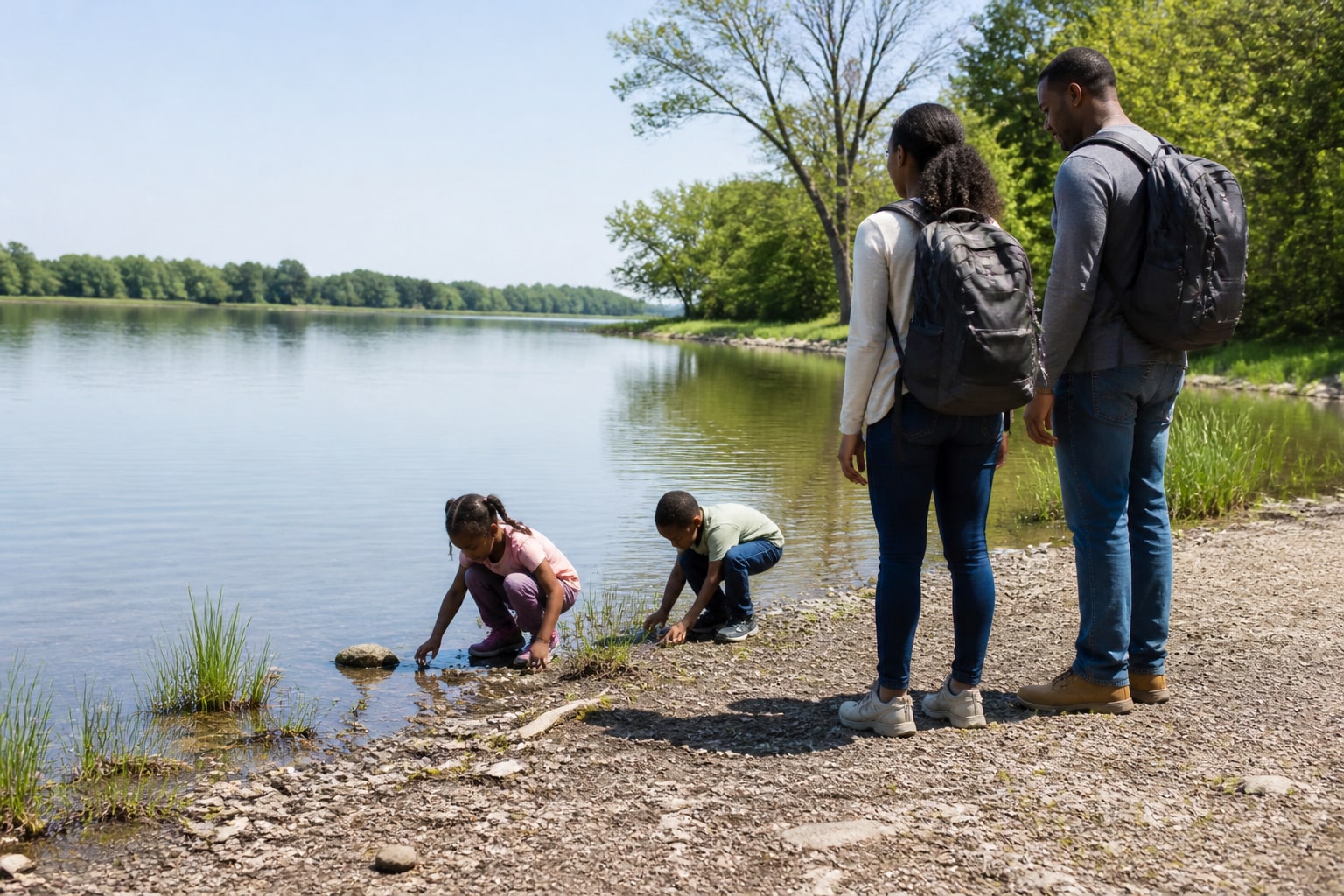
Rivers: currents, stones and pools
Rivers are a different story. Even when they look calm, there are currents you can’t see from the bank, stones covered in silt (very slippery) and sudden changes in depth in the pools.
Choose wide, shallow stretches with slow flow. Water shoes for everyone, adults included. And be wary of dams and weirs upstream: if they open their gates, the water level rises quickly.
What to pack
- Approved life jackets for every child who can’t swim.
- SPF 50 sunscreen, a cap and UPF lycra rash guard.
- Water shoes.
- Towels, a complete change of clothes and a sweatshirt (water cools you more than you think).
- Plenty of drinking water (there are no fountains at reservoirs).
- Basic first-aid kit: plasters, gauze, antiseptic, tweezers (for ticks), saline solution.
- A rubbish bag. Whatever you bring in, take out.
- Simple snacks: fruit, nuts for children over 4, sandwiches.
On very hot days, the risk of dehydration is high, especially for little ones. If you notice vomiting, lethargy or that they aren’t urinating, watch closely for signs of dehydration and find shade and rehydration salts.
Specific freshwater outings in Spain
A few ideas by region to inspire you:
- San Juan Reservoir (Madrid): authorised swimming zone, sand, pine woods and non-motorised water sports.
- Lake Sanabria (Zamora): Spain’s largest glacial lake, with signposted beaches and clear waters.
- Borosa River pools (Jaén): a family route in Cazorla, with swimming stretches in quiet areas.
- Proserpina Reservoir (Badajoz): Roman-era site, shallow shorelines, very popular with families.
- Ruidera Lagoons (Castilla-La Mancha): a chain of connected lagoons with swimming areas.
- Susqueda or Sau Reservoir (Girona): spectacular scenery, always check for authorised zones.
Things to do besides swimming
Water is the excuse, but there’s something for the whole day: short hiking routes, picnics, looking for animal tracks, fishing without killing where permitted, kayaking or paddleboarding from age 6-7 with a life jacket. If it rains or it’s too hot at midday, bringing simple games for rest breaks saves the afternoon.
When to get out of the water (and call the paediatrician)
Get the child out of the water if they have purple lips, shiver uncontrollably or complain of a headache. After swimming, keep watch over the following 24-48 hours: persistent cough, difficulty breathing, fever or unusual drowsiness after immersion (even a brief one) are reasons to consult the paediatrician or go to A&E. So-called “secondary drowning” is rare, but it does exist.
Frequently asked questions
At what age can a baby swim in a reservoir or river? There’s no magic age. From 6 months they can get wet in very calm areas, for short periods, with comfortably warm water. Before that age, it’s best to avoid immersion because of the risk of hypothermia.
Are armbands fine if I watch closely? Not as a safety system. They can slip off, puncture, or give the child a false sense of independence. For real safety, use an approved life jacket.
Is reservoir water safe for swimming? In authorised zones, yes. You can check the water quality on the Náyade system of the Ministry of Health. Outside signposted zones, the risk (depth, currents, cyanobacteria) is higher.
My child can swim in the pool, can I relax at the reservoir? Not entirely. Swimming in cold, murky water with no edges to hold on to is very different from a pool. Active supervision still applies.
What should I do if I see green patches on the water? Don’t swim. Report it to the lifeguard service if there is one, or inform the local council. Cyanobacteria can be toxic to people and pets.
As an Amazon Associate, I earn from qualifying purchases.