Dinosaur routes and paleontological sites to visit with children
A practical guide to dinosaur footprint sites, museums and trails in Spain to visit as a family, with age-based recommendations, tips and verifiable data.
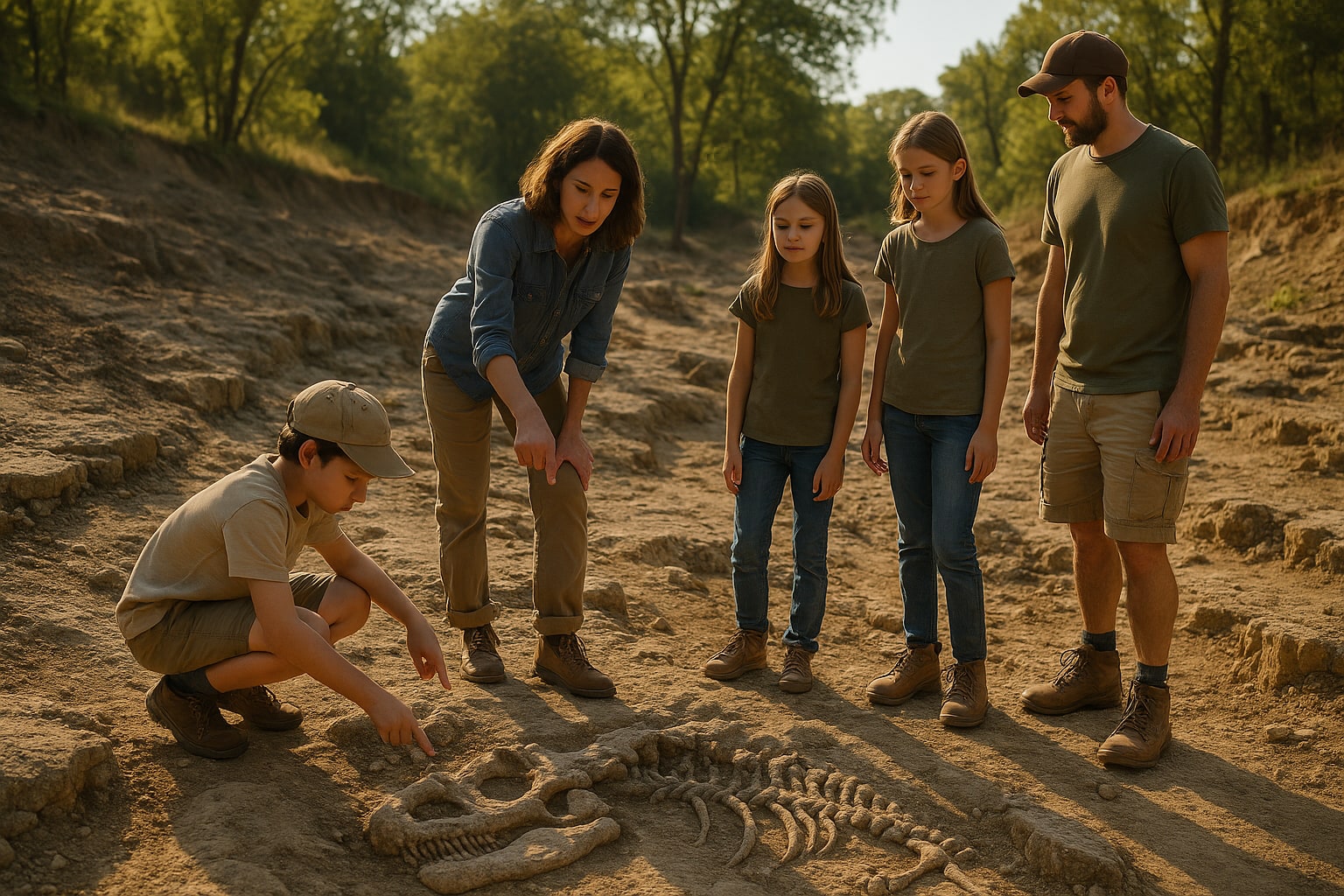
Few things hook a 4-year-old like a dinosaur. And a 10-year-old, too. The good news is that in Spain you don’t have to cross the ocean to see them: we have some of the most important paleontological sites in Europe, museums designed for the whole family, and open-air footprint trails that are enjoyed like a mountain hike with a prize at the end.
This guide covers the most recommended paleontological outings for going with children, organised by region, with practical tips by age and everything worth knowing before you put your boots in the car boot.
Why children are fascinated by dinosaurs
It’s no coincidence. Dinosaurs have every ingredient that captivates the child’s mind: they are enormous, they are real (although extinct), they have long, difficult names that children love to memorise, and they belong to a world that no longer exists. Developmental psychology calls this “intense interests”, and it is common between the ages of 3 and 8.
Making the most of that interest for a family trip pays off: they learn geology, biology and palaeontology almost without noticing.
La Rioja: Spain’s “capital” of dinosaur footprints
The Cameros area in La Rioja is home to more than 10,000 ichnites (fossil footprints) catalogued so far. It is, by far, the best place in Spain to see real footprints in the open air.
Enciso and the Barranco Perdido
Enciso is the starting point. Here you will find the Enciso Paleontological Centre and several sites accessible on foot: Valdecevillo, La Virgen del Campo, Icnitas de Navalsaz. These are short routes, between 1 and 3 kilometres, with information panels and life-size dinosaur reproductions scattered across the landscape.
The Barranco Perdido is a palaeo-adventure park with a bathing area, simulated excavations and workshops. It works well with children between 4 and 12 years old. It opens mainly in summer.
Igea and Munilla
Less crowded than Enciso, but just as interesting. In Igea you can see an 11-metre fossil tree trunk. Munilla has several sites with very well-preserved theropod and ornithopod footprints.
Asturias: MUJA and the Dinosaur Coast
The Museo del Jurásico de Asturias (MUJA), in Colunga, is probably the most complete dinosaur museum in Spain. The building is shaped like a three-toed footprint, and inside there are original skeletons, life-size replicas and interactive areas.
The visit easily combines with the Dinosaur Coast, a stretch of coastline between Gijón and Ribadesella with ichnite sites accessible at low tide. Beaches such as La Griega (Colunga) or Vega (Ribadesella) have visible footprints explained by MUJA’s own guides on booked tours.
Tip: check the tide tables before you go. Without low tide, you won’t see them.
Teruel: Dinópolis, the theme park
Dinópolis, in the city of Teruel, is the largest palaeontological theme park in Spain. It mixes museum, attractions, 3D cinema and shows. It has seven venues spread across the province (Galve, Rubielos de Mora, Peñarroya de Tastavins, Albarracín, Castellote, Mas de las Matas and Riodeva), each focused on a local site or species.
Riodeva, for example, is famous for Turiasaurus riodevensis, one of the largest dinosaurs in Europe. Galve has visitable footprints and a small museum.
It works from 3 years old, but it is best enjoyed from 5-6 onwards, when children can follow the explanations.
Cuenca: Las Hoyas and the Palaeontology Museum
The Las Hoyas site, near Cuenca, is one of the most important Early Cretaceous sites in the world. There, Concavenator corcovatus was discovered, a theropod with a hump on its back that is known only from this location.
The Museum of Palaeontology of Castilla-La Mancha (MUPA), in Cuenca, displays original fossils from the site. It is smaller than MUJA or Dinópolis, but very well laid out and perfect for a morning with children of any age.
Other palaeontological outings around Spain
- Museo Geominero (Madrid): free admission, a collection of fossils and minerals. A good afternoon outing with young children.
- CosmoCaixa (Barcelona): the Flooded Forest room and the palaeontology exhibitions work very well from 4 years old.
- Coll de Nargó site (Lleida): fossilised dinosaur nests, with family-friendly guided visits.
- Fumanya (Berguedà, Barcelona): a vertical rock face with hundreds of titanosaur footprints. Spectacular.
- Salas de los Infantes (Burgos): a local museum with Cretaceous fossils and routes through nearby sites.
Practical tips by age
0 to 3 years: small museums and short visits are best. MUJA and CosmoCaixa have adapted areas. Open-air footprint trails appeal to them for the scenery, even if they don’t understand much.
4 to 7 years: the golden age of dinosaurs. Dinópolis, Barranco Perdido and the Enciso routes are a sure bet. Bring a notebook so they can draw what they see.
8 to 12 years: they can manage longer guided visits, excavation workshops and routes of several kilometres. Las Hoyas, MUJA with a guide and Dinópolis’s rural venues work very well.
Teenagers: if the interest persists, real palaeontology workshops (some museums run summer excavation days) are a great outing. If not, combining the site with another activity (hiking, swimming, local food) usually saves the day. Here are more ideas for outings with teenagers who actually want to do things.
What to bring and how to prepare the visit
- Closed shoes: many sites are on uneven ground.
- Water and sun protection: footprint trails usually have little shade.
- Binoculars: useful for spotting footprints on vertical rock faces (Fumanya, some points at Enciso).
- A dinosaur book or app: going over the names beforehand helps them get hooked on the visit.
- Check opening hours: many rural museums close at midday or only open in season.
If you plan to combine the palaeontological trip with a longer getaway, the tourist trains in Spain let you reach some areas (Teruel, La Rioja) without a car, adding adventure along the way.
Frequently asked questions
At what age do children start to take an interest in dinosaurs? It usually starts between 3 and 4 years old, coinciding with the explosion of language and curiosity about the enormous. Not every child goes through this phase, and that is just as normal.
Are the footprints you see real or replicas? It depends on the site. At Enciso, Fumanya, La Griega or Munilla they are original, in situ. Many museums have a mix: protected original fossils and replicas children can handle.
Can you really dig? Not at active sites, for conservation reasons. But several centres (Barranco Perdido, some Dinópolis venues, summer work camps in Salas de los Infantes) organise simulated or supervised excavations for families.
How long does a typical visit last? A large museum such as MUJA or Dinópolis needs half a day or a full day. An open-air footprint trail takes between 1 and 3 hours. Small museums can be seen in 1-2 hours.
Is it better to go in spring, summer or autumn? Spring and autumn are ideal: good weather and fewer crowds. Summer works well in mountain areas (La Rioja, Teruel, Asturias) and for parks with water activities. In winter, it’s better to opt for indoor museums.