At what age can a child have their first mobile phone? An age guide according to paediatricians and experts in 2026
The recommended age for a first mobile phone is between 12 and 14 years old according to the current paediatric consensus. We explain why, what alternatives exist before then, and how to support that first smartphone without drama.
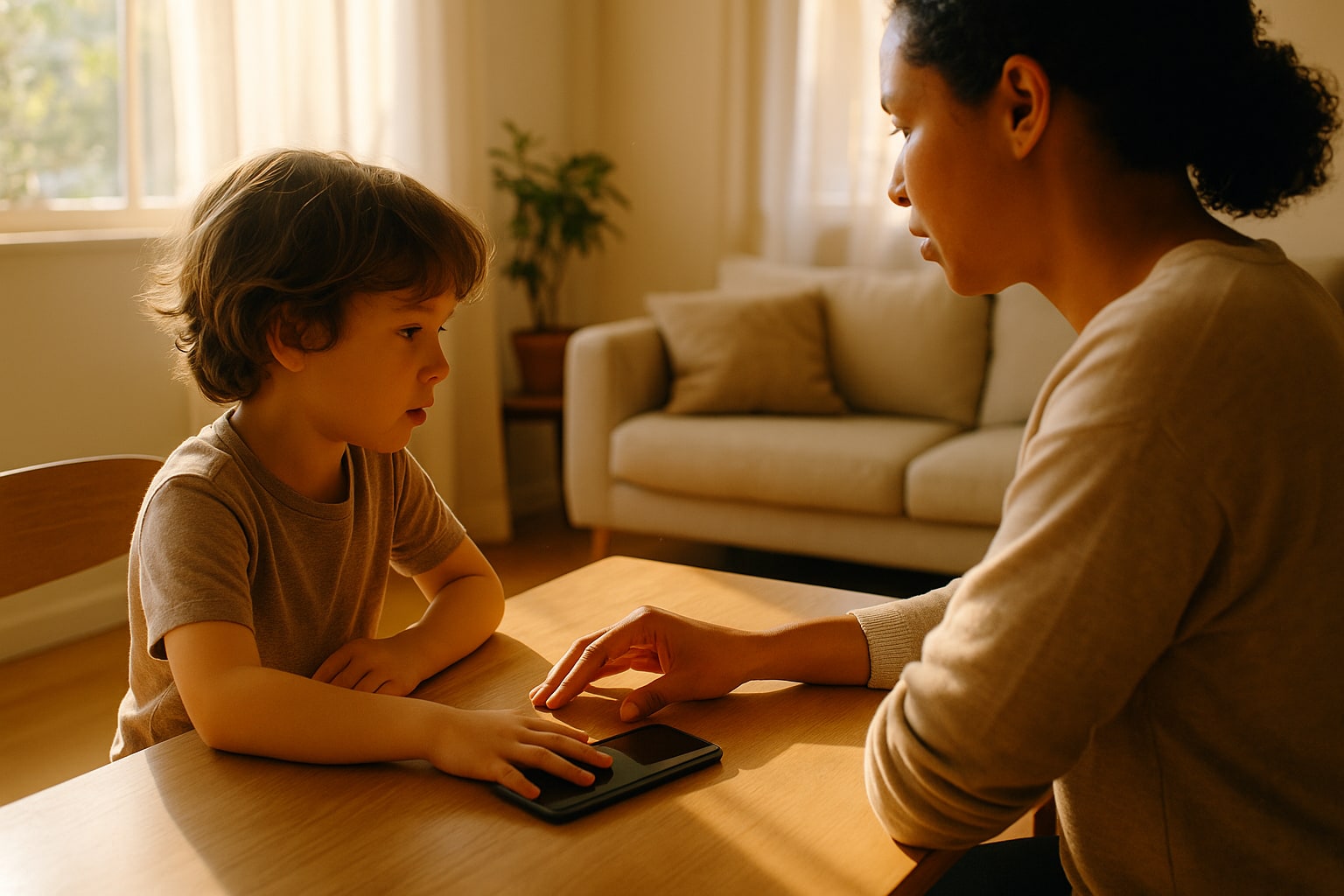
The question comes sooner than you expected. Sometimes at 8, sometimes at 10, almost always with the line “but all my friends already have one.” And there you are, searching on Google whether giving your child a phone at 11 is a good idea, a bad idea, or something in between.
The short answer is that the recommended age for a first smartphone is between 12 and 14 years old, according to the consensus of the Spanish Association of Paediatrics (AEP), the American Academy of Pediatrics (AAP) and UNICEF’s guidelines on childhood and screens. The long answer is the one that matters to you: it depends on the child, the environment, the type of device and the level of support. Let’s go step by step.
Summary by age: what paediatric consensus recommends
Before going into the nuances, this table summarises what the main paediatric and public health guidelines say in 2026:
| Age | Own phone? | Recommended alternative |
|---|---|---|
| 0-6 years | No | No screens before 2 years; very limited and supervised use afterwards |
| 6-9 years | No | Occasional use of the family phone, with an adult present |
| 9-11 years | Only if there is a real need | Watch with calls or basic phone without internet |
| 12-13 years | Worth considering, without social media | Smartphone with strict parental controls |
| 14-16 years | Yes, with support | Smartphone with clear usage agreements |
| 16+ years | Yes, with progressive autonomy | Open conversation about risks |
What the AEP, the WHO and other organisations say
The AEP, through its Family Digital Plan, recommends delaying the first smartphone as long as possible and in no case before the age of 12. The WHO does not set a specific age for a mobile phone, but it does establish that children under 2 should have no contact with screens and that between 2 and 5 years use should be less than one hour per day.
The American Academy of Pediatrics insists that the problem is not only age, but also the type of content and the amount of exposure. And UNICEF, in its report on safe digital environments, highlights that access to social media before the age of 13 is associated with more problems of self-esteem, sleep and anxiety.
In Spain, family movements such as “Adolescencia Libre de Móviles” (Adolescence Free of Mobile Phones) have driven a public debate that has led many autonomous communities to ban mobile phones in schools up to secondary level.
Why age matters (and why it is not the only factor)
The adolescent brain continues to mature until well past the age of 20. The areas responsible for self-control, emotional management and weighing consequences are the last to develop. A smartphone with free access to the internet and social media is, essentially, an open door 24/7 to stimuli designed to capture attention.
That does not mean a 10-year-old with a phone will certainly have problems. It means the risk is greater the earlier the phone is handed over and the less support there is behind it. And that support matters more than the date of the birthday.
From 0 to 6 years: neither a personal phone nor loose screens
In this age range there is no debate. No paediatric body recommends a personal phone. The WHO is clear about children under 2: zero screens. Between 2 and 5, very limited use, always supervised by an adult, with quality content.
If you need a break (we all do), it is better to have a specific, limited cartoon session than to hand over the phone “so they can keep themselves entertained”. The difference lies in controlling the time and the content.
From 6 to 9 years: no phones, but other options are fine
At this age, most children do not need a personal phone. If the reason is safety (they go to school alone, they stay at home for a while), there are alternatives:
- Children’s smartwatches with calling to authorised numbers and GPS location.
- Basic phones without internet access, only calls and SMS.
- Shared family phone for occasional calls.
If you have doubts about how to choose a good school to also support these early years of socialisation, you might find it helpful to read about how to tell whether a school fits the way your child learns.
From 9 to 11 years: the grey area
This is where the real social pressure begins. Many classmates already bring a phone to school, there are class WhatsApp groups and your child feels left out. It is hard.
The paediatric recommendation is still to wait. But if, due to family circumstances (shared custody, extracurricular activities, travelling alone), you need them to have a device, consider:
- A phone without social media installed.
- Active parental control from day one.
- No phone in the bedroom at night.
- Limited usage time in set slots.
From 12 to 14 years: the usual moment for a first smartphone
This is the age range in which most families in Spain take the step, coinciding with the move to secondary school. The AEP considers this age reasonable provided it comes with clear agreements and parental control.
Key points for this stage:
- Set up the device together before handing it over.
- Agree on usage times (nothing during meals, nothing in the bedroom at night).
- Delay social media until at least 13-14 years old (most platforms require that minimum age in their legal terms, although almost nobody verifies it).
- Talk about privacy, inappropriate content, sextortion and cyberbullying. Without fear, and with clarity.
From 14 to 16 years and beyond: towards autonomy
From 14 onwards, most teenagers already use their phone regularly. The aim here is not to control every move, but to support. Gradually withdraw parental controls, keep the conversation open and trust (with healthy caution).
It is an age at which other challenges also appear: less interest in family plans, more independence. If you are looking for ideas that actually work, we have a guide with plans with teenagers who actually want to do them.
Real risks of early phone use
It is not about dramatising, but about knowing what the evidence supports:
- Sleep disruption: blue light and night-time use delay falling asleep.
- Lower school performance due to fragmented attention.
- Exposure to inappropriate content: pornography, violence, dangerous viral challenges.
- Cyberbullying: one in three Spanish teenagers says they have suffered or witnessed it, according to data from the Ministry of Health.
- Impact on self-esteem due to constant comparison on social media.
- Grooming and sextortion: contact from adults with sexual intentions or blackmail.
Parental control: what to activate from day one
Before handing over the phone, take some time to set it up. The basic options:
- Google Family Link (Android) or Screen Time (iOS): usage limits, download approval, content filters.
- Purchase restrictions within apps.
- Safe search filters in the browser and YouTube.
- Turn off location sharing on social media.
- Review permissions for each app (microphone, camera, contacts).
Parental control does not replace conversation. It complements it.
Common mistakes when giving the first phone
- Handing it over unconfigured and “we’ll see”.
- Using it as a constant reward or punishment.
- Banning it completely without explaining why.
- Not setting an example (adults’ phones at the table, in the car, in bed).
- Letting it charge in the bedroom at night.
Frequently asked questions
Is it illegal for a child under 14 to have social media? In Spain, the law requires 14 years old to consent to the processing of personal data, which in practice sets the legal minimum age for opening accounts on most networks. Platforms usually ask for 13 in their terms, but they do not verify age.
My son says he’s the only one in the class without a phone. Is that true? Rarely. According to the INE, in Spain around 25% of 10-year-olds have their own phone, a figure that rises to 70-75% at 12 and exceeds 90% at 14. In other words: at 10, most still do not have one.
Is a smartwatch a useful alternative to a phone? Yes, especially between 7 and 10 years old if you need to locate them or let them make calls. It meets the practical need without opening the door to the internet and social media.
What should I do if I gave the phone too early and now I see problems? It is never too late to readjust. You can remove apps, limit hours, take it away at night or even switch to a more basic device for a while. Explain why and do it through support, not as punishment. If you notice signs of anxiety, isolation or significant changes in mood, consult the paediatrician.
What if the school needs it for homework? For schoolwork, a shared family computer or tablet is usually enough, with no need for a personal smartphone. Check with the school what exactly is required before assuming a personal phone is necessary.