Playing with kids on very hot days: how to get out without it becoming an ordeal
A practical guide to enjoying summer as a family when the thermometer shows no mercy: safe time slots, hydration, warning signs, and refreshing plans for all ages.
There are summer days when opening the front door feels like peering into an oven. And with young children, the question keeps coming back: should we go out, stay in, or what can we do so the day doesn’t drag on forever? Plans with kids on very hot days are possible, but they take a bit of strategy: choosing the right time and place and, above all, respecting what little bodies can handle.
This guide gives you concrete guidelines for getting around sensibly when the heat bears down, following the recommendations of the Spanish Association of Paediatrics (AEP) and the Ministry of Health, along with a good list of plans for indoors and outdoors.
Why heat affects children more
Children, especially those under 4, regulate their body temperature worse than adults. They sweat less in proportion, dehydrate faster, and often aren’t aware they’re thirsty until they’ve been in the sun for a while. The AEP reminds us every summer: babies under 6 months are the most vulnerable group and should not be exposed to direct sun.
On top of that, when they’re playing, children don’t stop. And “not stopping” at 35 degrees has consequences.
Quick summary: what to consider before going out
| Factor | Recommendation |
|---|---|
| Safe time slot | Before 11:00 a.m. and after 7:00 p.m. |
| Hours to avoid | 12:00 to 5:00 p.m. (peak radiation) |
| Hydration | Water on demand, every 15–20 min if active |
| Sun protection | SPF 50+, reapply every 2 h and after swimming |
| Clothing | Light-coloured, loose cotton or linen, hat and UV-filter sunglasses |
| Most vulnerable age | Under 4s, especially babies aged 0–6 months |
Time slots: when it’s fine and when it isn’t
The basic rule is simple. Between 12:00 and 5:00 p.m., it’s best to stay indoors. Solar radiation is at its highest and temperatures tend to keep rising until mid-afternoon. If you’re going out with the little ones, prioritise the early morning or after 7:00 p.m., when the sun goes down and the shadows lengthen.
During heatwaves, this risk window can be extended. Check the AEMET warnings: when there is an orange or red alert, outdoor plans are ruled out for the youngest children.
Hydration: how much water and when
There’s no need to force them to drink litres. What works is offering water frequently. If you’re outside playing, every 15–20 minutes. If there’s a pool or beach, too: water gives a sense of hydration but doesn’t provide it.
For babies who are exclusively breastfed, feeding on demand covers their needs, although it’s normal for them to ask more often on hot days. For formula-fed babies, check with your paediatrician whether it’s advisable to offer a little water depending on their age.
Summer fruit (watermelon, melon, peach), mild gazpacho and homemade ice lollies are great allies. Avoid sugary soft drinks and very cold drinks all at once.
Signs of heatstroke: when to worry
This is important to be clear about. If your child shows any of these signs after some time in the sun or in intense heat, act:
- Very hot, dry skin (or excessively red and sweaty)
- Body temperature above 38.5–39 °C with no other apparent cause
- Headache, dizziness, confusion or unusual drowsiness
- Nausea or vomiting
- Muscle cramps
- Rapid pulse and fast breathing
- In babies: irritability, weak crying, sunken fontanelle, nappy dry for hours
What to do? Move them somewhere cool, remove excess clothing, cool them with damp cloths (never ice-cold water) and offer fluids if they’re conscious. If they don’t improve within a few minutes or there is vomiting, confusion or loss of consciousness, call 112. When in doubt, call your paediatrician or go to A&E.
Outdoor plans that work in the heat
If you decide to go out during the good hours, there are options that never fail:
- Municipal swimming pools: cheap, shaded and with lifeguards. Best first thing in the morning.
- Beach early or late in the day: parasol, water, and back home before it gets too hot.
- Rivers, rock pools and natural swimming holes: they usually have natural shady areas and a milder temperature.
- Shaded parks and fountains: many towns and cities have play areas with pergolas or tree cover.
- Short walks through leafy woodland or canyons: the temperature difference can be 5–7 °C compared with open areas.
For milder days or short trips, lighthouses and coastal villages are another option, with a sea breeze almost guaranteed.
Refreshing indoor plans
When the thermometer doesn’t drop below 35 °C, the best thing is to change tack:
- Public libraries: air-conditioned, free and with a children’s area in many cities.
- Children’s museums: science, art, interactive exhibits. They usually have air conditioning and scheduled summer activities.
- Shopping centres with play areas: not the most stimulating plan, but it works for burning off energy.
- Cinemas: summer matinee sessions at reduced prices.
- Playrooms and municipal cultural centres: ask your local council, many offer free workshops.
If you’re looking for more local ideas, take a look at these plans for rediscovering your neighbourhood as a family.
Home plans for impossible days
Sometimes the best thing is to surrender to the air conditioning or the fan and set up the plan at home:
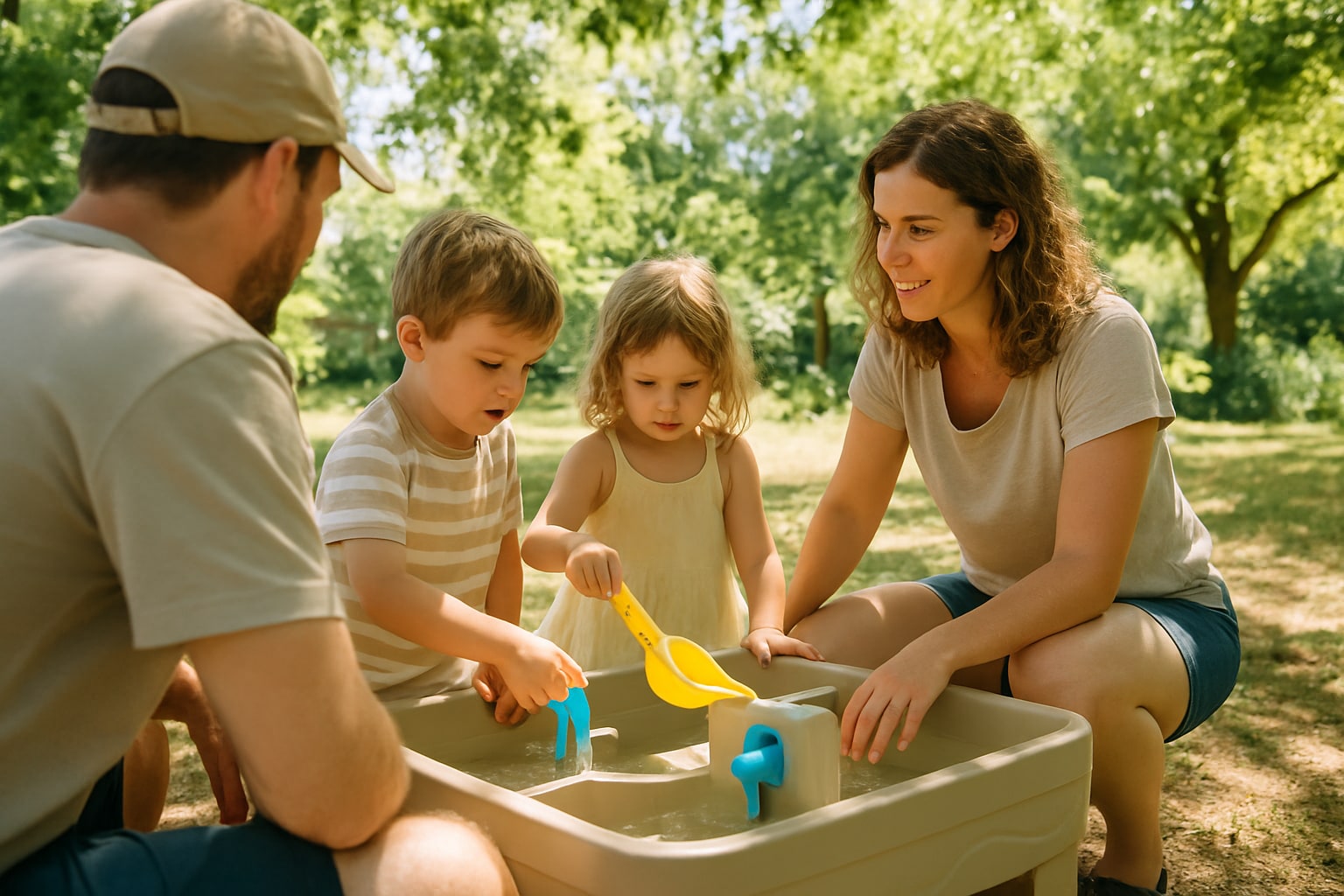
- Sensory tray with water and ice: bowls of cold water, coloured ice cubes (with food colouring), sponges and plastic toys. Ideal for 1–4 year olds.
- Painting with ice: freeze water mixed with poster paint in ice cube trays, add lolly sticks, and paint on thick paper.
- Small paddling pool on the terrace or patio (always with direct supervision and in the shade).
- Ice lolly and fruit smoothie workshop: get them involved in the recipe.
- Afternoon of crafts, reading or board games.
- Homemade tent with sheets: inside, books, stories and torches.
Babies under one year: extra care
Babies deserve their own section. No direct sun for under-6-month-olds. For those aged 6–12 months, use a specific child sunscreen, shade, a hat and loose clothing that covers them. Never leave them inside a car, not even for a minute: the temperature inside can rise 10 °C in 10 minutes.
If you notice your baby is very listless, has hot skin, cries without tears or has gone more than 6 hours without a wet nappy, call the paediatrician.
Frequently asked questions
Can I take my 3-month-old out for a walk if it’s very hot? Best first thing in the morning or at dusk, always in the shade and with a well-ventilated pram (don’t cover it with muslins, as they raise the temperature inside). If there is an extreme heat warning, stay at home.
Should I put a cap or hat on them? A wide-brimmed hat is better than a cap. It also protects the neck and ears.
Is it bad if they eat less in the heat? It’s common for appetite to drop. As long as they drink well and keep their energy up, don’t worry. Prioritise fresh, light meals with plenty of fruit and vegetables.
Can I cool my child down with very cold water? It’s not advisable. Lukewarm or cool water is better, never ice-cold, to avoid a sudden change in temperature.
What sun protection should I use for babies? From 6 months, a mineral child sunscreen (zinc oxide or titanium dioxide), SPF 50+, water-resistant. For under-6-month-olds, prioritise shade and clothing; consult your paediatrician before using any cream.