Visiting vineyards and wineries as a family: can children come along?
Can you do wine tourism with children in Spain? We answer the legal question, which wineries are family friendly, and what activities are designed for little ones.
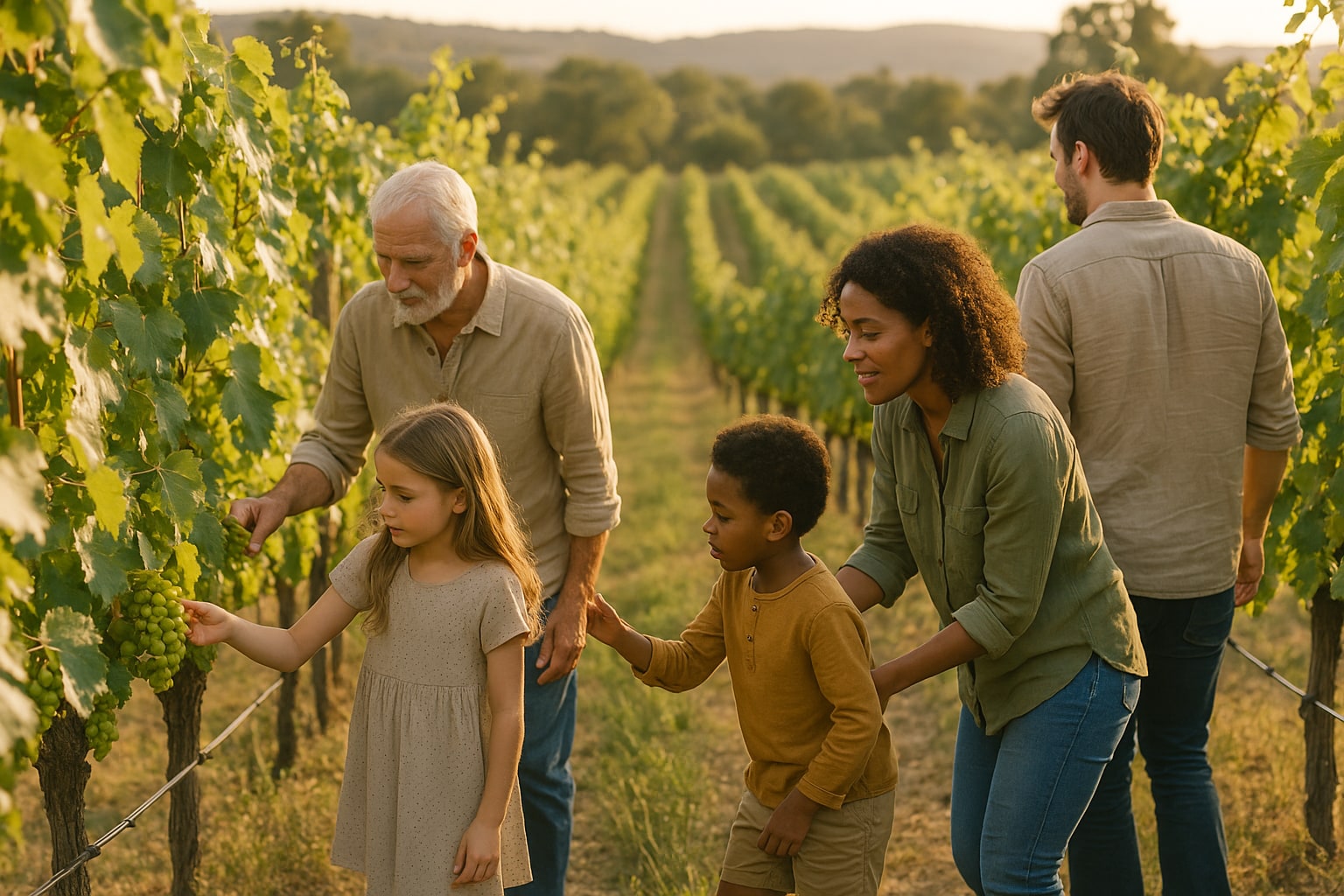
You fancy a rural getaway, you’ve seen gorgeous photos of vineyards in autumn, and the doubt creeps in: can I take the kids to a winery? Will they let them in? Will they get bored out of their minds while the adults taste wine?
The short answer is yes, you can. Family wine tourism has been growing in Spain for years, and many wineries have adapted their visits so that little ones can enjoy them too. But it’s worth knowing what to expect, what to ask before booking, and how to choose the right place depending on age.
Is it legal to take children to a winery?
Yes, it’s completely legal. A winery is not a bar or an alcohol-consumption venue in the strict sense: it is an agri-food production space that offers tourist visits. Minors may enter accompanied by a responsible adult.
What Spanish regulations prohibit is alcohol consumption by anyone under 18. In other words, children can visit the facilities, see the vineyards, walk among the barrels and attend the explanation. What they cannot do is taste wine. Full stop.
Some wineries, as a matter of internal policy, ask that minors always go accompanied and supervised, especially in areas with tanks, machinery or stairs. It’s common sense.
Quick facts: family wine tourism
| Item | Value |
|---|---|
| Usual minimum age | No legal minimum; each winery decides |
| Average visit duration | 60-90 minutes |
| Approximate adult price | 10-25 € |
| Approximate child price | Free up to 8-12 years old at many wineries |
| Best season | Spring and harvest (September-October) |
| Advance booking | Almost always required |
What a guided vineyard visit for families usually includes
A standard visit combines three blocks: a walk through the vineyard, a tour of the winery (tanks, barrel room, bottling) and a final tasting for adults. At family-friendly wineries, this structure is adapted.
It is customary for children to be offered must, grape juice or soft drinks during the adults’ tasting. Some include specific materials: magnifying glasses to look at the grapes, activity booklets, small smell-and-game sets or explanations adapted by the guide.
Ages: what to expect at each stage
Not every age experiences the visit the same way. This is what usually works:
- 0-2 years: feasible if you bring a baby carrier (vineyard floors are not friendly to strollers). The visit will be more for you than for the little one.
- 3-6 years: they enjoy the vineyard, walking on soil and seeing animals if the winery has them. The technical part bores them quickly. Better to choose short visits of 45-60 minutes.
- 7-11 years: the ideal age. They understand the process, ask questions and enjoy the “scientific” side of fermentation.
- 12 years and up: they can follow a full visit without trouble, although the tasting still isn’t for them.
Family-friendly wineries: what to look for before booking
Not all wineries are prepared to receive children, even if they let them in. Before booking, check whether they offer:
- An adapted visit or a parallel children’s workshop.
- Green areas or a picnic space where little ones can move around.
- A high chair and kids’ menu if food is included.
- Animals (hens, sheep, winery dogs) or a visitable vegetable garden.
- A changing table and accessible toilet.
- Reduced or free price for minors.
Many wineries in Rioja, Ribera del Duero, Penedès, Rías Baixas, Jerez and Rueda already offer experiences labelled “en familia” or “con niños”. Call or write beforehand: a direct question (“do you have an activity for a 6-year-old?”) will save you surprises.
Activities for children at wineries: more than just looking at barrels
The most interesting proposals for little ones usually are:
- Children’s harvest (September-October): picking grapes with child-sized scissors under supervision. It’s the star attraction.
- Treading grapes in traditional lagares. Children love it, and it makes a memorable photo.
- Tastings of musts and juices with smell and colour games.
- Label workshops: they design their own label and take home a bottle of must.
- Tourist train rides through the vineyard, very comfortable with small children.
- Farm schools attached to rural wineries.
If you plan to combine the getaway with other activities, you may want to look at this guide to visiting charming villages as a family, since most wine routes pass through historic town centres that are well worth visiting.
Best time of year to go with children
- Spring (April-June): green vineyard, pleasant temperatures, few crowds.
- Harvest (September-October): the most appealing, but book weeks in advance.
- Summer (July-August): intense heat in areas like Jerez or Ribera. Visit first thing in the morning.
- Winter: bare vineyard, less striking, but a quiet winery and lower prices.
Safety: the basics to remember
Wineries have areas with real risks: deep tanks, wet floors, stairs, machinery. Children must go holding hands or very close to an adult at all times. No running.
In fermentation rooms there can be high concentrations of CO₂; guides know perfectly well which areas are visited with minors and which are not. Follow their instructions without hesitation.
If you go during the harvest, wear closed shoes, a cap and bring water. The vineyard at midday in September is punishing.
Wine tourism while pregnant
You can visit wineries while pregnant without any problem. What you should not do is taste wine (not even a “symbolic” sip): according to the WHO and SEGO, there is no safe dose of alcohol in pregnancy. Ask for must or water and enjoy the walk.
If you are planning a getaway while pregnant, you may be interested in this article on travelling pregnant by car and by plane.
Frequently asked questions
Do wineries let babies in? Almost all do. Bring a baby carrier instead of a stroller, because vineyard floors and some indoor areas are not accessible with wheels.
Do children pay admission? It depends on each winery. Usually it is free up to 8-12 years old or they pay a reduced fee (3-8 €). Ask when booking.
Can a 16-year-old taste a sip of wine during the tasting? No. Spanish law prohibits alcohol consumption by anyone under 18, including in family and tourist settings. Responsible wineries do not offer it.
What happens if the child gets bored halfway through the visit? Let the guide know before starting. Wineries used to families usually have a room, a courtyard or a garden where you can wait. If two adults are going, you can take turns.
Is booking always necessary? Yes, practically always. Wineries work with closed groups and set times. Book at least a week ahead, and a month ahead if you go during the harvest or a long weekend.