Family-friendly plans near home: how to rediscover your neighbourhood together
Practical ideas for enjoying family leisure time without taking the car: routes, games and local plans suited to each age to rediscover your neighbourhood with children.
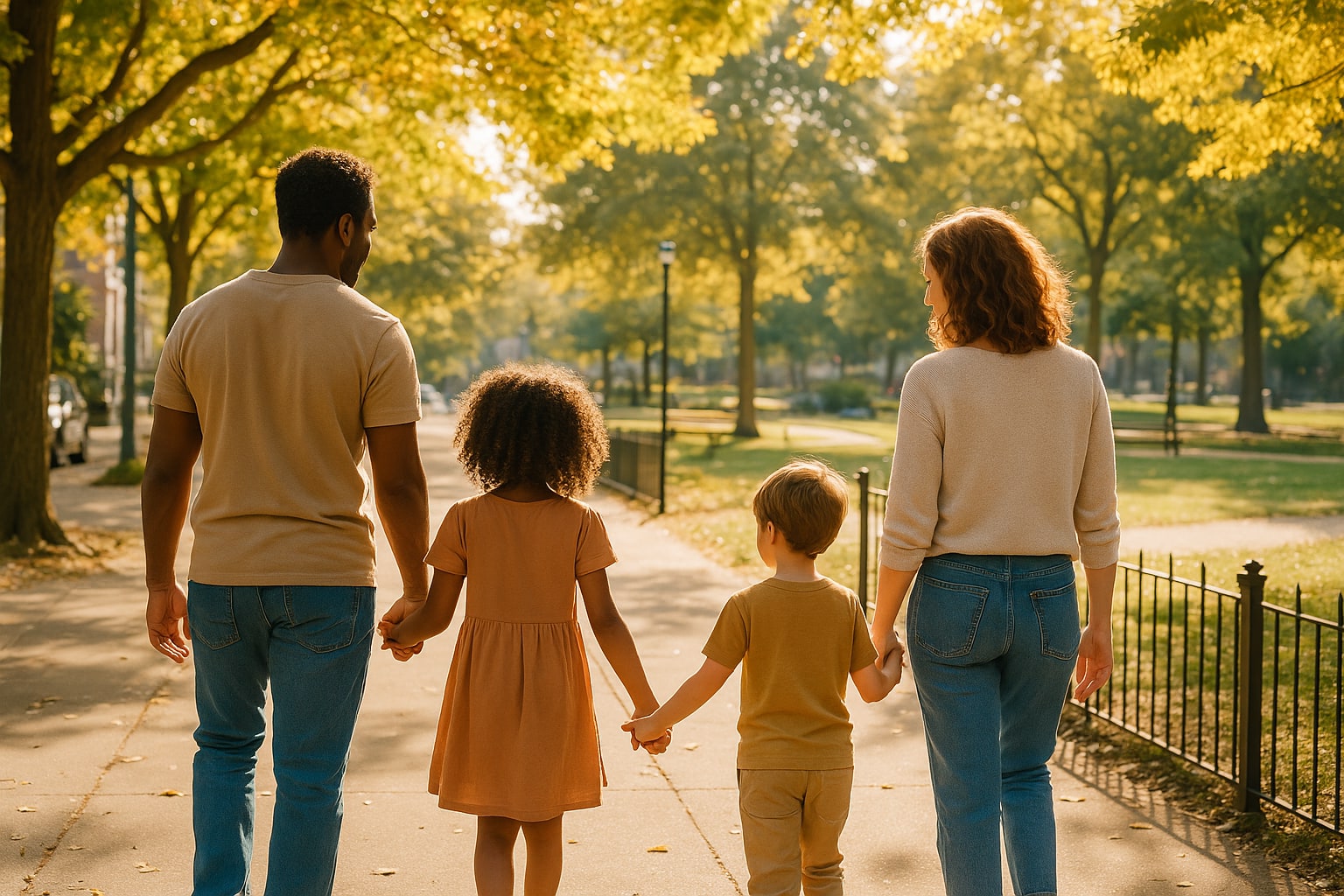
There are Saturdays when the mere idea of strapping the kids into the car to “do something cool” feels exhausting. The good news: you don’t need to go far. Your neighbourhood has much more to offer than you remember, and family plans close to home tend to work best when everyone is tired, naps are pending or the budget is tight.
This guide is designed for families with children aged 0 to 14. You’ll find age-based ideas, tips for turning routine into adventure, and resources you probably already have within five minutes’ walk.
Why local leisure works (especially with young children)
Long journeys wear adults out and throw little ones off: changes in sleep, unusual meals, overstimulation. A short plan close to home avoids all of that.
Moreover, moving around your usual surroundings helps children build a mental map, autonomy and a sense of belonging. The American Academy of Pediatrics stresses the value of unstructured outdoor play, and for that you don’t need a natural park: a square, a local park or a quiet street will do.
Quick summary: plans by age, time and budget
Before going into detail, here is an indicative table to help you decide on the spot.
| Age | Typical plan | Duration | Material | Cost |
|---|---|---|---|---|
| 0-2 years | Sensory walk around the neighbourhood | 30-60 min | Pram or baby carrier | €0 |
| 2-5 years | Urban treasure hunt | 45 min | Hand-drawn list | €0 |
| 6-9 years | Bike ride around the neighbourhood | 1-2 h | Bike and helmet | €0 |
| 10-14 years | Mini photo report | 1 h | Phone or camera | €0 |
| All | Visit to the municipal library | 1 h | Library card | €0 |
Rediscovering the neighbourhood with children: change your outlook, not your destination
The trick is to switch from “errand mode” to “exploration mode”. Same route, different attitude.
Try heading out without a specific goal. Letting your child choose which corner to turn at, which doorway to look at or which shop window to observe completely changes the experience. In 20 minutes you’ll discover things you hadn’t noticed for years.
Family activities around the neighbourhood by age
Babies and children up to 2 years old
At this age, what matters is gentle stimulation. A slow walk through a tree-lined area, stopping to touch leaves, listening to birds or looking at a shop window with lights is already a great outing. Between 6 and 18 months it becomes very evident how much they are drawn to movement in their surroundings.
From 2 to 5 years
A golden age for observation games. You can prepare a homemade treasure hunt: a list with drawings (a red door, a cat, a bike, a very big tree) that they tick off. It lasts as long as your patience does, and that already counts as a win.
From 6 to 9 years
This is where challenges come in. A bike or scooter ride along quiet streets, a route past the neighbourhood’s fountains, or a “who finds it first” game with streets named after trees. Visits to the market to buy an ingredient and cook it together when you get back also work very well.
From 10 to 14 years
Pre-teens and neighbourhood outings are not incompatible if you give them a leading role. Ask them to organise the outing themselves: a route of comfortable benches, a mini photo report on “the neighbourhood in autumn”, or finding commemorative plaques on building facades and then researching them at home.
Local family plans that (almost) never fail
There are underused public resources. They are worth knowing about:
- Municipal library: storytelling sessions, board game loans, a children’s area with cushions. Free.
- Civic centres: weekend family workshops, many at no cost.
- Parks and squares: not just the swings. An improvised game of football, drawing with chalk, bringing bubbles.
- Covered markets: a visit with a mission (“choose a fruit we’ve never tried”) turns shopping into a plan.
- Urban gardens and green areas: many councils offer guided tours for children.
If you’re looking for more options without spending money, you may be interested in this compilation of free plans with children in Spain.
Local children’s leisure when it rains or is cold
The weather shouldn’t cancel the plan. Indoor alternatives within five minutes:
- An afternoon at the library followed by a snack at home.
- A visit to a local stationery shop or bookshop to choose a sticker or a bookmark.
- Coffee and churros with the little ones if the corner café welcomes children (those that accept pushchairs are gold).
- A route of beautiful doorways (yes, it exists and it’s addictive).
What to do with children in the neighbourhood without spending anything
Money isn’t a requirement. Some ideas that cost nothing:
- Reverse treasure map: draw together a map of the neighbourhood marking the “family’s favourite places”.
- Walk diary: a notebook where each person writes or draws something new they saw.
- The 100-step challenge: you head out, count 100 steps in one direction and explore whatever is there.
- Collecting leaves, stones or flowers (without uprooting anything living) and making a collage when you get back.
- Watching roadworks: many children are fascinated by seeing a crane at work. Ten minutes and then home.
Tips to make the plan really work
Three things adults learn along the way:
- Lower your expectations. Half an hour of fun is better than two forced hours.
- Travel light. Water, a snack, tissues. That’s all.
- Let them set the pace. If they want to stop for ten minutes to watch a building site, stop. That is the plan.
And if at some point the plan goes wrong (because it sometimes does), it’s fine. Heading home early is also a valid option. The aim is not to “make the most of the day”, it is to be together without stress.
Frequently asked questions
From what age can I take my baby out for a walk?
Unless your paediatrician advises otherwise, you can go outside from the first few days, protecting against sun, cold or wind depending on the season. A gentle walk is also beneficial for the adult.
How long should a plan with young children last?
It depends a lot on the child, but between 2 and 5 years most children enjoy outings of 45-90 minutes more than long days. Better to repeat than to stretch it.
What if my son gets bored in the neighbourhood because he “already knows it”?
Try switching his role: let him guide, decide the route or propose a challenge. Boredom is often a lack of leadership, not a lack of stimulation.
Is it better to plan the outing or improvise?
Both work. With babies and very young children it helps to have a rough idea (where the toilets are, where to sit). From age 6 onwards, improvising is usually part of the game.
What do I do if there are no parks or green areas near my neighbourhood?
You can rely on covered resources: libraries, civic centres, markets, small shops. And plan short public transport trips to the nearest green area as a weekly “mini excursion”.