Listeriosis and toxoplasmosis: which foods to avoid without going crazy
A practical guide to knowing which foods to avoid during pregnancy due to the risk of listeria and toxoplasma, with safe alternatives and handling guidelines according to the AEP and the Ministry of Health.
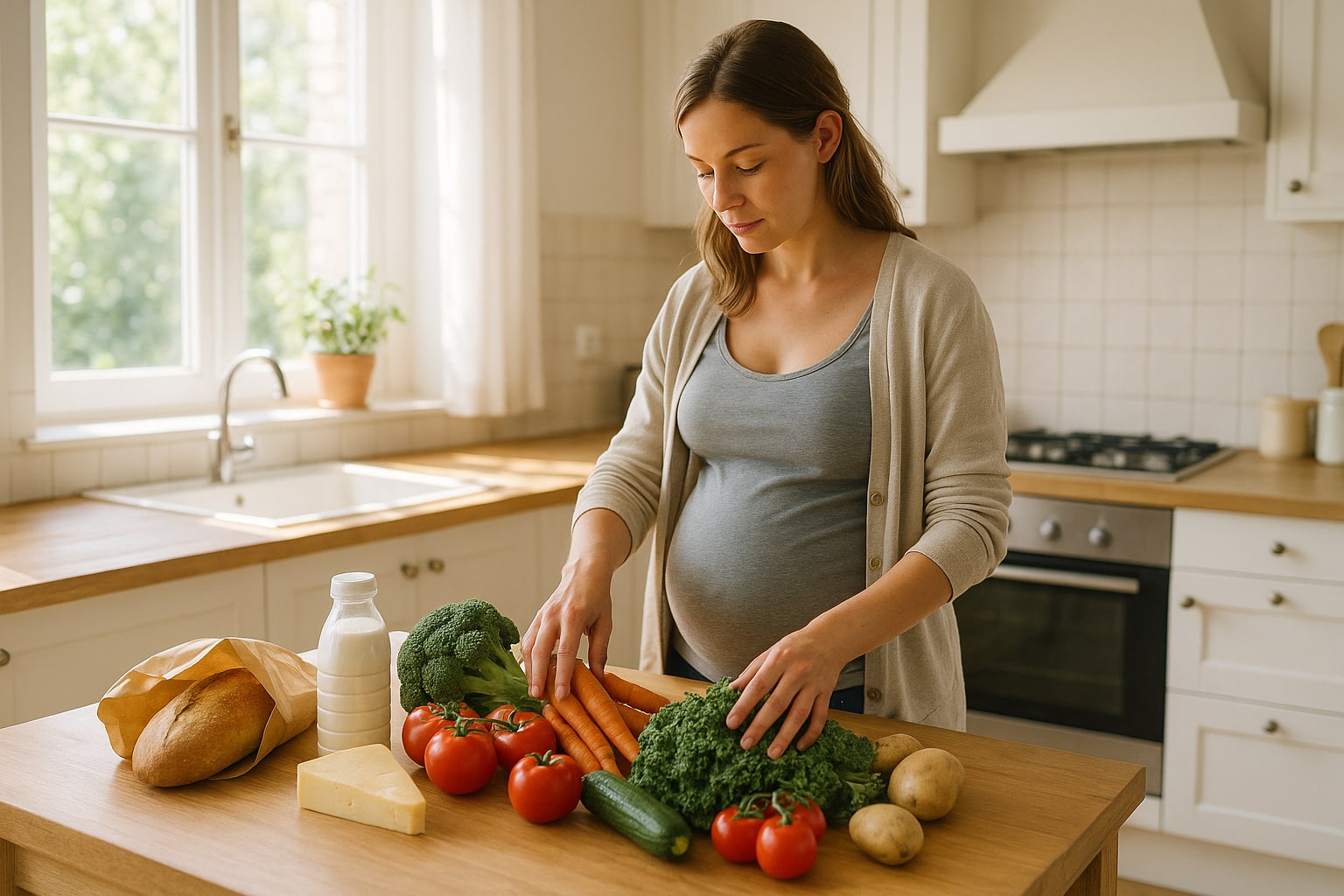
You’re pregnant and suddenly the fridge looks like a minefield. No ham, no cheese either, and that salad at the bar is best left alone… It’s normal to feel anxious. The good news: with a few clear rules, eating well and enjoying your food is still perfectly possible.
This guide summarises the recommendations of the Spanish Association of Paediatrics (AEP), the Ministry of Health, the WHO and the AESAN for preventing two infections that concern people during pregnancy: listeriosis and toxoplasmosis. No drama, with alternatives and common sense.
Why listeria and toxoplasma are a concern in pregnancy
Listeria monocytogenes is a bacterium that survives in the fridge (it grows even at 4 ºC) and is destroyed by heat. In the general population it causes little more than mild gastroenteritis, but during pregnancy it can cross the placenta and cause miscarriage, premature birth or severe neonatal infection. It is rare, but when it happens it is serious.
Toxoplasma gondii is a parasite transmitted mainly through raw or undercooked meat, poorly washed vegetables and contact with the faeces of an infected cat. If you catch it for the first time while pregnant, it can pass to the baby and cause congenital toxoplasmosis.
In Spain, systematic toxoplasma screening is no longer carried out in all regions because dietary prevention works very well. This is where you come in.
Quick summary: what to avoid and what you can eat
| Food | Allowed? | Reason |
|---|---|---|
| Cured cold cuts (ham, chorizo, salchichón) | Avoid unless cooked or frozen for 4 days at -20 ºC | Toxoplasma |
| Cheeses made with raw milk and soft cheeses | Avoid | Listeria |
| Cured and pasteurised cheeses | Yes | Safe |
| Undercooked or steak tartare | No | Toxoplasma |
| Raw fish (sushi, smoked fish, ceviche) | No | Listeria and anisakis |
| Refrigerated pâtés | No | Listeria |
| Raw fruit and vegetables | Yes, very well washed | Prevention |
| Raw or runny egg | No | Salmonella |
Foods to avoid due to the risk of listeria
Listeria lives in refrigerated ready-to-eat products. These are the ones to keep out of your basket:
- Raw-milk cheeses and soft cheeses such as brie, camembert, feta, blue cheese, burrata or fresh mozzarella (unless the label clearly states it is pasteurised).
- Refrigerated pâtés of any kind (long-life canned ones are fine).
- Refrigerated smoked fish: salmon, trout, smoked cod.
- Sliced cooked meats that have been open for days (turkey deli meat, York ham opened a week ago…).
- Prepared salads in bags or from a buffet if you don’t know how long they’ve been sitting out.
- Raw or cold-smoked shellfish.
As a rule: if it’s refrigerated, ready to eat and you’re not going to heat it, think twice.
Foods to avoid due to the risk of toxoplasma
Here the enemy enters mainly through meat and soil on vegetables:
- Raw or undercooked meat: tartare, carpaccio, steak tartare, rare burgers, roast beef pink in the middle.
- Uncooked cured cold cuts: serrano ham, Iberian ham, chorizo, salchichón, loin, fuet. Salting and curing do not reliably eliminate the parasite.
- Poorly washed fruit and vegetables, especially those eaten raw.
- Unpasteurised raw milk and its derivatives.
The ham trick: if you freeze it for at least 4 days at -20 ºC (a three- or four-star freezer), the toxoplasma is inactivated and you can eat it. Cooked ham also works (in croquettes, in a stew, on a baked pizza).
If you have never had toxoplasmosis (your first-trimester blood test will tell you), these measures are especially important.
How to cook and handle food to minimise the risk
Kitchen hygiene solves most of the problem:
- Cook meat to over 71 ºC in the centre of the piece. No “a bit pink in the middle”.
- Wash fruit and vegetables by rubbing them under the tap. For those eaten raw, you can soak them for a few minutes in water with a few drops of food-grade bleach (check the label) and rinse well.
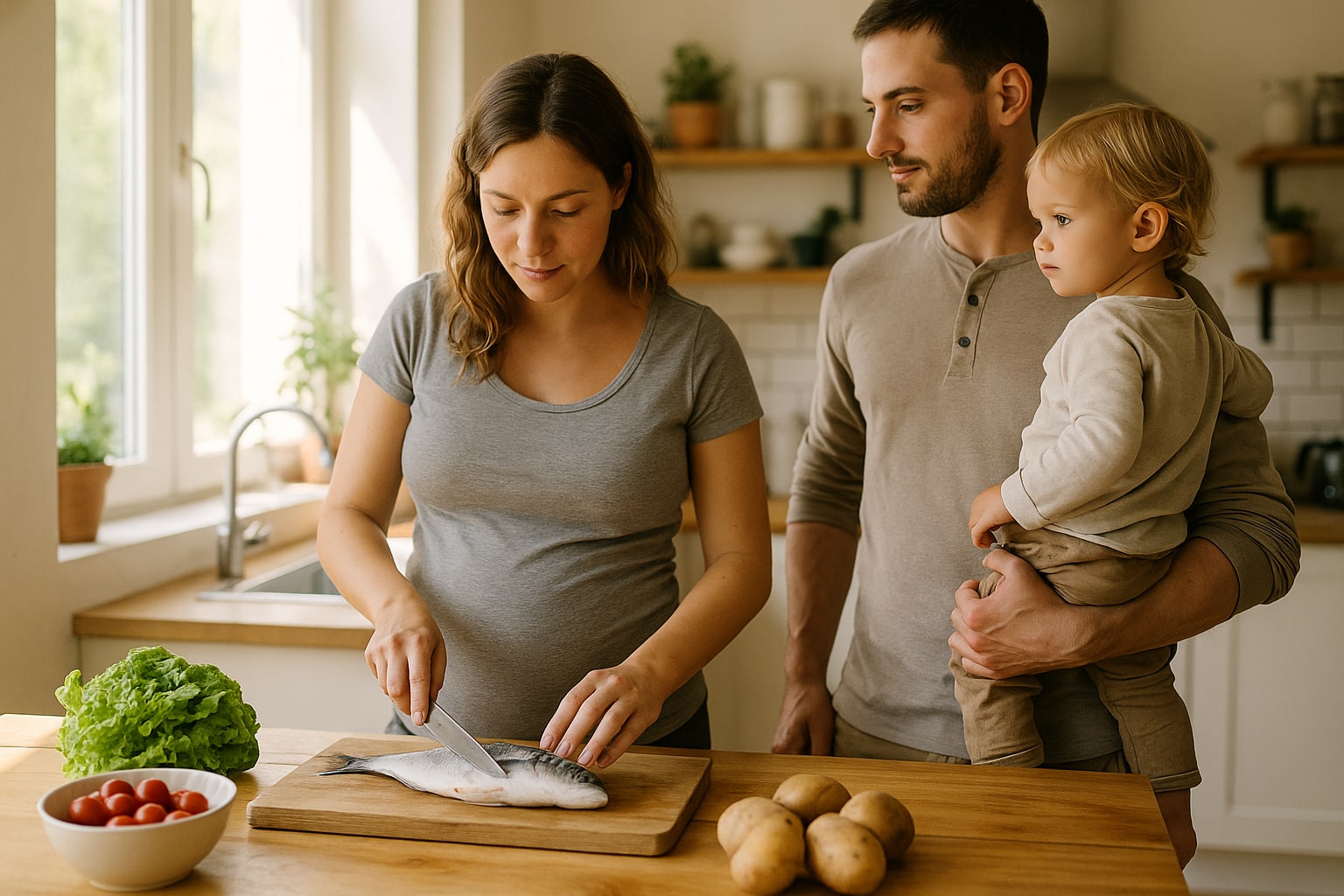
- Keep separate boards and knives for raw meat and everything else.
- Wash your hands after handling raw meat, soil or cats.
- If you have a cat, have someone else clean the litter tray every day (the parasite needs 24 hours to become infectious). You don’t need to give the cat away, really.
- Respect the cold chain and the use-by dates to the letter.
With fish, things change a little: there the main risks are anisakis and mercury. You’ll find this covered in this guide on which fish are and aren’t safe during pregnancy.
Eating out: how to order without stressing
Eating out is still possible. Some useful tips:
- Ask for your meat “well done” and don’t be shy about saying so.
- Avoid prepared salads whose handling you can’t check (better a simple salad you can see being made).
- No carpaccio, tartare, sushi, ceviche, nor cheeses you’re not sure are pasteurised.
- At buffets, be careful with anything that has been sitting at room temperature for a while.
- Omelettes and eggs, well cooked through.
If you have doubts about the coffee, tea or herbal infusions you order anywhere, here are the safe amounts of caffeine during pregnancy.
Common myths
“Iberian acorn-fed ham is so cured that it’s fine.” No. Curing does not guarantee the elimination of toxoplasma. Freeze it first or cook it.
“A little blue cheese won’t hurt.” The risk is low, but it exists. Better to wait.
“Rinsing lettuce with water is enough.” Rub it leaf by leaf. For extra safety, use water with a few drops of food-grade bleach and rinse.
“I have a cat, I have to give it away.” No. It’s enough that you don’t clean the litter tray yourself and that you wash your hands.
Frequently asked questions
Can I eat cooked ham (York) while pregnant? Yes, as long as it has been stored properly and you eat it soon after opening. If it has been open in the fridge for days, it’s better to heat it first.
What about avocado or vegetable sushi? The risk with sushi isn’t only the fish; it’s also the handling and the rice. Better to avoid it or choose cooked options (well-made tempura).
I accidentally ate something from the list, what should I do? Don’t panic. The likelihood of infection from a one-off exposure is low. Mention it at your next check-up with your midwife or gynaecologist, and consult sooner if you develop fever, chills or flu-like symptoms.
Are pasteurised aged cheeses safe? Yes. Aged Manchego, Parmesan, Grana Padano, Emmental or Gouda are not a problem.
How long should I keep these precautions up? Throughout the whole pregnancy. After delivery you can return to your usual diet with no restrictions for these reasons.