Preeclampsia: what it is, risk factors and the checks that detect it
Preeclampsia is a pregnancy complication that is detected through blood pressure checks and urine tests. We explain what causes it, who is at higher risk, and which warning signs you should not overlook.

If you are pregnant, you have probably had your blood pressure taken at every appointment. It is not a formality. It is the most effective way to detect preeclampsia early, one of the complications that midwives and obstetricians monitor most closely during pregnancy.
It usually appears from week 20 onwards and affects, according to data from the Spanish Society of Gynecology and Obstetrics (SEGO), between 2% and 8% of pregnancies. It is not rare, but it is manageable if detected early. That is why routine checks matter so much, even when you feel perfectly well.
What is preeclampsia?
Preeclampsia is a hypertensive disorder of pregnancy. It is characterised by high blood pressure (140/90 mmHg or higher) together with protein in the urine or other signs of involvement of organs such as the liver or kidneys.
It is not simply “having slightly high blood pressure”. It is a condition that can progress and requires specific medical follow-up. It differs from gestational hypertension in that the latter occurs without proteinuria or involvement of other organs, although both require close monitoring.
The exact cause is still being studied. Current evidence points to abnormal development of the placenta in the early weeks, which ends up affecting maternal circulation. It is not related to anything you did or did not do during pregnancy.
Symptoms of preeclampsia
Many pregnant women notice nothing at first, which is why check-ups are so important. When there are symptoms, these may include:
- Sudden swelling in the hands, face or legs (beyond the usual swelling of pregnancy).
- Severe headache that does not improve with usual painkillers.
- Visual disturbances: blurred vision, flashes of light or spots.
- Pain in the upper abdomen, below the ribs.
- Nausea or vomiting that appears suddenly in the third trimester.
- Very rapid weight gain over a few days, due to fluid retention.
None of these symptoms on their own automatically means preeclampsia. But if they appear, especially in combination, contact your midwife or the obstetric emergency service without waiting for your next appointment.
Risk factors for preeclampsia
Some conditions increase the likelihood of developing it, although none guarantees it. The team caring for you assesses these factors from the first visit to decide the type of follow-up you need.
| Risk factor | Why it matters |
|---|---|
| First pregnancy | The risk is higher in first pregnancies |
| Preeclampsia in a previous pregnancy | Markedly increases the likelihood of recurrence |
| Pre-existing chronic hypertension | Predisposes to vascular complications |
| Diabetes (pre-existing or gestational) | Affects vascular and placental function |
| Multiple pregnancy | Greater placental demand |
| Maternal age under 18 or over 35 | Associated with higher incidence |
| Obesity | Linked to greater vascular inflammation |
| Family history of preeclampsia | Suggests a genetic component |
Having one or more of these factors does not mean you will develop it. It means follow-up will be somewhat closer, which is exactly what you need to feel reassured.
How it is detected: blood pressure checks and urine tests
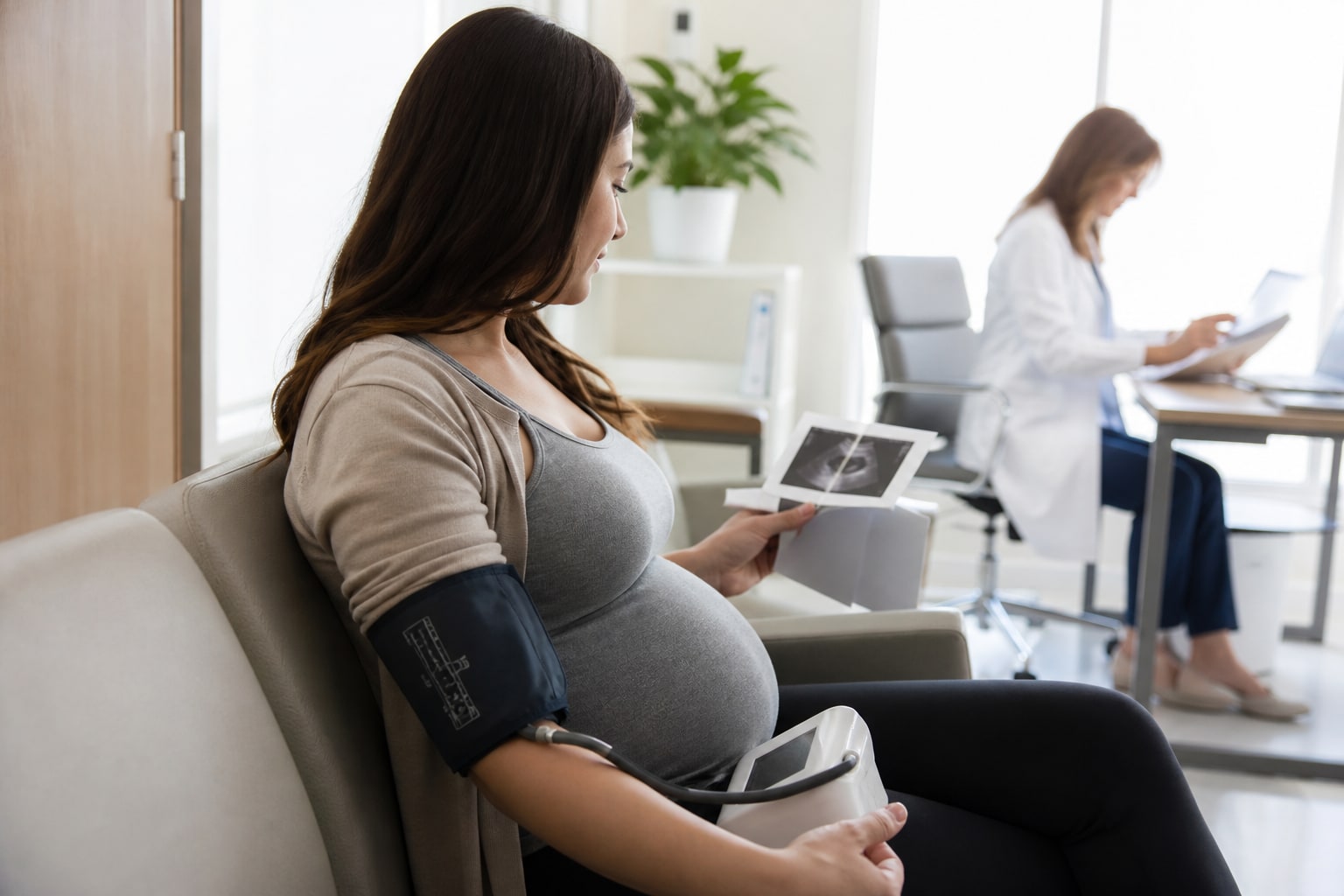
Detection is based on two pillars, present at every pregnancy check-up according to the Ministry of Health’s schedule:
- Blood pressure measurement at every prenatal visit, from the first trimester.
- Urine analysis to detect proteinuria, routinely performed at several check-ups throughout pregnancy.
If either of these checks gives an abnormal result, the obstetrician may request additional tests: blood tests for liver and kidney function, platelet count, or a flow study using Doppler ultrasound. None of these tests is invasive or poses an added risk to the pregnancy.
Treatment of preeclampsia
The only definitive treatment is delivery, once the baby is sufficiently mature. In the meantime, management aims to control blood pressure and monitor foetal wellbeing:
- Antihypertensive medication, always prescribed and adjusted by the obstetrician.
- Relative rest, as medically indicated (not always absolute bed rest).
- More frequent checks of blood pressure, blood tests and foetal monitoring.
- In severe cases, hospital admission for close monitoring.
Never start or adjust any medication on your own. Each case of preeclampsia is different, and the treatment plan depends on the week of gestation and the severity of the condition.
Consequences of preeclampsia
When well controlled, most pregnancies with preeclampsia reach a good outcome. Without follow-up, it can lead to more serious complications: restricted foetal growth, premature birth or, in the most severe cases, eclampsia (seizures) or HELLP syndrome. These situations are uncommon when prenatal care is adequate, and this is precisely what regular check-ups aim to prevent.
Common myths about preeclampsia
- “If I don’t have swelling, it can’t be preeclampsia”. False. It can develop without visible oedema.
- “It only affects high-risk pregnancies”. No. It can appear in pregnancies with no prior risk factors.
- “If I had preeclampsia before, it will always happen again”. Not necessarily, although the risk is higher and follow-up will be closer.
Frequently asked questions
From which week can preeclampsia appear? Generally from week 20 onwards, although most cases are diagnosed in the third trimester.
Can I prevent preeclampsia? There is no guaranteed way to prevent it, although in high-risk pregnant women the obstetrician may consider specific preventive treatments from the first trimester.
Does preeclampsia affect the baby? It can reduce blood flow to the placenta, which sometimes results in slower foetal growth. That is why additional monitoring is introduced when it is diagnosed.
Does it go away after delivery? Blood pressure usually returns to normal in the weeks after delivery, although medical follow-up is needed until full resolution.
Is it the same as gestational hypertension? No. Gestational hypertension does not include proteinuria or involvement of other organs, although both are monitored in a similar way during pregnancy.
If you are pregnant and have doubts about your rights during this medical follow-up, you may be interested in this article on work and pregnancy, employment rights and risk during gestation. And if you also have intense nausea that does not subside, you may find it useful to read about hyperemesis gravidarum, another complication that deserves specific medical attention.