Traveling while pregnant: plane, car and destinations for each trimester
A practical guide to traveling safely while pregnant: how late you can fly, how to position the car seat belt correctly, and which destinations to choose in each trimester.
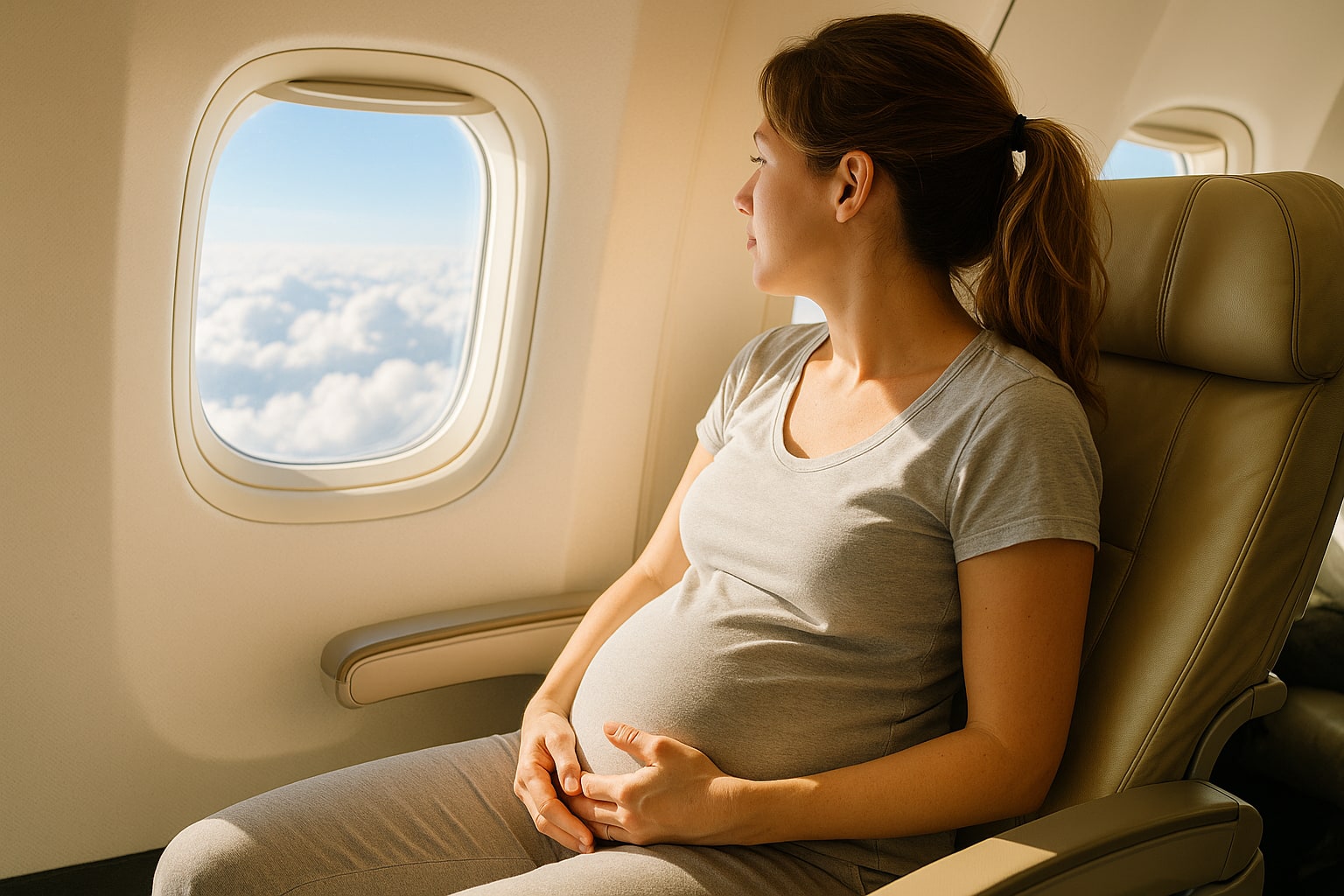
Traveling during pregnancy is, in most cases, perfectly possible. The Spanish Society of Gynecology and Obstetrics (SEGO) and the American College of Obstetricians and Gynecologists (ACOG) agree: an uncomplicated pregnancy is no reason to stay at home. What does change is the planning.
In this guide you will find the essentials to travel with peace of mind: which trimester is best for traveling, how late airlines will let you fly, how to put on the car seat belt without discomfort for your belly, and which destinations make sense (and which are better left for later).
Quick summary by trimester
Before going into detail, a general overview to orient you:
| Trimester | Weeks | Good time to travel? | Things to keep in mind |
|---|---|---|---|
| First | 1-13 | Yes, with caveats | Nausea, tiredness, higher risk of miscarriage (not caused by the trip) |
| Second | 14-27 | The best time | More energy, fewer symptoms, manageable belly |
| Third | 28-40 | With caution | Airline restrictions from weeks 28-36 depending on the airline |
Before booking: talk to your midwife or gynecologist
This is not a mere formality. If your pregnancy is low-risk, you will probably get the green light without further ado. But there are situations (placenta previa, preeclampsia, history of preterm birth, multiple pregnancy) in which you will be advised to avoid long flights or distant destinations.
Also request an up-to-date medical certificate stating your gestational week and the estimated due date. Many airlines require it from a certain week onward.
Traveling pregnant in the first trimester
The first trimester has a reputation for being difficult, but not because of travel. Nausea, extreme tiredness and dizziness can turn any journey into an ordeal. If you can choose, it is not the best moment for a long adventure.
Tricks that work:
- Pack bland snacks (crackers, nuts, fruit).
- Stay hydrated with small, frequent sips.
- Avoid strong smells during transport.
- Book aisle seats so you can get up without disturbing anyone.
The risk of miscarriage is higher in these weeks, but traveling does not increase it. What can happen is that, if it occurs far from home, the emotional and medical management becomes more complicated.
Traveling pregnant in the second trimester
Between weeks 14 and 27 lies the ideal window. Nausea has usually subsided, the belly does not yet weigh too much and energy returns. It is the time SEGO and ACOG recommend for the typical “babymoon” or any trip with some logistics involved.
Even so, do not be overconfident:
- Walk every 1-2 hours on long journeys to prevent blood clots.
- Wear compression stockings if you will be sitting for long periods.
- Drink more fluids than you think necessary.
Traveling pregnant in the third trimester
From week 28 onward, serious restrictions begin. Tiredness returns, the belly takes up real space and the (reasonable) fear of going into labor far from home appears.
From week 36 (34 in twin pregnancies), your midwife will usually advise against any trip that takes you more than an hour away from your reference hospital. Not out of whim, but in case things come early.
Flying while pregnant: how late you can fly
This is one of the most searched questions, and the answer depends on the airline. There is no single rule.
| Airline (indicative) | Flight without certificate | Flight with medical certificate | Absolute limit |
|---|---|---|---|
| Iberia | Up to week 28 | Weeks 28-36 | Week 36 |
| Vueling | Up to week 28 | Weeks 28-36 | Week 36 |
| Ryanair | Up to week 28 | Weeks 28-36 | Week 36 |
| Air Europa | Up to week 28 | Weeks 28-36 | Week 36 |
In multiple pregnancies, the limit drops to week 32 with most companies. Always check the airline’s policy before booking, as conditions change.
For the flight itself:
- Choose an aisle seat and walk every hour.
- Fasten the seat belt below the belly, over the hips.
- Drink water frequently (cabin air dehydrates).
- Move your ankles while seated to promote circulation.
Airport security detectors are safe during pregnancy, according to the U.S. Federal Aviation Administration.
Traveling by car while pregnant: seat belt and stops
The car offers more freedom, but requires its own precautions. The key is the seat belt, which you must always wear, even on short trips.
How to wear it correctly:
- The lap belt, below the belly, snug over the hips and pelvic bones. Never over the abdomen.
- The shoulder belt, between the breasts and to the side of the belly, never above or below the bump.
- The belt should sit firmly, not loosely.
On long trips, every 90-120 minutes: get out, walk for 5-10 minutes, stretch your legs and use the bathroom. It prevents cramps, swelling and, above all, reduces the risk of venous thrombosis.
If you are the front passenger, move the seat as far back as you can from the airbag.
Destinations for pregnant women: which ones are fine and which are better avoided
Not all destinations are a good idea. The WHO advises against traveling during pregnancy to areas with active Zika transmission (which affects fetal development) and to countries where malaria is a problem and requires prophylaxis incompatible with pregnancy.
Comfortable destinations:
- European cities with good transport links and healthcare (Lisbon, Paris, Rome, Amsterdam).
- Spanish coast with a nearby hospital.
- Rural getaways without steep slopes or risky activities.
- Spa resorts adapted for pregnant women.
Better to avoid:
- Destinations with active Zika (parts of Central America, Southeast Asia, parts of Africa).
- Countries requiring live-virus vaccines (yellow fever).
- Altitudes above 2,500-3,000 meters if you are not acclimatized.
- Safaris, diving, skiing and high-impact activities.
For touring Spain with peace of mind, tourist trains for traveling with children are also a comfortable option when there are older siblings in the family.
And before leaving, check that your travel insurance covers pregnancy and possible complications. Most standard policies exclude pregnancy from a certain week onward, so read the fine print or take out a specific policy.
Frequently asked questions
Can I fly in the first trimester if I have nausea? Yes, there is no medical contraindication. But weigh whether it is worth it: the discomfort can spoil the trip. If you decide to go, bring bags, water and something light to snack on.
Is the airport scanner safe? Yes. Both the walk-through detectors and body scanners use very low or no radiation levels, considered safe during pregnancy.
What if I go into labor on the plane? It is very rare, which is why airlines limit flights from week 36 onward. Crew are trained in first aid, but avoiding it is the purpose of the limit.
Can I drive while pregnant until the end? As long as you are comfortable behind the wheel and your reflexes are not compromised, yes. Many women stop driving in the last weeks for comfort, not because of a rule.
What if I travel with other children? Plan more frequent stops and bring activities that do not require your constant attention. Leisure ideas for family gatherings can help if the trip is to visit family.