Visiting Charming Villages with the Family: How to Make Them Fun for Children
A practical guide to turning a rural getaway into a plan that hooks the kids: activities by age, preparation tricks, and destinations that really work.
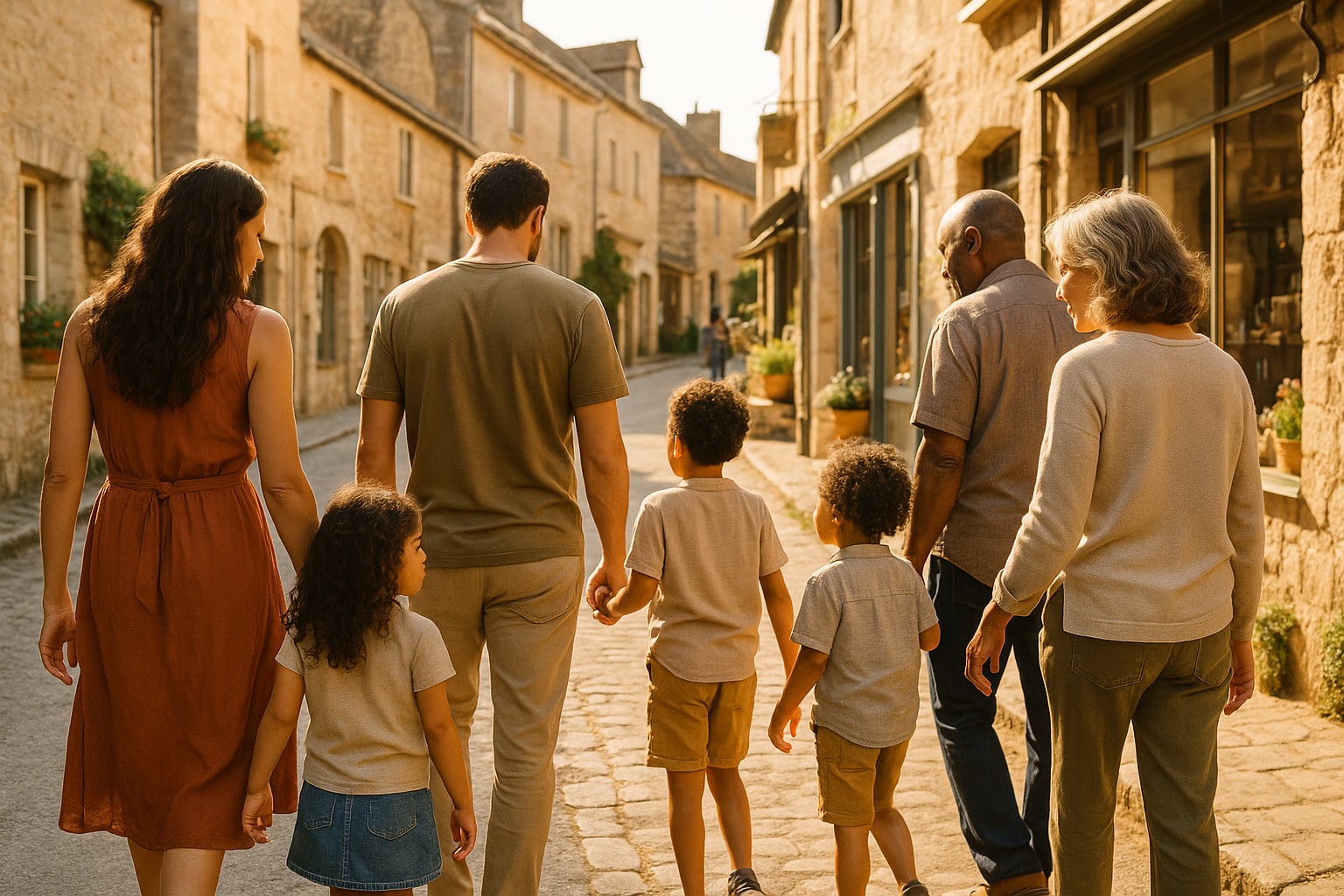
Strolling through a cobblestone village sounds like a great plan to you. To your children, depending on their age, it may seem like “a bunch of boring stones”. The good news is that with a little preparation, almost any charming village can become a plan they remember for months.
This guide covers exactly that: how to choose the destination, what to pack, what to do there, and how to keep the trip from ending with everyone exhausted and in a bad mood before lunch.
Why charming villages make a good family plan
A small village offers something the city doesn’t: short distances, almost no traffic, and manageable stimulation. Children can wander freely around a square without you being on constant alert. They tire less because they move at their own pace.
There’s also real contact with traditional crafts, animals, vegetable gardens, stone, and wood, things that never come up in everyday urban life. And for you, a rural weekend usually costs less than a trip to a capital city.
How to choose the right village for your children’s age
Not every village works equally well for every age. A historic centre with very steep streets and steps is torture with a pushchair. A village with almost no green spaces will bore a 5-year-old quickly.
- With babies and children under 2: prioritise flat villages or ones with at least one accessible area, comfortable accommodation, and a nearby park.
- Between 3 and 6 years old: look for wide squares, visible animals (hens, donkeys, sheep), fountains, and a castle or city wall they can “explore”.
- Between 7 and 11 years old: villages with a river, an easy walking trail, caves, or a small interactive museum win here.
- Teenagers: they need some extra incentive. Adventure sports nearby, a spectacular viewpoint, different food, or a local festival.
What to pack in the backpack so the day works
Not too much, not too little. The basics that prevent many meltdowns:
- Water and a few snacks (fruit, nuts if they already eat them safely, biscuits).
- Cap, sunscreen, and an extra layer of clothing. Rural weather changes quickly.
- Closed, comfortable footwear. Cobblestones ruin thin sandals.
- Wet wipes, rubbish bags, and a change of clothes if they’re small.
- A small notebook and pencils. They’re useful for almost everything (you’ll see).
Activities for children in charming villages
Here’s the key. Simply “walking around and looking” isn’t enough. Children need a mission.
Treasure hunt around the historic centre
Before leaving the accommodation, write on a piece of paper 8–10 things they have to find: a fountain, a stone coat of arms, a weathervane, a cat, a balcony with flowers, a blue door. The first to find them all wins. It works from 4 years old up to well into pre-adolescence if you adjust the difficulty.
Travel journal
An inexpensive notebook where they can draw the square, stick in a leaf from the path, write the name of the village, and what they ate. At 6–7 years old they can already do it on their own. It’s a better keepsake than any photo.
Short routes around the area
Most charming villages have a short trail: to a viewpoint, a hermitage, a waterfall. As a rough maximum, allow 1 km per year of age, always with some margin. A 5-year-old can manage 3–4 km if the terrain is easy and there are stops.
Workshops and visits to craft workshops
Many villages offer workshops in pottery, bread, cheese, or honey. Book in advance. If this kind of plan interests you, we have a specific guide on visits to factories and workshops with children that may be useful.
Contact with farm animals
Ask at the tourist office whether there is any farm school or farm that opens to the public. Watching a goat being milked impacts a city child more than any theme park.
Destinations that work well for families
Without pretending to be a closed list, here are some examples that tend to fit well:
- Albarracín (Teruel): spectacular reddish centre, walls to climb, little traffic.
- Frigiliana (Málaga): white streets, short distances, beach nearby.
- Besalú (Girona): a medieval bridge that impresses, manageable size.
- Cudillero (Asturias): coloured houses in an amphitheatre, sea right beside it.
- Pedraza (Segovia): small, walled, ideal for an afternoon.
- Alquézar (Huesca): walkways over the Vero river, adventure for children over 6–7 years old.
If you’re travelling by train, there are some very appealing options. Take a look at our selection of tourist trains in Spain for travelling with children.
How to manage the pace and avoid “I’m bored”
Children don’t visit the way adults do. They need to stop, sit down, eat something, run around. Plan one “intense” activity in the morning and another in the afternoon, with downtime in between. Leave time for them to play in the square without a schedule.
If two adults are going, take turns. One sits on a terrace with the tired little one, while the other keeps exploring with the older child. Nobody has to see everything.
Eating and sleeping without drama
Eat early. In rural villages many kitchens close at 3:30 pm and there’s no alternative. Ask whether they have a children’s menu or dishes to share. Rural accommodation with a kitchen is very handy with babies and small children: you can warm up a purée, breastfeed calmly, or prepare something quick.
Frequently asked questions
From what age is it worth taking a child to a charming village? From babyhood you can go. Whether they’ll remember it is another matter. The age range where they enjoy it most is between 4 and 11 years old, when exploration motivates them and they don’t yet demand constant screens.
How many days is ideal to stay? Two nights is usually the sweet spot. An arrival and settling-in day, a full day of activities, and a calm morning before heading home.
And if it rains? Always have a plan B: a local museum, a covered workshop, the village library (more than once these have saved us). A raincoat turns rain into an adventure for the youngest children.
Can you go with a pushchair? It depends on the village. Check photos beforehand. In many historic centres, a baby carrier is far more practical than a pushchair, especially up to 2–3 years old.