Pelvic floor during pregnancy: why you should look after it before childbirth
Looking after your pelvic floor during pregnancy reduces the risk of incontinence and makes childbirth easier. A practical guide by trimester with recommendations from midwives and physiotherapists.
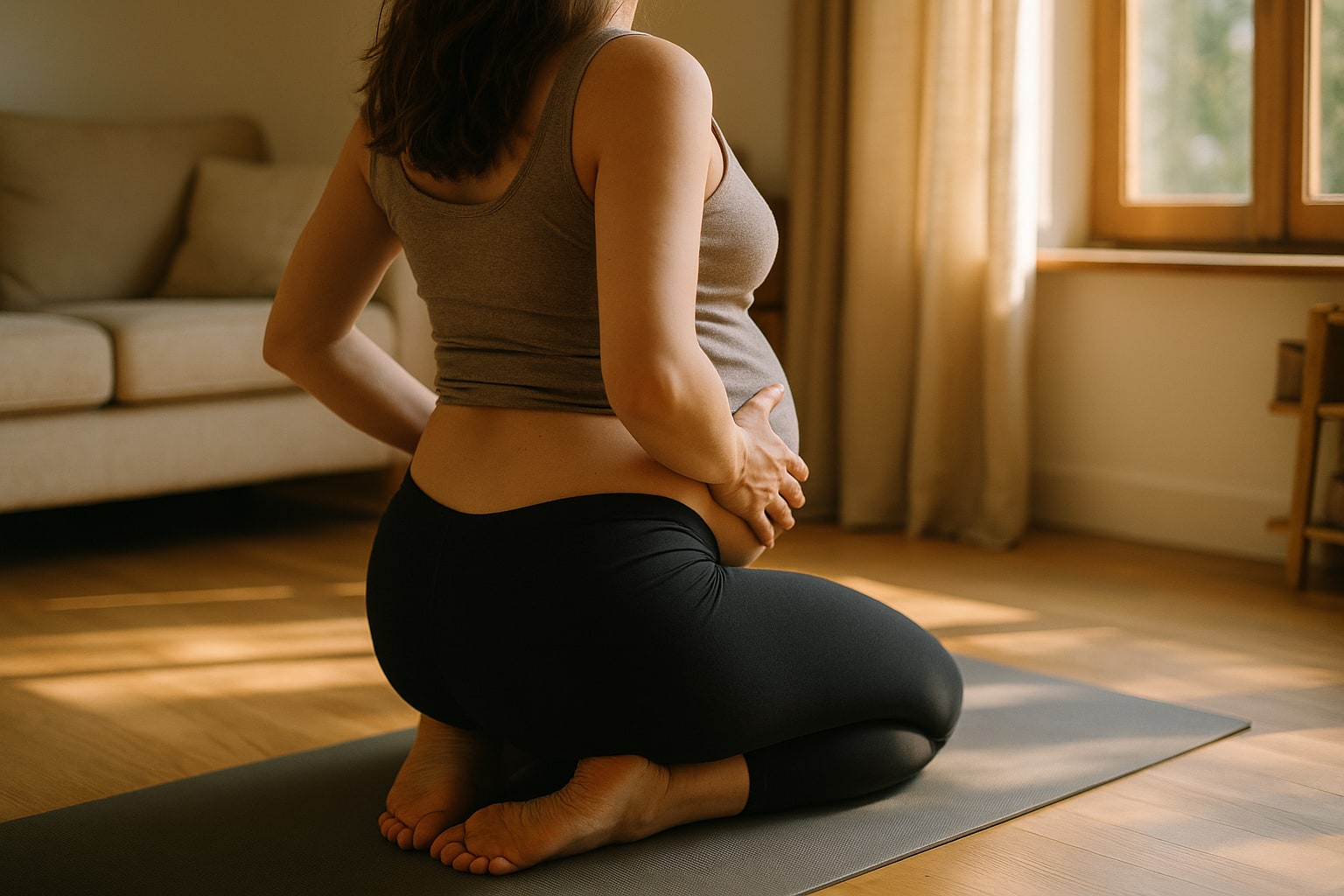
During pregnancy, your body changes at a speed that can sometimes be hard to keep up with. And there is one area that works in silence, out of sight, bearing more and more weight: the pelvic floor. Preparing it before childbirth is not a trend or something “only celebrities do”. It is a clear recommendation from midwives, specialist physiotherapists and SEGO itself.
Here we explain what it is, why it matters to look after it from the first trimester and what you can do at each stage. No guilt, no anxiety, and with evidence-based information.
What the pelvic floor is and what it does
The pelvic floor is a set of muscles, ligaments and connective tissue that closes the pelvis from below. Think of it as a hammock supporting the bladder, the uterus and the rectum. It also plays a role in urinary and faecal continence, in sexual intercourse and, of course, in childbirth.
It is a deep muscle group, so you cannot see it or control it as easily as a biceps. But it can be trained, and it responds well when you give it attention.
Why pregnancy puts it to the test
The uterus goes from weighing about 60 grams to over a kilo by the end of pregnancy. Add the baby, the placenta and the amniotic fluid. All that weight rests, quite literally, on the pelvic floor for months.
On top of this comes the effect of relaxin and other hormones, which increase the laxity of the tissues to allow the baby to pass. The result: an area that is more vulnerable to stretching, weakness and micro-tears, even before labour.
Consequences of not looking after it: incontinence, prolapse and more
The most common consequence is urine leakage when coughing, sneezing or laughing. According to data published in gynaecology journals, between 30 and 50% of pregnant women experience some degree of urinary incontinence in the third trimester or postpartum.
Other possible consequences:
- Prolapse of the bladder, uterus or rectum (descent of these organs).
- Persistent perineal pain after childbirth.
- Discomfort during sexual intercourse.
- A feeling of heaviness in the genital area.
These are not inevitable. And many can be prevented with early work.
Normal pelvic floor changes by trimester
In the first trimester, hormonal changes already start to soften the tissues, although the weight is still small. It is the best time to become aware of the area.
In the second trimester, the uterus rises above the pubic bone and the centre of gravity shifts. You may notice more pressure by the end of the day.
In the third trimester, the load is at its maximum. Mild leaks, a feeling of heaviness and, at times, frequent urges to urinate may appear. This is expected and does not mean something is wrong.
Warning signs: when to consult a midwife or gynaecologist
Seek advice without delay if you notice:
- Heavy or constant urine leakage.
- A feeling of a lump in the vagina.
- Intense or sharp perineal pain.
- Loss of stool or gas without control.
- Bleeding not related to gynaecological check-ups.
Your midwife may refer you to a physiotherapist specialising in the pelvic floor if she considers it necessary.
Kegel exercises in pregnancy: how to do them properly
Kegel exercises consist of consciously contracting and relaxing the pelvic floor muscles. The key is to identify the area correctly: it is the muscle you would use to stop the flow of urine midstream (although this trick is only useful for locating the muscle, not for practising while urinating).
A common routine recommended by midwives:
- Slow contractions: squeeze for 5 seconds, relax for 10. Repeat 10 times.
- Quick contractions: squeeze and release quickly, 10 repetitions.
- 2 or 3 sets a day.
You can do them sitting, lying down or standing. The important thing is not to tighten your buttocks, abdomen or thighs at the same time, and to keep breathing normally.
Pelvic floor physiotherapy during pregnancy
If you have access, an assessment with a physiotherapist specialising in obstetrics around weeks 20–24 is very useful. They can evaluate your muscle tone, teach you how to activate the area correctly and work on perineal elasticity for childbirth.
In the third trimester, perineal massage is usually introduced, which evidence links to a lower risk of tears and episiotomy. Your midwife can explain how to do it at home from week 34.
Other practical tips by trimester
First trimester
- Become aware of the area with gentle Kegel exercises.
- Take care of your posture: avoid arching your lower back.
- Stay well hydrated and prevent constipation (straining hard puts pressure on the pelvic floor).
Second trimester
- Introduce adapted physical activity: swimming, prenatal yoga, walking.
- Avoid high-impact exercise (jumping, running hard) if you notice pressure.
- Learn to breathe out when exerting yourself (lifting weights, getting up).
Third trimester
- Start perineal massage from week 34, if your midwife advises it.
- Practise birthing positions that relieve the area (supported squatting, all fours).
- Rest lying on your side to relieve pressure. If you have questions about this, you may be interested in this guide on sleeping positions in pregnancy by trimester.
Common myths worth debunking
“If I’m going to have a caesarean, I don’t need to work on my pelvic floor.” False. Pregnancy alone weakens it, with or without a vaginal birth.
“Kegels are done while you urinate.” No. Only use this once to identify the muscle. Doing them this way can encourage infections and dysfunction.
“If I don’t have leaks, there’s no problem.” The absence of symptoms does not mean a healthy pelvic floor. It can be hypertonic (too tense) and still cause problems.
Frequently asked questions
When can I start pelvic floor exercises? You can start from the first trimester, as long as your pregnancy is uncomplicated. Check with your midwife if you have a threat of preterm labour or placenta previa.
Do Kegels make childbirth harder? No. A trained pelvic floor is not a rigid one. Learning to contract it also means learning to relax it, which is key during the pushing stage.
Is pelvic floor physiotherapy covered by the public health system? It depends on the autonomous community. In some it is offered postpartum; follow-up during pregnancy is usually private. Ask at your health centre.
Can I exercise normally? Yes, with adaptations. Swimming, walking, prenatal yoga and hypopressive pilates (with a trained professional) are good options. Avoid strong impact if you notice pressure or leaks.
And after childbirth? The general recommendation is to wait until the six-week check and have an assessment with a specialist physiotherapist before resuming Kegels or high-impact exercise. Every postpartum is different.