Screens before age 2: why the WHO advises against them and what alternatives exist
The WHO recommends zero screen time before age 2 because of its impact on child development. We explain what the evidence says and which alternatives work at home.
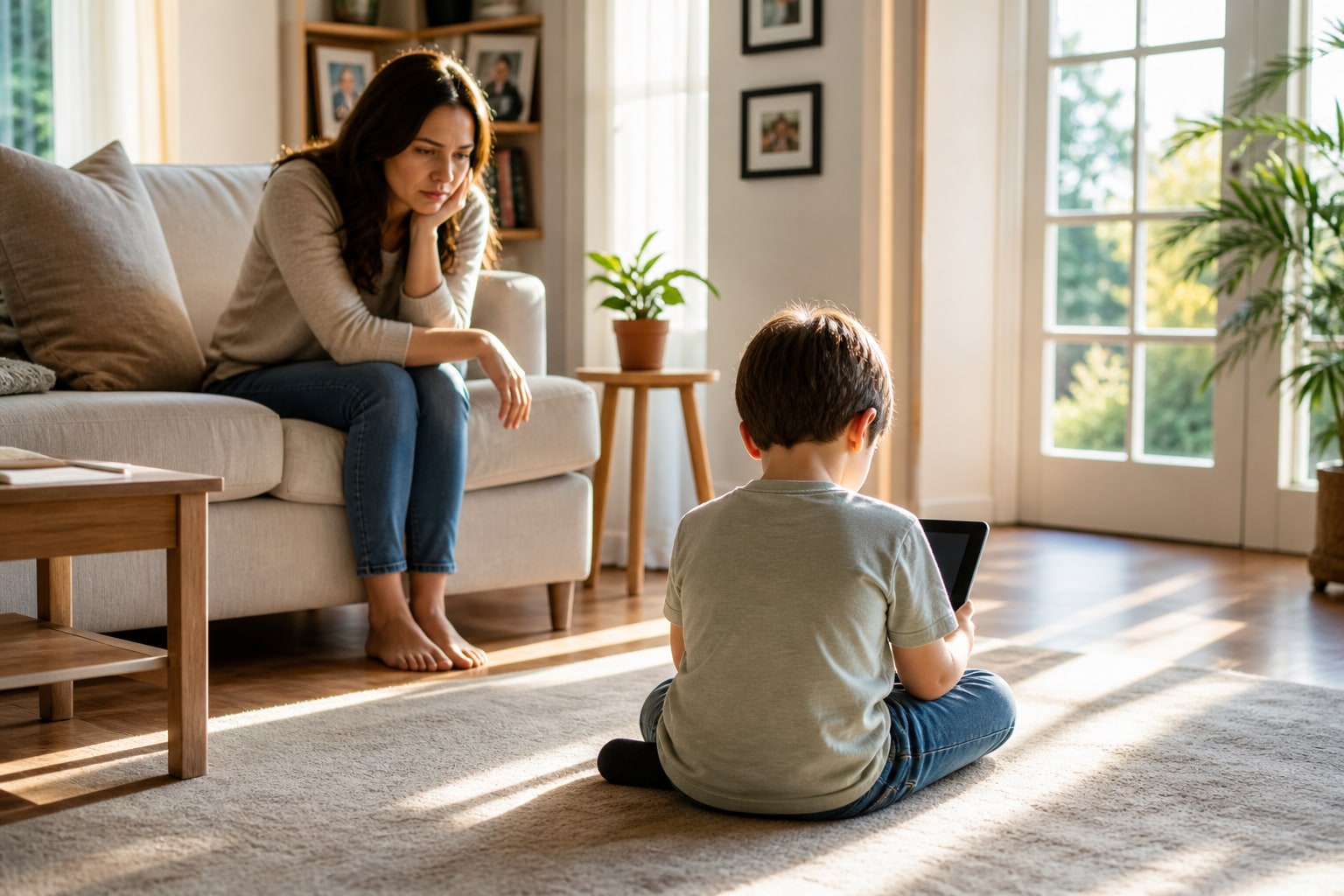
If you have a baby at home, you’ve surely been there: you’re cooking, your child starts crying, and the temptation to put a video on your phone is huge. There’s nothing wrong with admitting it. But it’s worth knowing what official bodies say about screen use in the first two years of life, because the evidence is quite clear.
In this article you’ll find what the World Health Organization (WHO) recommends exactly, why it recommends it, what happens with video calls, and what real alternatives exist when you need five minutes to breathe. No guilt and no alarmism.
What the WHO says about screens before age 2
In April 2019, the WHO published its first guideline on physical activity, sedentary behaviour and sleep for children under 5. It was a pioneering document because, until then, there were no specific official recommendations on screen time for babies.
The recommendation is straightforward:
- Children under 1 year: 0 minutes of screen time. None.
- Ages 1 to 2: ideally 0 minutes. If there is exposure, never more than 1 hour a day, and the less the better.
- Ages 2 to 4: maximum 1 hour a day of sedentary screen time.
The WHO refers to “sedentary screen time”: television, phones, tablets or any device the child watches passively. It compares it with other forms of sedentary behaviour, such as being in a pushchair or high chair for too long in one stretch. Both are concerning, but screens add an extra factor because they capture the baby’s attention in a way that a simple period of stillness does not.
Summary table: recommendations by age
| Age | Maximum screen time (WHO) | Remarks |
|---|---|---|
| 0-12 months | 0 minutes | No exposure recommended |
| 1-2 years | 0 minutes (ideal); up to 1 hour maximum | The less, the better |
| 2-4 years | Maximum 1 hour a day | Quality content and accompanied |
| 5 years onwards | According to family and paediatric judgement | See updated AEP guidelines |
If you want to go deeper into the later age brackets, we have a specific guide on screen time by age according to the WHO and the AEP.
Why exposure to screens in babies is a concern
A baby’s brain grows at a speed that never occurs again in a lifetime. In the first two years, millions of neural connections are formed every second, and they are shaped by stimuli from the environment: the voice of their family, the objects they touch, smells, movements.
Screens, by design, offer an intense but flat stimulus. The baby looks, but does not interact. It doesn’t smell, grasp, or respond to anyone. And, above all, it doesn’t receive the response of another human being, which is what truly builds language and bonding.
Effects of screens on children under 2 according to the evidence
The Spanish Association of Paediatrics (AEP) and the American Academy of Pediatrics have reviewed the available evidence. The points most often repeated in the studies are:
- Delayed language acquisition in babies exposed to screens for more than an hour a day. A study published in JAMA Pediatrics (Madigan et al., 2019) found an association between more screen time at 24 months and poorer language development at 36 months.
- Poorer sleep quality. Blue light and stimulation interfere with melatonin and the rest routine.
- Reduced face-to-face interactions, which are the main driver of learning at this age.
- Later attention difficulties when use is intensive and early.
Important: this does not mean that if your baby has watched 10 minutes of cartoons they will have problems. We are talking about sustained patterns of use, not occasional moments.
And video calls with grandparents?
This is the question every family asks. The WHO and the AEP agree: video calls don’t count as “screen time” in the problematic sense. They are a real social interaction, even at a distance. The baby sees a face that speaks to them, responds and recognises them.
So if you live far from family, relax: a video call with grandma on Sundays is not the same as a YouTube video on loop.
Alternatives to screen use for babies
This is where we get practical. Because saying “don’t use screens” without offering options is not much help when you’ve been up since 6 in the morning with a baby on your hands.
For babies from 0 to 12 months
- Treasure basket: a low basket with everyday, safe objects (wooden spoon, scarf, pine cone, large sponge). They explore them for much longer than you’d think.
- Unbreakable mirror at their height. They can spend 15 minutes looking at themselves.
- Activity blanket with different textures.
- Narrate out loud what you’re doing: “Now I’m chopping the onion, look how it falls”. For them it’s first-class language stimulation.
For children from 1 to 2 years
- Pouring with water or pulses in the kitchen while you cook. Two bowls and a spoon. Half an hour of concentration.
- Cardboard books with flaps or textures.
- Finger painting on large paper or directly in the bath.
- Play with putting in and taking out: a shoebox with clothes pegs inside, for example.
- Sing songs with gestures: the traditional ones still work.
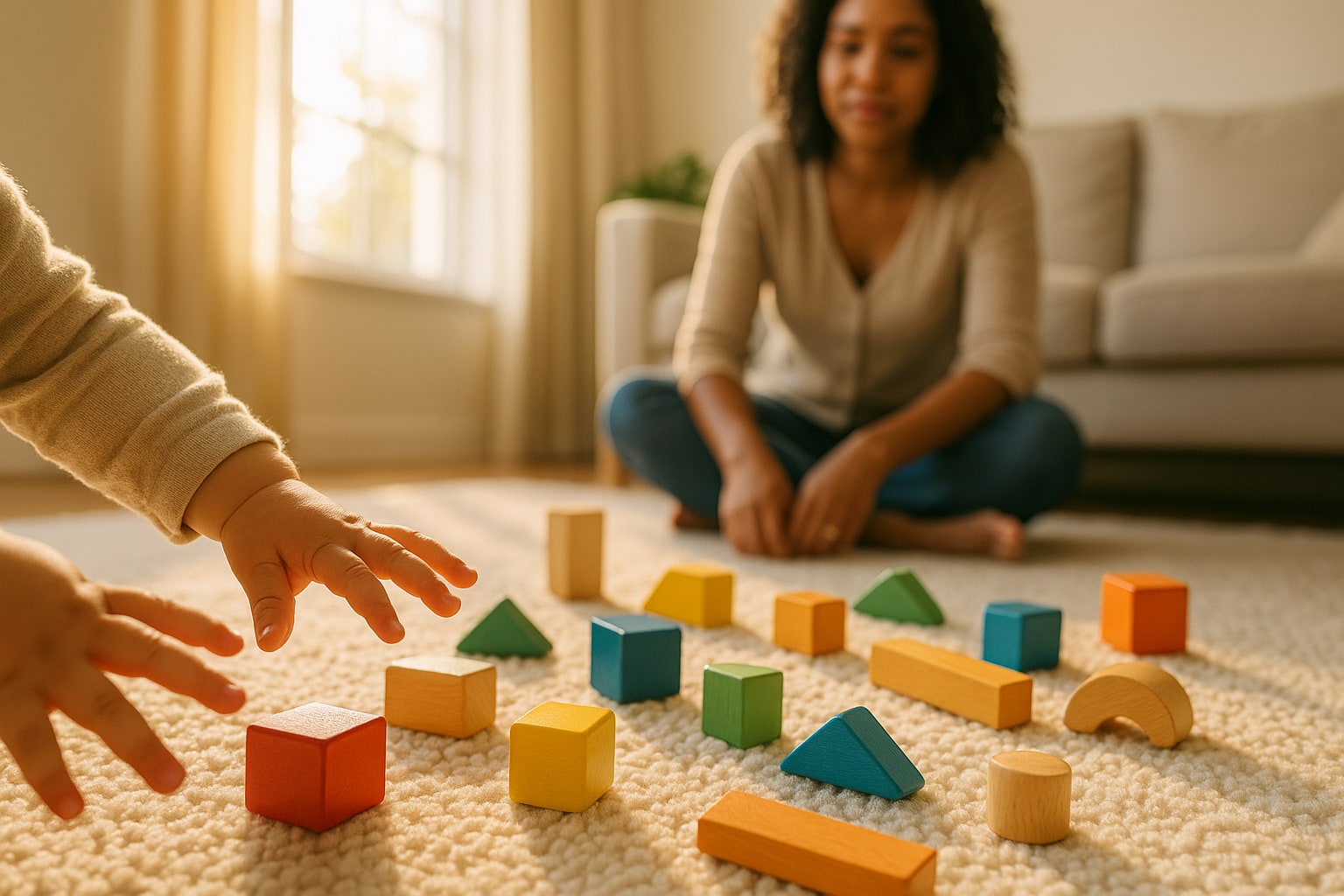
None of these activities require buying anything expensive. And many families discover that, once the screen is removed, the child entertains themselves alone for longer periods than expected.
What you can do if you already use screens at home
If you’ve read this far and think “well, at home they already watch cartoons every day”, take a breath. It’s not about blaming yourself, but about adjusting what can be adjusted.
- Reduce gradually, not all at once.
- Replace the screen moment with an alternative routine: bath, story, music.
- Avoid screens during meals and the hour before bed.
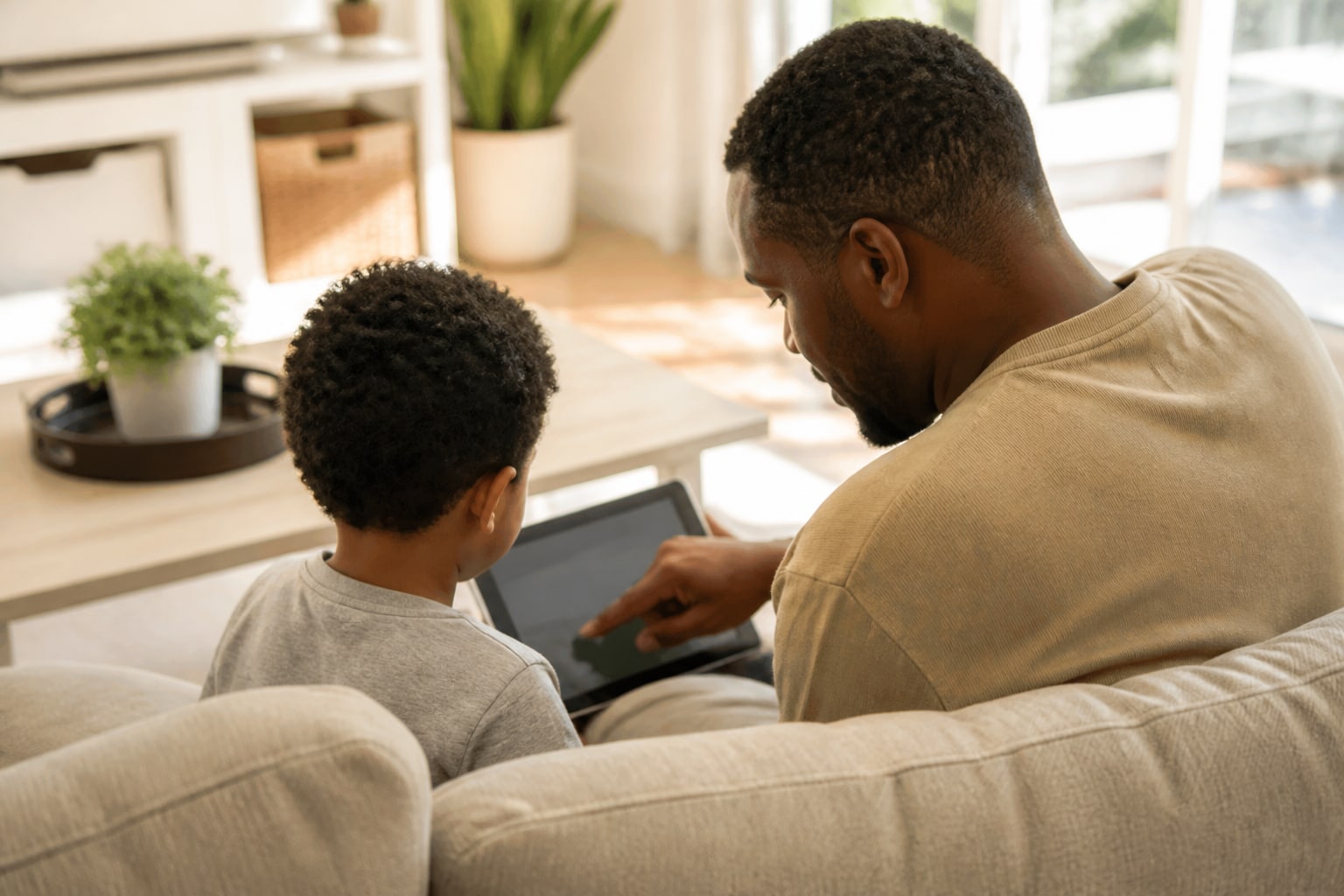
- Always accompany the screen: commenting on what’s happening helps reduce the passive effect.
- No screens in the bedroom of the baby.
Common myths about screens and babies
“Educational videos are good for their development.” There is no evidence that under-2s learn from a video what they wouldn’t learn (better) from a person. The so-called “video deficit effect” is well documented.
“If they watch cartoons in English, they’ll learn languages sooner.” False for this age. Languages are acquired through real human interaction, not passive exposure.
“A little bit of tablet won’t do any harm.” An occasional short period, no. The problem is habitual and growing use.
Frequently asked questions
Can my baby watch TV if I’m ironing in front of them? Even if they don’t look at it directly, background television reduces the amount and quality of words directed at them and interrupts their play. The recommendation is to keep it off when the baby is awake in the same room.
Are “baby” apps on tablets safe? The WHO does not distinguish between types of app for under-2s: the recommendation remains 0 minutes. An app calling itself “educational” does not change the impact on development at this age.
My 18-month-old only eats if they watch cartoons. What do I do? This is a common and reversible pattern. You can remove it gradually: first switch it off at the end of the meal, then halfway through, until it is eliminated. If eating behaviour worries you, discuss it with your paediatrician.
And if they go to nursery and screens are used there? You can ask the centre what use they make of them. Many nurseries follow AEP recommendations and limit or avoid screens for under-2s.
Do screens cause autism or ADHD? No. There is no scientific evidence establishing a causal relationship. Some studies do link intensive use with delays in language and attention, but correlation is not causation. For any concern about your child’s development, your paediatrician is the reference.