Coffee, tea and herbal infusions during pregnancy: safe amounts
Practical guide to caffeine during pregnancy: how much you can have per day, equivalences by drink, and which herbal infusions are safe or better avoided depending on the trimester.
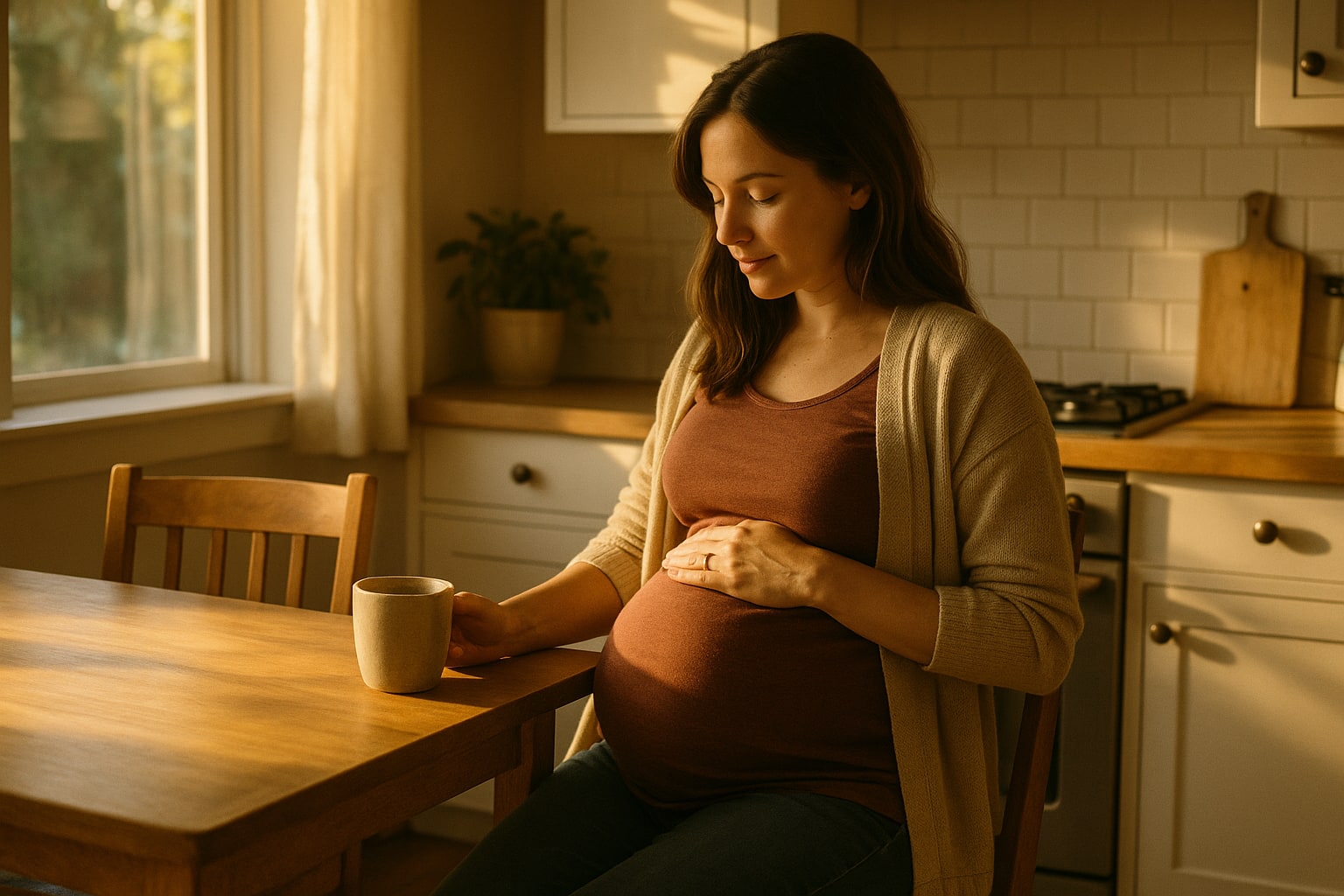
You’re pregnant and suddenly your morning coffee, your mid-afternoon tea or your bedtime infusion becomes a question mark. Can I? How much? And does chamomile count too? It’s one of the most common questions in midwife consultations, and the good news is that there are clear answers.
In this article we explain what the WHO, the EFSA and the main gynecology societies say about caffeine during pregnancy, with concrete equivalences per cup and a list of safe infusions and others best avoided. No guilt, no alarmism, just data.
Why caffeine matters during pregnancy
Caffeine crosses the placenta easily. Your baby, however, does not yet have the enzymes needed to metabolize it, so it stays in their body longer than in yours. On top of that, as pregnancy progresses, you also metabolize it more slowly: in the third trimester it can take up to three times longer to be eliminated.
Moderate consumption has not been associated with significant problems. But exceeding certain thresholds has been linked to low birth weight and a slight increase in the risk of miscarriage in the first trimester, according to reviews by the EFSA and the ACOG (American College of Obstetricians and Gynecologists).
How much caffeine is considered safe per day
The international consensus is quite clear:
- EFSA (European Food Safety Authority): up to 200 mg of caffeine per day during pregnancy.
- WHO: recommends not exceeding 300 mg daily, being more prudent the lower the consumption.
- ACOG: also sets the threshold at 200 mg per day.
To give you an idea, 200 mg is roughly equivalent to one large filter coffee or two small cups of coffee. It’s not “no coffee at all”: it’s coffee in moderation.
Equivalences: how much caffeine each drink contains
Values vary by variety, roast and brewing time, but these are the usual ranges:
| Drink | Approximate caffeine |
|---|---|
| Espresso coffee (30 ml) | 60-80 mg |
| Filter coffee (200 ml) | 90-140 mg |
| Instant coffee (200 ml) | 60-80 mg |
| Decaf coffee (200 ml) | 2-5 mg |
| Black tea (200 ml) | 40-70 mg |
| Green tea (200 ml) | 25-45 mg |
| White tea (200 ml) | 15-30 mg |
| Matcha (1 teaspoon) | 60-70 mg |
| Cola (330 ml) | 30-40 mg |
| Energy drink (250 ml) | 80 mg or more |
| Dark chocolate (30 g) | 15-25 mg |
If you have a latte in the morning (around 80 mg) and a black tea in the afternoon (around 50 mg), you’re within the margin. If you add a cola and a piece of chocolate, you start getting close to the limit.
And decaf, does it count?
Decaf coffee contains minimal amounts of caffeine (2-5 mg per cup), so you can drink it with peace of mind. Current decaffeination processes using water or CO₂ are safe and leave no concerning residues in the final drink.
Tea during pregnancy: not all are the same
Tea (black, green, white, oolong, matcha) comes from the Camellia sinensis plant and contains caffeine. In addition, green tea and matcha contain catechins which, in high amounts, may interfere with the absorption of folic acid, which is especially key in the first trimester.
Consumed in moderation (one or two cups a day) it is not a problem, but it’s best to separate it from meals and from iron and folic acid supplements by at least one hour.
Safe infusions during pregnancy
“Herbal” infusions contain no caffeine, but that doesn’t mean all of them are harmless. Many medicinal plants have active principles that can affect the uterus or fetal development.
Generally considered safe in moderate consumption (1-2 cups a day):
- Chamomile (in moderation, especially in the first trimester).
- Lemon balm.
- Linden in small amounts.
- Ginger (useful for first-trimester nausea, up to 1 g a day according to the WHO).
- Rooibos (contains no caffeine and is rich in antioxidants).
- Raspberry leaf, but only from the third trimester onward and with your midwife’s approval.
Infusions not recommended during pregnancy
These plants are discouraged due to their hormonal or uterine action, or due to a lack of safety data:
- Sage, pennyroyal, rue, mugwort, fennel in high doses: they may stimulate contractions.
- Licorice: has been associated with preterm birth and alterations in the baby’s cognitive development.
- Ginseng, ginkgo biloba, echinacea: no sufficient evidence of safety.
- Senna, cascara sagrada, oral aloe vera: potent laxatives, not recommended.
- Star anise: risk of contamination with Japanese star anise, which is neurotoxic.
- St John’s wort: interferes with many medications and hormones.
If in doubt about any plant, ask your midwife or gynecologist before taking it regularly.
Recommendations by trimester
- First trimester: this is the time for the most caution. The placenta is forming and nausea may make you not even feel like coffee. Prioritize small amounts of ginger if you have nausea and limit caffeine to under 200 mg.
- Second trimester: you can maintain the 200 mg daily without problem if it agrees with you.
- Third trimester: caffeine is metabolized more slowly and can affect sleep (yours and your baby’s, who already has their own rhythms). Many women reduce it naturally. If you have reflux or insomnia, lowering consumption helps.
If sleep is becoming difficult, you may be interested in reading about sleeping positions in pregnancy by trimester.
Common myths about coffee and infusions during pregnancy
- “Green tea is healthier than coffee, so I can drink as much as I want.” False. It has less caffeine per cup, but it still provides caffeine and catechins.
- “Natural infusions do no harm.” Natural does not mean safe. Many medicinal plants are contraindicated.
- “One coffee a day causes miscarriage.” There is no evidence that moderate consumption (under 200 mg) significantly increases the risk.
Frequently asked questions
Can I have a latte in the morning? Yes, as long as you don’t exceed 200 mg of caffeine per day in total, also counting tea, soft drinks and chocolate.
Is chamomile safe in the first trimester? In small amounts (one cup a day) it is generally considered safe, but in the first trimester it’s best to be cautious and check with your midwife.
And energy drinks? They are discouraged throughout pregnancy. They combine high caffeine, taurine and other stimulants without clear safety data.
Is decaf coffee really safe? Yes. It contains tiny amounts of caffeine and current decaffeination methods are safe for consumption during pregnancy.
Can I drink ginger tea for nausea? Yes, up to 1 gram of ginger per day is considered safe by the WHO and helps many women with first-trimester nausea.